Amung and Tami: Regreening the Concrete Jungle

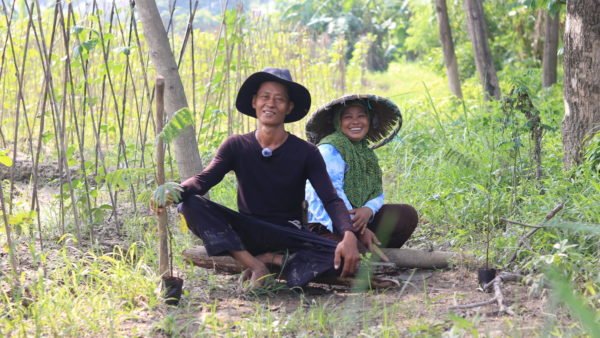
Amung and Tami
(Above) Amung and Tami

The Greenland International Industrial Center (GIIC) in Cikarang is one of Jakarta’s biggest industrial zones. And yet, even here, pockets of nature continue to proliferate. Through the enlightened approach of the GIIC management, and with critical support from local people, these patches of green within the estate are being stitched together. 

Trees4Trees, One Tree Planted (OTP) and Microsoft have teamed up with local farmers to help catalyze the regreening process. Amung and his wife, Tami, are two of many who are ensuring ‘Greenland’ remains an integral part of the GIIC. In the process, they’re bringing relief to the area, finding a connection to the past, and planting hope for the future.  

Nature and nurture 

For as long as he can remember, Amung has had an affinity with farming – nurturing plants to nourish his family. Together with his wife, he grows vegetable crops and fruit trees on disused industrial land in the GIIC.  

I’ve been farming here since 2014,” he explains. “It’s been about 10 years now. The land I work on provides us with vegetables, cassava, and many other crops and fruits.”   

Income from his farming has allowed Amung to provide for his family, while also covering school expenses for his two children. “Although it’s not a lot, we’re grateful,” he says.
Amung and Tami
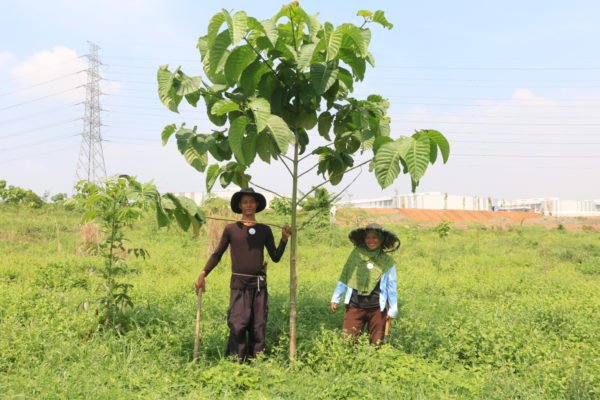
(Above) Amung and Tami, in the shade of one of many trees they have planted on the GIIC industrial estate in Cikarang, West Java.

Staying connected to their roots 

For Tami, working the land brings back memories. Before this area became an industrial zone, it was the site of her ancestral home. “One day, I visited and found the land where my house used to be had been abandoned. I told my husband and asked him to farm here,” she explained.  

Before long, Tami and Amung brought the land back to life. “I used to farm in other locations, but this land is the best,” says Amung. “Most plants can grow easily here. It is also close to the river for irrigation.” 
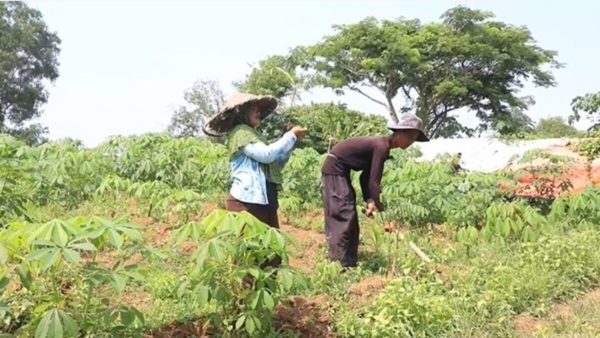
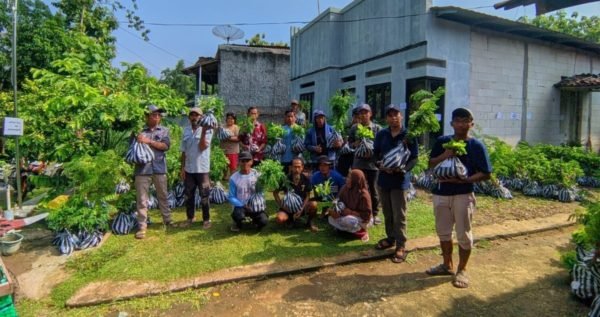
local Farmer
Above) With support from Microsoft, Trees4Trees and One Tree Planted, Tami and Amung have reconnected with their ancestral lands and helped keep the GIIC green.

Tree-planting support from Microsoft  

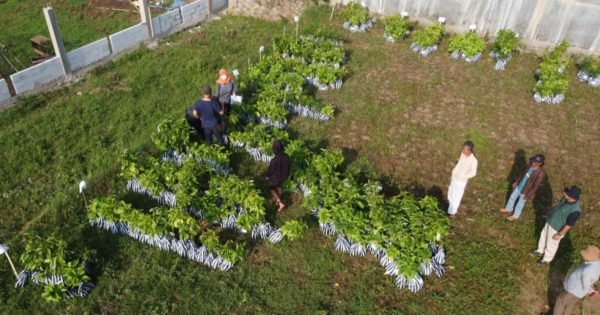
In 2022, Trees4Trees, with funding from Microsoft and support from One Tree Planted, launched a tree-planting program around the GIIC. The aim was to restore degraded land and increase tree cover to create an urban forest.  

“In 2022, we got 350 seedlings in total, consisting of fruit trees like mango, petai, and durian, as well as timber like mahogany, teak, and jabon,” says Amung. “We’re thankful to be able to plant them and benefit from them in the future. This program really supports us.”  

The program successfully planted 21,000 trees in public spaces and on local community lands. In 2023, Microsoft added another 19,000 trees. This year, the initiative will continue, expanding tree cover throughout the industrial zone. 

Amung and Tami hope all their trees will survive and bear fruit such as mangoes and petai, which they can sell. They are also looking forward to planting more new trees in future and contributing to the regreening of the local area. 
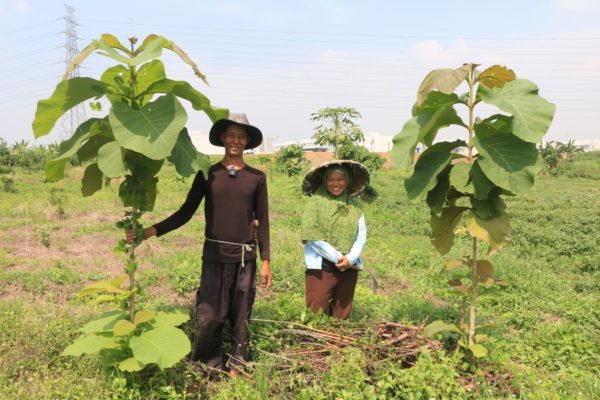
GIIC Farmers
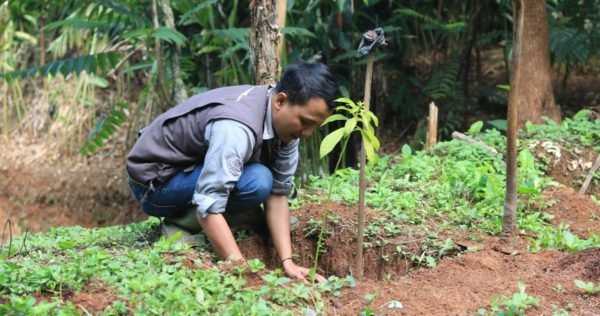
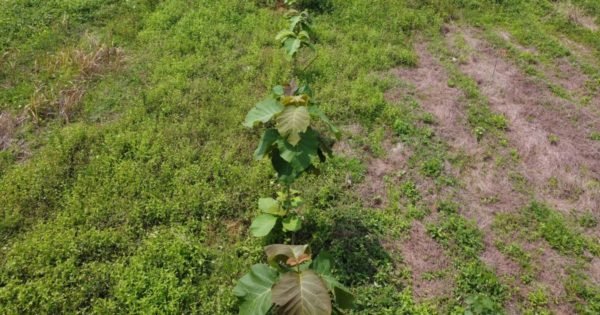
(Above) It’s been a year since the planting activities, and now the trees are nearly 2 meters tall.
Progress towards a greener future 

In just over a year, Amung and Tami have already transformed around 0.5 hectares of unused land in the GIIC area into a lush, green space that is filled with teak, jabon, and mango. Amung attributes this success to nature: “I think the soil is perfect for these trees to thrive, even without special treatment,” he says. 

Amung and Tami’s actions have played a vital role in keeping the GIIC green. In addition to providing shade, clean air, and water to the surrounding environment, the green spaces of the GIIC also deliver sustainable livelihood opportunities to local farmers. This also provides a blueprint for a more sustainable, more equitable future; a collaborative model that benefits local communities, business, and nature. 

Writer: V. Arnila Wulandani. Editor: Chris Alexander. Photos: Kemas Duga Muis/Trees4Trees

Taking the Next Step: Trees4Trees’ Planting Season 2023-2024

Trees4Trees’ Planting Season 2023-2024

Taking the Next Step: Trees4Trees’ Planting Season 2023-2024

At Trees4Trees, we started the new year early, by kicking off our 2023-2024 planting season back in December. With the generous support of our sponsors, volunteers, and donors, we plan to continue these programs through March 2024. 

Since December, millions of seedlings have been distributed from our nurseries to locations all over Java. Each of these trees offers reason for hope. From village to city and from coast to coast, they can help protect the environment and empower local communities.  

Rising to the challenge 

Indonesia saw its fair share of troubles in 2023. An extended dry season, caused by El Niño, delayed our planting efforts by a month – from November to December. Now the rains have finally arrived, were determined to make up for lost time. 

“We intend to plant 4.9 million trees across Java,” says Pandu Budi Wahono, Trees4Trees Program Manager. “This will help around 21,770 local farmers in 231 villages,” he added.

Continuing the Citarum Watershed project  

A big part of this program is our Citarum Watershed restoration project. Our goal, with support from 18,800 local farmers in 176 villages in the watershed area, is to plant 4 million trees in the next couple of months. 

“The restoration covers areas around five sub-watersheds,” explains Tomi Bustomi, who is our Regional Manager for West Java. “Ciminyak, Ciwidey, Cisangkuy, Cirasea, and Citarik River.,”  

Working alongside the Government of Indonesia, Tomi and his team aim to plant 10 million trees by 2025. In doing so, they will help restore ecosystems, preserve cultural and economic value for local communities, and safeguard biodiversity. 

planting Tree

A shore sign of progress: Replanting on the coast of Java 

In Pati Regency in Central Java, Trees4Trees is creating a green belt along the shoreline by planting mangroves. From 2021 through 2023, we already planted a total of 195,200 trees in six villages. Now, the plan is to extend these efforts to four more villages in the region.  

During December and January, a total of 33,750 new trees were planted in the villages of Semerak, Dukuhseti, Tegalombo, and Banyutowo. Khoirum Minan is the Trees4Trees Pati Unit Manager, who says extending the green belt in this way can benefit local communities by “preventing high tides from hitting residential areas and fishponds owned by locals.”  

Saving water, improving lives  

Last year’s prolonged dry season had a massive impact on local communities. Lots of places experienced serious water shortages, which affected both people and plants. To prevent this happening again in the future, Trees4Trees has been busy planting lots of tropical fruit trees known for their ability to store water when times are hard.  

These tree species include teak, kaliandra, and indigofera. We’ve also planted multi-purpose trees like coffee and petai, which are good for the environment and offer a sustainable source of income for local people too. 

Taking the Next Step: Trees4Trees’ Planting Season 2023-2024
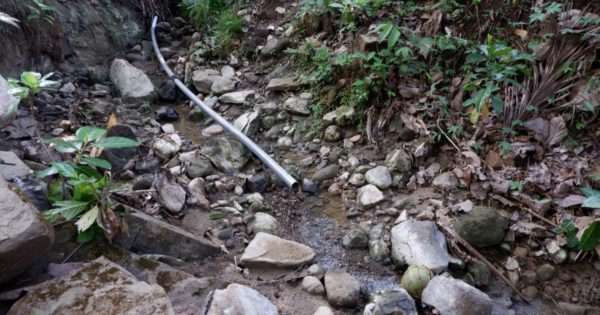
(Above) Water sources in Boyolali dried up in 2023, so T4T stepped  to support water conservation  by planting seedlings that will store water in their trunks, prevent soil erosion, and reduce surface run-off (below).

Distribution process

Expanding urban forests 

Our replanting plan extends to all kinds of environments, tackling a range of problems. This even includes cities and industrial areas, where trees bring some much-needed shade, carbon capture, and soil health, not to mention adding a little natural beauty. 

Most recently, Trees4Trees has been busy planting urban forests in industrial areas like GIIC in Bekasi, KIIC in Karawang, and Bogor. 

Taking the Next Step: Trees4Trees’ Planting Season 2023-2024
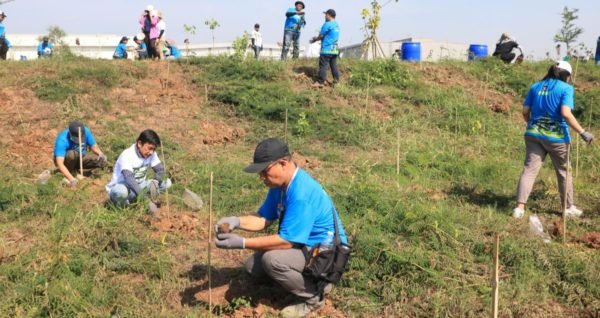
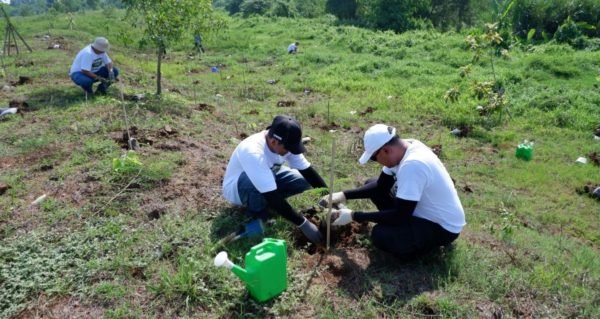
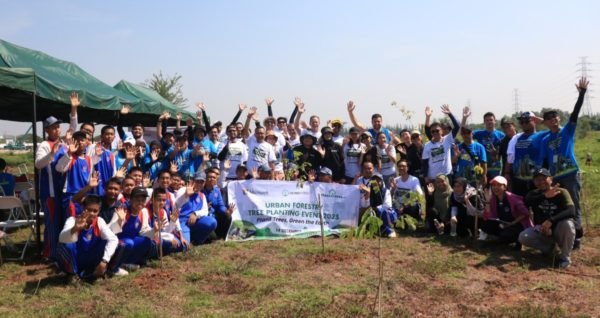
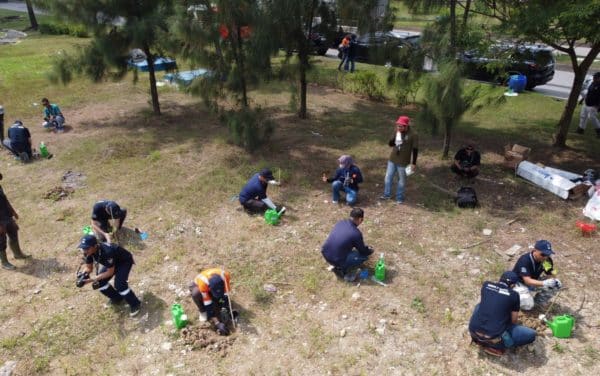
(Above) A recent tree planting event at GIIC Bekasi with Nissin and (Below) with Microsoft in Bekasi.

CSR program

another planting event
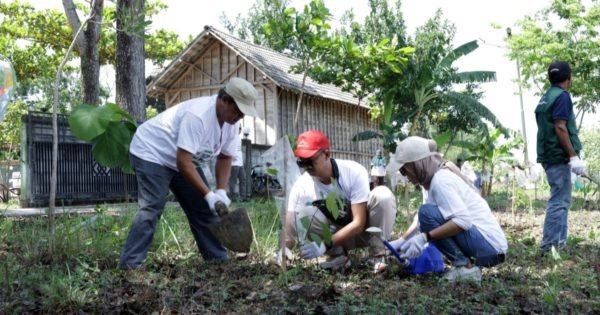
(Above) Another planting event, this time with AOI & ITS in Bojonegoro, East Java. (Above) Another planting event, this time with AOI & ITS in Bojonegoro, East Java.

It takes a village: Working together with partners 

In all our replanting operations, we collaborate with lots of different companies and organizations to get the job done. Each of these events helps deliver sustainable impacts to different areas, from cultural and historical sites to industrial regions, villages, farmland, and watersheds.  

Every project is a team effort. By involving staff, partners, and clients as tree-planter volunteers, and teaming them up with local communities of growers and farmers, we’re helping create new networks.  

Whether developing skills, sharing stories, or simply making new friends, the Trees4Trees planting season continues to expand its impact. Everyone involved is ready to take the next step on this journey, together. 


Growing Green: Microsoft’s Continued Urban Forestry Initiative

Microsoft tree-planting

Microsoft Tree Planting event

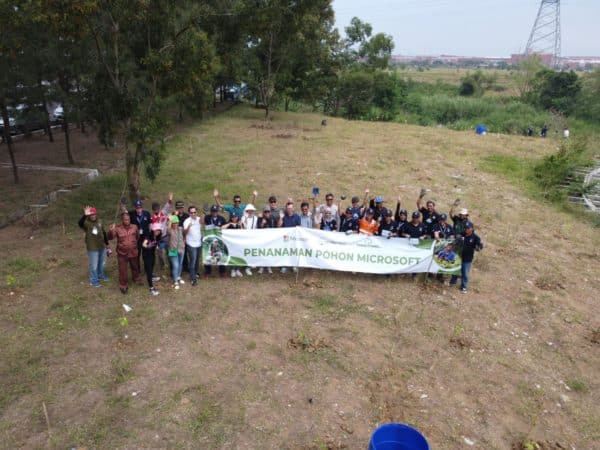
(Microsoft; Growing Green) It was only 8 AM, but already hot as an oven in the GIIC industrial area in Bekasi, just east of Jakarta. Sweltering days are par for the course around here, in one of West Java’s largest and busiest industrial centers, where buildings and factories are scattered all around, and trees are hard to come by.  

But all that is beginning to change. Microsoft Operations Indonesia has teamed up with Trees4Trees and One Tree Planted to launch a tree planting program that will bring shade to the industrial estate and a range of benefits to the surrounding landscape and communities.  

CSR Tree Planting event
(Above) Seedlings planted in 2022 have taken root and are beginning to grow (Photo: Kemas Duga Muis/Trees4Trees)

Balancing development with environment 

This program kicked off in 2022 – 2023, when 22,800 trees were planted. Following the success of that pilot project, 19,000 more trees are being planted in 2024.  

“Together with Microsoft, our goal is to enhance the greenery and create a healthier environment in industrial areas,” explains Pandu Budi Wahono, Trees4Trees’ Program Manager.  

Trees chosen for the program include gmelina and rain trees, which can provide some much-needed shade. Other, multipurpose trees like petai, durian, and jackfruit have also been chosen, as they can provide fruit and other resources for the local community. 

 tree-planting event

Read also: Regreening Jakarta’s Concrete Jungle through Urban Forest

Regreening the urban jungle 

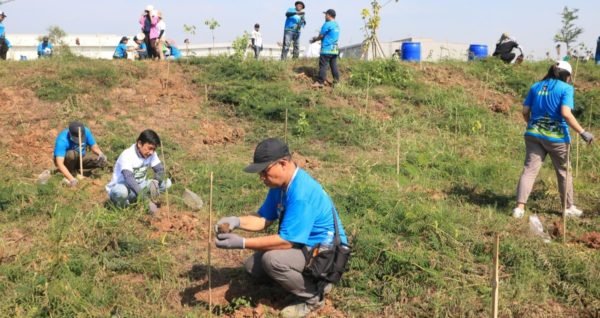
In December 2023, 500 new trees were planted in GIIC by a team of volunteers made up of Microsoft staff, partners, and clients marking the starting of the tree-planting initiative. 

Microsoft Tree-planting
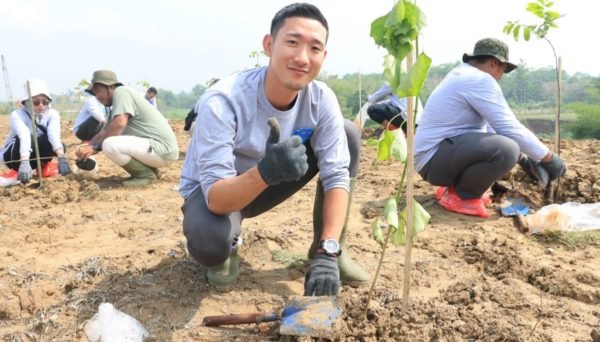
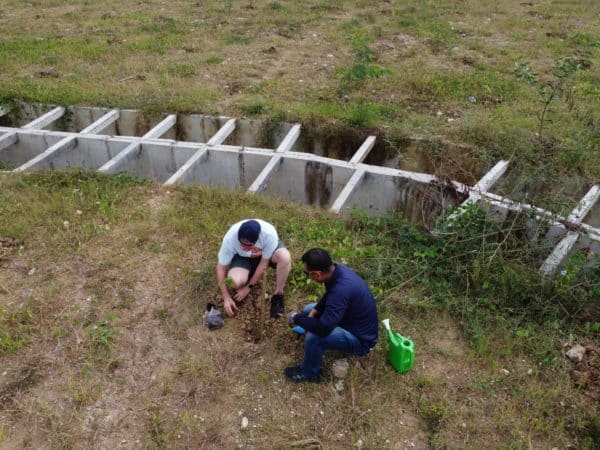
(Above and below) Volunteers from Microsoft plant trees under the hot sun in Bekasi (Photo: Trees4Trees/V. Arnila Wulandani)

photo session with microsoft team

“This tree planting event serves as a reminder for those of us, who work in the technology field, about the significance of environmental protection,” said Elizabeth Simatupang, who is the Data Center Operations Manager at Microsoft Operation Indonesia.  

She also revealed that volunteering had made her more aware of the many benefits trees can offer. “I hope the trees we’ve planted will produce more oxygen and be beneficial to the environment, aligning with our motto: Technology should not cost the Earth,” she added. 

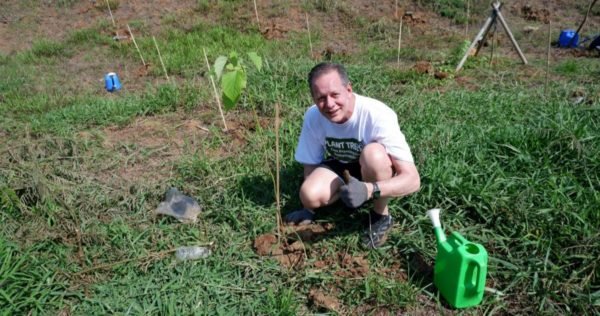
Gavin Hodge is DCD Project Manager at Microsoft Operations Indonesia. This was his second time volunteering with Trees4Trees, and he felt energized to see so many people working to support the environment. 

“It is great to see so many people get involved,” said Gavin, referring to the various Microsoft partners and team members onboard with the project. “I hope big trees will stay here for a long time and remove carbon dioxide, making it a better place to live,” he added.  

Microsoft team
(Above) Gavin Hodge during the tree planting event (Photo: Trees4Trees/V. Arnila Wulandani)

A watershed moment for urban replanting 

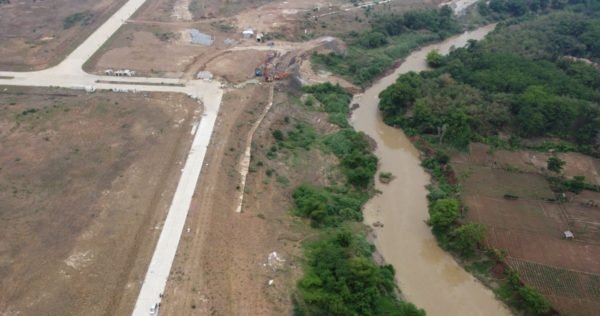
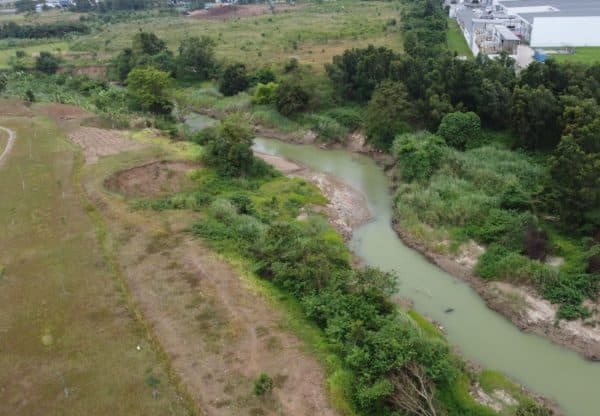
Although the program  focuses on creating an urban forest, improving degraded land and providing tree cover, its goals go even further. The industrial areas are located downstream of the Citarum river, specifically alongside the Cipamingkis and Cikalapa rivers., The program aims to restore the watershed and return forest cover to the region, addressing a range of complex challenges triggered by developmental pressures. 

Microsoft tree-planting
(Above) An aerial view of the Cipamingkis River (Photo: Trees4Trees/Kemas Duga Muis)

Amung is a local farmer and one of the project partners, who helps out by growing trees for the planting activities. In recent times, he’s seen the dangers of deforestation and land degradation firsthand: “Recently, when the river burst its banks and flowed into my field, many of my plants were lost.” He blames excessive upstream development for the flood, noting that severe river siltation left the rainwater with nowhere else to go. 

The benefits of Microsoft’s extended planting program spread beyond the industrial estate and into the surrounding landscape, impacting lives and livelihoods in unexpected ways. In addition to providing shade and restoring the watershed, planting trees here can help prevent flooding and protect local farmers from potential ruin. Technology shouldn’t cost the Earth. Thanks to the latest initiatives by Microsoft and partners, development is headed in a more positive direction.  

Watch the video: Urban Forestry Tree-planting with Microsoft

Writer: V. Arnila Wulandani. Editor: Christopher Alexander

Regreening Jakarta’s Concrete Jungle through Urban Forestry

Regreening Jakarta’s Concrete Jungle
With support from Microsoft, and in collaboration with local farmers, schools, and communities, Trees4Trees will continue replanting urban areas around Jakarta.

In terms of urban area, Jakarta is the second biggest city in the world. And it’s still growing; areas on the outskirts are quickly swallowed by the urban sprawl, and the increasing number of industrial centers is already having an environmental impact. But in the satellite towns of Bekasi and Karawang, locals are finding ways to push back against the concrete tide: by planting more trees. 

Replanting urban forests offers all kinds of benefits. Trees combat pollution and lower temperatures. They provide habitats for animals and livelihoods for people. They filter drinking water, protect against flooding and prevent soil erosion. On a larger scale, urban forests are proven to mitigate the negative impacts of climate change by sucking carbon dioxide out of the atmosphere.  

Going Green in Greenland: Trees4Trees’ Replanting Program   

Recognizing the importance of urban forests, and with support from Microsoft and One Tree Planted, Trees4Trees kicked off a tree-planting initiative in the Greenland International Industrial Center (GIIC) in Bekasi and the Karawang International Industrial Center (KIIC) in Karawang. The program, which began in November 2022, has already covered an area of 25 hectares.  

Regreening Jakarta’s Concrete Jungle
(Above) Since November 2022, Trees4Trees has planted 17,778 new trees around Bekasi and Karawang

“With this project, our goal is to plant 25,000 trees in GIIC and KIIC,” explains Anto Wartono, Planning Manager at Trees4Trees. “We hope these trees will soon grow into urban forests.”  

According to Anto, Trees4Trees has already planted 17,778 trees around GIIC and KIIC. Around 8,000 more trees are expected to be planted in the area over the next few weeks.  

The program actually went beyond planting. To raise public awareness about the importance of green spaces in urban areas, Trees4Trees engaged with local women farmers and ran an environmental campaign in local schools and communities.  

Rehabilitating the Riverbanks 

One of the main goals of the project is to restore areas around rivers. In recent years, the riverbanks have been eroding away due to land conversion. Trees4Trees focused on areas either side of the Cipamingkis and Cikalapa rivers, which flow through the GIIC area in Bekasi and the KIIC in Karawang, respectively.   

Regreening Jakarta’s Concrete Jungle
(Above) The Cipamingkis River in Bekasi, where Trees4Trees has been active recently

In Jakarta, temporary shelters are a common sight on the city’s riverbanks. During the rainy season, rising water levels can lead to floods and landslides. Adding trees to the banks of rivers is an effective defense against these dangers. 

“Many riverbanks have been converted into residential areas and semi-permanent buildings,” says Anto, who has experienced plenty of obstacles to urban planting. “Unlike in rural areas, planting trees in urban areas is more challenging – there are only a few spaces we can use as green areas.”    

Greening Industrial Areas, Supporting Farmers 

The process of urbanization and land conversion is also squeezing farmers off their land. As part of the urban forest project, Trees4Trees has been working with displaced farmers, helping them establish plantations in the newly reforested areas. By planting trees with high economic value – like durian, avocado, and caqui – we are helping devise new and sustainable ways to support local livelihoods. 

“We have planted 3,085 trees in two villages around KIIC, Puseurjaya and Margamulya village,” says Anto. “While in the GIIC buffer zone, we have planted 2,300 trees in Pasirtanjung village by involving local farmers,” he added.   

Preserving Biodiversity  

Trees4Trees’ work in KIIC also covered the Telaga Desa conservation area; an educational park that provides a precious green oasis in Karawang. As part of the project, more than 3,000 trees were planted here. Trees species chosen for this purpose included kemang (white mango), buni (currant), pulai (blackboard tree), mundu (yellow mangosteen), genitri (rudraksha), puspa (needlewood), and gandaria (mango plum).  

Regreening Jakarta’s Concrete Jungle
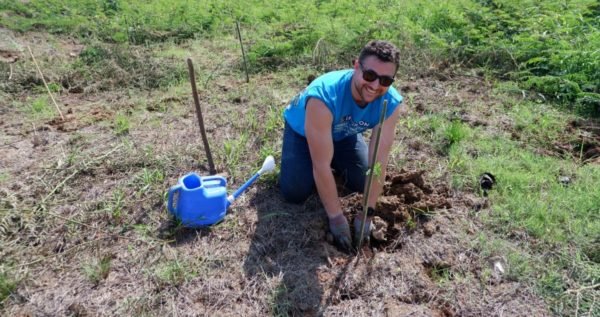
(Above) Microsoft’s Gavin Hodge (left) helps plant trees in the GIIC in Bekasi

“These trees will grow 20 meters high in 5 years,” explains Gavin Hodge, the DCD Project Manager at Microsoft. He joined the activity in GIIC and KIIC area as a volunteer tree planter, and believes this project will offer a range of benefits. “(It’s) going to protect our environment and improve the estate, while also improving the situation for the community. So it’s good that Microsoft can be a part of it.” 

With support from Microsoft, and in collaboration with local farmers, schools, and communities, Trees4Trees will continue replanting urban areas around Jakarta. Every sapling holds enormous potential. In time, they could change the landscape in one of the world’s biggest urban areas.   

To find out more about our ongoing replanting programs, and to see how you can help, visit devtrees4trees.portopaper.com 

Writer: V. Arnila Wulandani. Editor: Christopher Alexander