Eco-Friendly Farming: Cicalengka Farmers Move Beyond Timber Logging

Eco-Friendly Farming

For farmers in Nagrog Village, Cicalengka District, West Java, farming is not just a job that fulfills their daily lives, but a cultural heritage passed down through generations. Most of them inherit family land, which they manage by growing crops and trees. They harvest and sell their yield, providing them with a decent livelihood.  

Traditionally, crops like chili, banana, citronella grass, clove buds, and some vegetables formed their primary harvests. They also cultivated trees like burflower (jabon), gmelina, and albizia (sengon), earning income by logging and selling the timbers. However, in recent years, many of them have recognized the need to adopt more environmentally friendly practices to secure their livelihood for the future. 
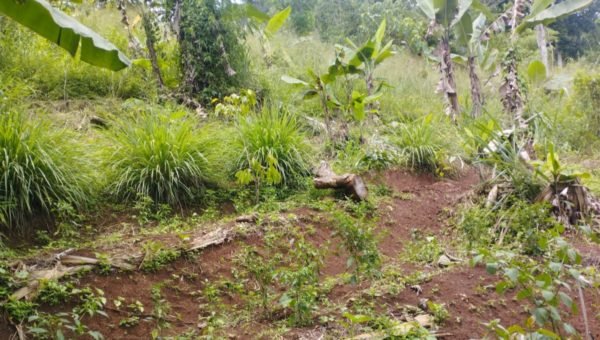
Trees
Crops like citronella grass, bananas, and vegetables are typical crops planted in farmers’ lands.

From Harvesting Timber to a New Eco-Friendly Farming Model 

“Logging trees for timber is an outdated way to earn income,” said Faisal, one of Nagrog Village’s farmers. “For us, cutting down the trees and selling the timber is a thing of the past. We’re transitioning to a farming model focused on growing trees without cutting them down. Tree cover is essential for preventing erosion and controlling rainwater runoff in our village,” he explained.  

In recent years, the farmers in Nagrog Village have united to create a greener future. As an initial step, they have shifted their focus to cultivating more trees and crops, prioritizing the sustainable harvest of fruits and leaves over cutting timber.
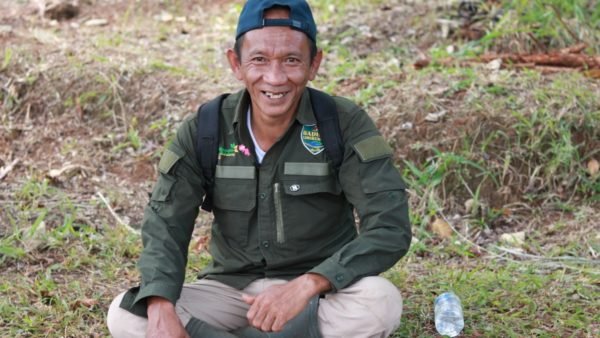
Eco-Friendly Farming
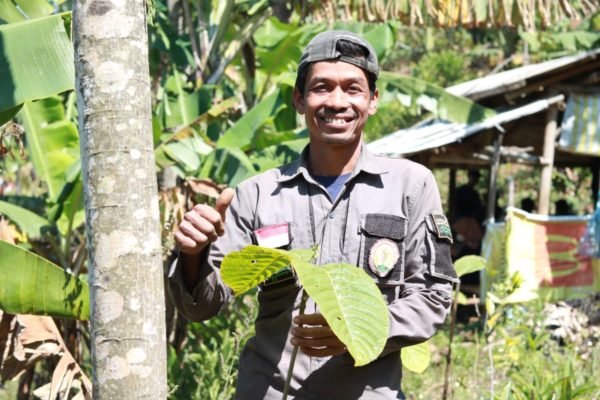
Faizal took a rest after working on his land in Nagrog Village

Maximizing Cloves and Citronella Grass 

Clove trees and citronella grass are the main crops they cultivate lately. “Clove buds fetch a good price in the market. It’s 80,000 rupiah per kilogram,” shared Agus, another farmer. “Citronella grass grows exceptionally in our village land, with consistent demand and good prices as it’s used for essential oils,” he added. Agus also noted Arabica coffee’s potential, priced between 15,000 and 18,000 rupiah per kilogram, although market fluctuations are a challenge. “So, we need to diversify crops and fruit trees to stabilize our income,” he emphasized.  

On the other hand, Yaya, another farmer, faces different challenges when growing cloves due to his open land exposed with direct sunlight. “The dry season has always been tough, especially last year. Many of my young clove trees didn’t survive the heat. My crops also struggled,” he said. “I’ve used shading nets, but I think more shade trees are needed to reduce the heat and improve their survival rate,” he said. 
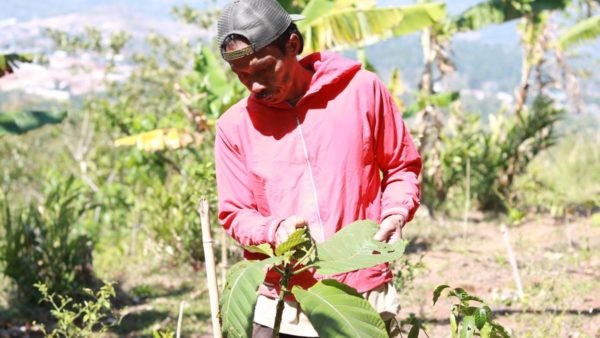
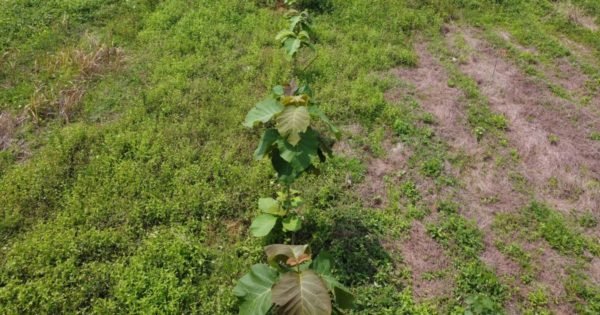
Agus is taking care of burflower trees he planted, ensuring they grow healthy.

Tree Growers

Greener Future with Tree Planting Support 

In 2022, new hope arrived for the green initiatives taken by farmers in Nagrog Village. EcoMatcher, in collaboration with Trees4Trees introduced a tree planting program that engaged local farmers as tree grower partners. Among the participants were Faizal, Agus, and Yaya, who benefited from the program.  

“I received over 400 tree seedlings of clove and burflowers trees. This really helped me since I can’t afford them on my own,” said Yaya. He considered cloves to enhance the existing trees he planted, and burflowers to provide shade for his sun-scorched land.  
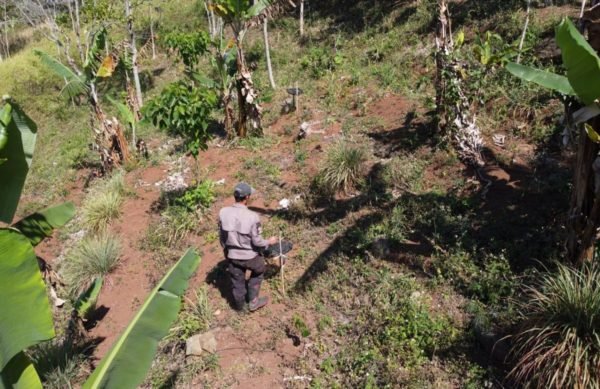
Eco-Friendly Farming
Yaya is working on his land, where he implemented agroforestry by combining crops and trees.

Faisal highlighted how the program supports farmers in multiple ways, not only providing free seedlings but also advanced farming knowledge. It includes teaching farmers with agroforestry technique to optimize results both income and environmental health.  

“We planted burflower trees to provide shade for our crops. Citronella grasses were planted on sloped lands to prevent erosion, and clove trees were added to our existing stock, offering valuable buds in six years while benefiting the environment. We’re truly grateful for this program,” Faisal said. 

Cultivating Hope for the Future  

With increased tree cover supporting their green initiatives, farmers are now exploring further innovations. “Clove trees offer benefits beyond the buds; their leaves can be used for essential oil production. We’re also looking into enhancing income from citronella grasses by producing essential oils ourselves, because the demand is high, and the market is competitive,” said Faisal. 

However, a lack of production machinery and knowledge remains a challenge for them. Despite this, they remain hopeful about realizing their dream. “With more trees planted, we believe doors open to further improvements in our sustainable farming practices,” added Faisal. 

In line with Faisal, Agus expressed his commitment to working with fellow farmers in his village to implement environmentally friendly farming practices. “I’m no longer interested in logging trees for timber. By preserving trees, we protect the environment and safeguard our village’s water sources for our community’s lasting survival. I think that is the most important thing,” he said. 

Writer: V. Arnila Wulandani. Photo: Kemas Duga Muis

Amplifying the Reforestation Message with Tantri and Arda: Trees4Trees’ Green Ambassadors

Tantri Arda

Tantri Arda

Trees4Trees has taken a new step in broadening its reforestation message by partnering with Tantri Syalindri, lead vocalist of the renowned Indonesian rock band Kotak, and her husband Arda Hatna Danarda, an Indonesian pop singer as green ambassadors. This collaboration aligns with the shared mission of Trees4Trees and Tantri and Arda to promote environmental preservation efforts in Indonesia. 

Through this collaboration, the spirit of protecting the environment and Indonesia’s natural resources is expected to reach a wider audience, particularly the younger generation.  

Creating Environmental Protection Songs and Raising Awareness Among Fans 

As musicians, they have incorporated environmental messages into their songs and performances. In 2015, Tantri and her band, Kotak, released a song titled “Jagalah Bumi” (Protect the Earth) as the soundtrack for a children’s series. Two years later, she collaborated with her bandmate, Chua, the bassist, to create another environmental song in a strong rock style, titled “Hijaukan Bumi” (Green the Earth). 

Due to the environmental messages conveyed in their songs, they gained opportunities to be involved in several environmental preservation projects. One involvement was in a tree-planting program to green the roadsides of tollways, initiated by one of Indonesia’s state-owned companies.  

Arda, on the other hand, spreads awareness about environmental preservation in his own way. “As musicians, we spread environmental messages through our work. The simplest way I contribute is by actively reminding the audience not to litter and leave garbage at the concert venue,” Arda explained. 

Tantri Arda
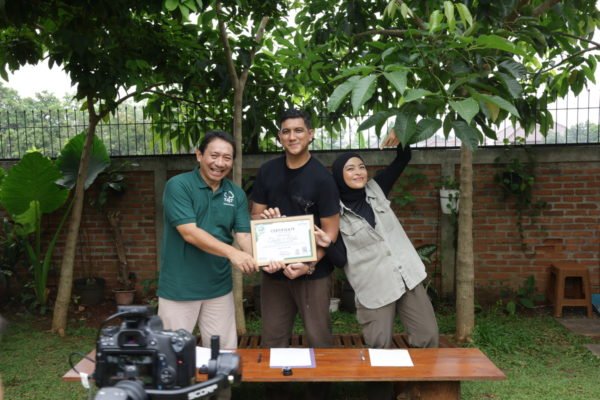
Arda and Tantri received a tree-planting E-certificate from Trees4Trees Program Manager, which they can track tree’s location through unique code called World Identification Number (WIN)

Applying Green Action on Their Wedding and Daily Life  

Planting trees has always been part of Arda’s life. His mother, who comes from a mountainous region, was familiar with planting and passed this habit to her children. “I’ve been planting trees since I was a kid because my mom taught me how. It became a regular part of our lives,” said Arda. When he married Tantri ten years ago, the couple decided to give tree seedlings to their guests as wedding souvenirs, reflecting their care for the environment and nature. 

“Now, ten years later, some of our friends still send us pictures of how tall the trees have grown. It’s incredible to see the growth of something we gave them as a small seedling, and now they are thriving. I’m also grateful that from the little seedlings we gave, then spreading to our friends and acquittance’s home, then creating great impacts by providing the oxygen and shade,” Tantri shared. 

Now, their green habits have been introduced to their children. They not only plant various types of trees and plants around their home, but also teach their kids how to do the same. “I believe it’s human nature to enjoy greenery and feel at ease surrounded by plants and trees, connecting with nature. A green environment brings tranquility, and many ideas are born from that kind of space,” said Arda. 

Tantri Arda
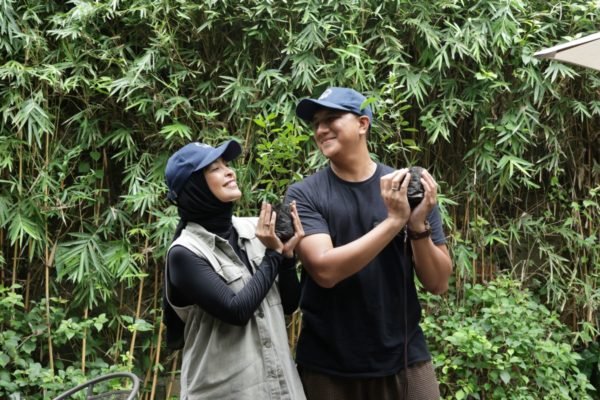
Arda and Tantri introduced a symbolic gesture—a half-closed hand, representing that planting trees is also planting hope for a better future.

Voice Out: Planting Trees for Hopes  

In partnership with Trees4Trees, they committed to promoting the message and spirit of reforestation. Over the next three years, they will collaborate with Trees4Trees on digital campaigns to inspire more people to protect their environment, helping the Earth thrive. Arda introduced a symbolic gesture that will align with this partnership campaign—a half-closed hand, reminiscent of a prayer—representing the idea that planting trees is also planting hope for a better future through a healthier planet.  

This partnership aims to make a lasting impact by raising awareness and encouraging sustainable practices toward Indonesia’s audience. “We have experienced climate change effects, like extreme heat or heavy rain that leads to flooding. I think witnessing these conditions should prompt us to evaluate ourselves. What have we done to preserve and care for our Earth?” said Tantri. 

She also emphasizes that simple actions, like planting trees around our homes, can make a difference. “Planting trees is one of the simplest ways to show our care for the Earth. We can start with our surroundings. But if you don’t have space, you can plant with Trees4Trees. There are plenty of areas out there where we can contribute to reforestation. So, I invite you to help green the Earth for a better life,” Tantri encouraged. 

Writer: V. Arnila Wulandani. Photos: Yulianisa Dessenita 

Growing Green: Microsoft’s Continued Urban Forestry Initiative

Microsoft tree-planting

Microsoft Tree Planting event

(Microsoft; Growing Green) It was only 8 AM, but already hot as an oven in the GIIC industrial area in Bekasi, just east of Jakarta. Sweltering days are par for the course around here, in one of West Java’s largest and busiest industrial centers, where buildings and factories are scattered all around, and trees are hard to come by.  

But all that is beginning to change. Microsoft Operations Indonesia has teamed up with Trees4Trees and One Tree Planted to launch a tree planting program that will bring shade to the industrial estate and a range of benefits to the surrounding landscape and communities.  

CSR Tree Planting event
(Above) Seedlings planted in 2022 have taken root and are beginning to grow (Photo: Kemas Duga Muis/Trees4Trees)

Balancing development with environment 

This program kicked off in 2022 – 2023, when 22,800 trees were planted. Following the success of that pilot project, 19,000 more trees are being planted in 2024.  

“Together with Microsoft, our goal is to enhance the greenery and create a healthier environment in industrial areas,” explains Pandu Budi Wahono, Trees4Trees’ Program Manager.  

Trees chosen for the program include gmelina and rain trees, which can provide some much-needed shade. Other, multipurpose trees like petai, durian, and jackfruit have also been chosen, as they can provide fruit and other resources for the local community. 

 tree-planting event

Read also: Regreening Jakarta’s Concrete Jungle through Urban Forest

Regreening the urban jungle 

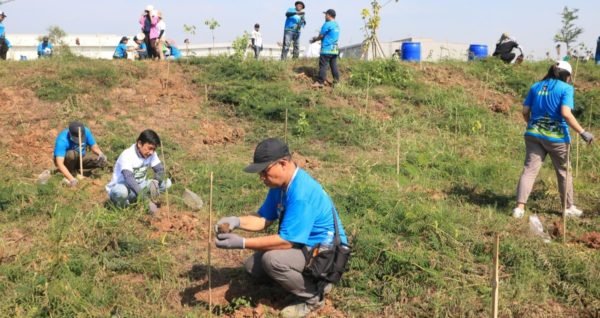
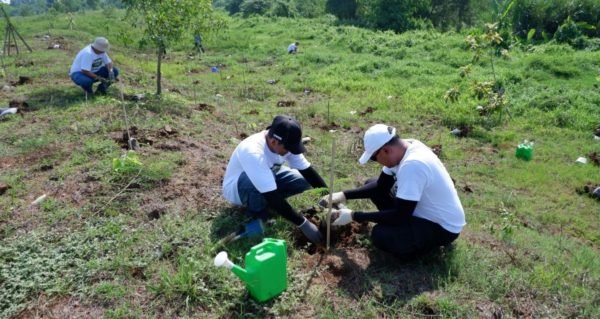
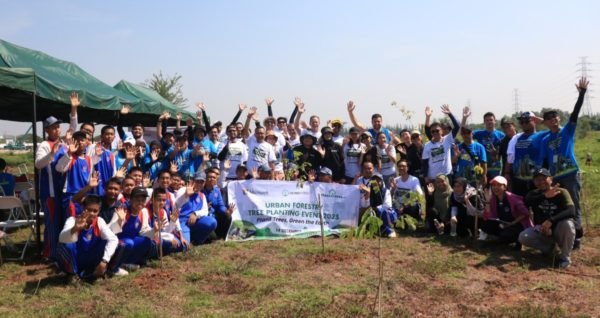
In December 2023, 500 new trees were planted in GIIC by a team of volunteers made up of Microsoft staff, partners, and clients marking the starting of the tree-planting initiative. 

Microsoft Tree-planting
(Above and below) Volunteers from Microsoft plant trees under the hot sun in Bekasi (Photo: Trees4Trees/V. Arnila Wulandani)

photo session with microsoft team

“This tree planting event serves as a reminder for those of us, who work in the technology field, about the significance of environmental protection,” said Elizabeth Simatupang, who is the Data Center Operations Manager at Microsoft Operation Indonesia.  

She also revealed that volunteering had made her more aware of the many benefits trees can offer. “I hope the trees we’ve planted will produce more oxygen and be beneficial to the environment, aligning with our motto: Technology should not cost the Earth,” she added. 

Gavin Hodge is DCD Project Manager at Microsoft Operations Indonesia. This was his second time volunteering with Trees4Trees, and he felt energized to see so many people working to support the environment. 

“It is great to see so many people get involved,” said Gavin, referring to the various Microsoft partners and team members onboard with the project. “I hope big trees will stay here for a long time and remove carbon dioxide, making it a better place to live,” he added.  

Microsoft team
(Above) Gavin Hodge during the tree planting event (Photo: Trees4Trees/V. Arnila Wulandani)

A watershed moment for urban replanting 

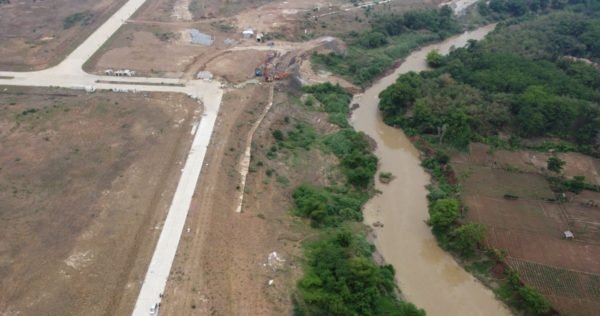
Although the program  focuses on creating an urban forest, improving degraded land and providing tree cover, its goals go even further. The industrial areas are located downstream of the Citarum river, specifically alongside the Cipamingkis and Cikalapa rivers., The program aims to restore the watershed and return forest cover to the region, addressing a range of complex challenges triggered by developmental pressures. 

Microsoft tree-planting
(Above) An aerial view of the Cipamingkis River (Photo: Trees4Trees/Kemas Duga Muis)

Amung is a local farmer and one of the project partners, who helps out by growing trees for the planting activities. In recent times, he’s seen the dangers of deforestation and land degradation firsthand: “Recently, when the river burst its banks and flowed into my field, many of my plants were lost.” He blames excessive upstream development for the flood, noting that severe river siltation left the rainwater with nowhere else to go. 

The benefits of Microsoft’s extended planting program spread beyond the industrial estate and into the surrounding landscape, impacting lives and livelihoods in unexpected ways. In addition to providing shade and restoring the watershed, planting trees here can help prevent flooding and protect local farmers from potential ruin. Technology shouldn’t cost the Earth. Thanks to the latest initiatives by Microsoft and partners, development is headed in a more positive direction.  

Watch the video: Urban Forestry Tree-planting with Microsoft

Writer: V. Arnila Wulandani. Editor: Christopher Alexander

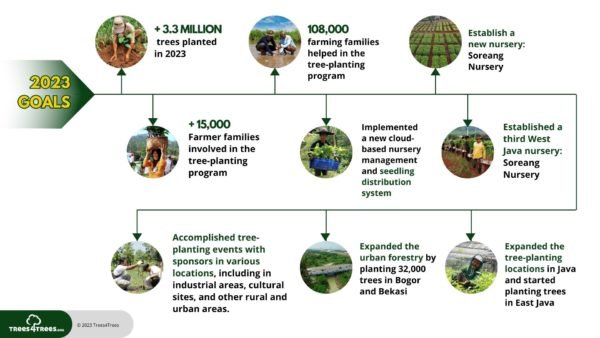
Trees4Trees 2023 Green Journey

Reforestation_urban forest_trees4trees

Green Journey; Reforestation_urban forest_trees4trees

Green Journey; The year 2023 is coming to an end, and a new year is on the horizon! Despite facing challenges such as a prolonged dry season and the impact of the El Nino phenomenon, Trees4Trees remains steadfast in its mission to green the environment. It includes supporting areas affected by drought and water scarcity through tree planting.  

The Trees4Trees planting season is currently in progress and is scheduled to continue until early 2024, leading to the planting of more trees. This initiative is expected to generate larger impacts on the environment, social aspects, and the economy.  

Therefore, we express our gratitude to the individuals, companies, and organizations that have supported our green mission throughout the year. Your remarkable support as sponsors and donors has enabled us to achieve new milestones in 2023, and we are eager to share them with you. 

TREES4TREES 2023 REFORESTATION JOURNEY 


Green journey; reforestation goals_trees4trees

Looking ahead to 2024, we are steadfast in our commitment to expanding tree planting efforts. This involves over 20,000 farmers in 231 villages across various regions in Indonesia. You, your organization, or company can actively contribute by becoming sponsors and donating trees to support this cause. For more details, please reach out to us at info@trees4trees.treesforplant.com. 

 As the new year approaches, it provides a timely opportunity to adopt green resolutions and resetting habits that promote a sustainable lifestyle. Through these changes, we collectively contribute to the well-being of our planet and secure a better future. Additionally, consider gifting trees as a meaningful and eco-friendly New Year’s present. 

 GIFT TREES

Wishing you a joyful New Year! Continue making a positive impact on Earth by participating in Trees4Trees tree planting initiatives.  


A Breath of Fresh Air: Tackling Air Pollution in Jakarta

Planting Trees to Combat Jakarta Pollution
Planting Trees to Combat Jakarta Air Pollution
Photo: jakarta.go.id

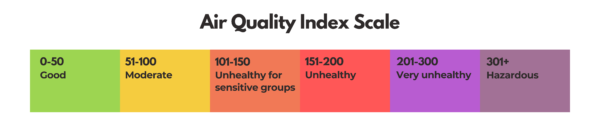
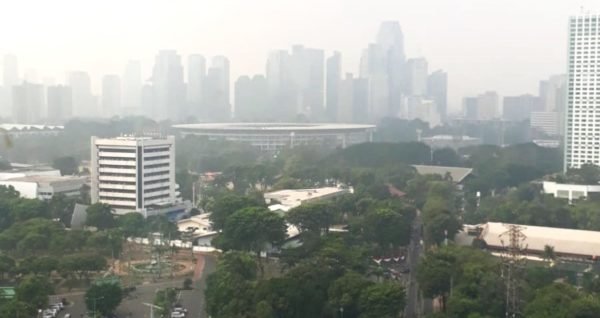
In recent months, Jakarta, has been choking in air pollution. Since May, Indonesia’s capital has regularly been ranked in the global top 10 of polluted cities – on Monday morning (9/25), it was ranked second worst in the world after registering an Air Quality Index (AQI) score of 153.  

But Jakarta isn’t the only Indonesian city grappling with air pollution. Palembang, Indralaya, Depok, Tangerang, and Medan have all gone into the red on the AQI recently, with readings above 160. For city dwellers, this has potentially life-threatening consequences – air pollution causes diseases like bronchitis, chronic obstructive pulmonary disease, asthma, pneumonia, and cancer. 

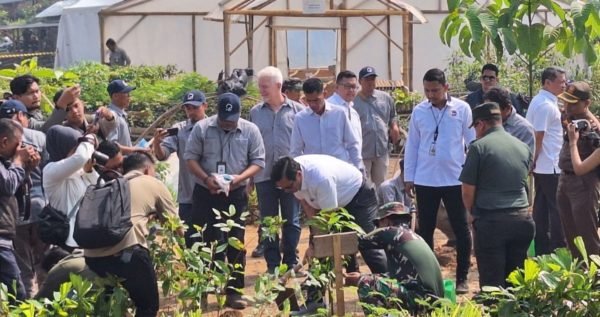
Faced by a health crisis and an environmental disaster, Indonesia is working to find solutions. During a recent visit to Trees4Trees’ Ciminyak nursery, government minister Luhut Binsar Pandjaitan made his commitment clear. “We need collective efforts to fight air pollution,” said the minister. “Planting trees is one of the effective solutions to sequester carbon emissions, combat air pollution, and mitigate global warming,” he added.  

Planting trees to combat jakarta pollution
(above) Minister Luhut Binsar Pandjaitan inspected trees at Ciminyak Nursery during the visit to the Citarum River Revitalization Project.
Planting Trees to Combat Jakarta Air Pollution
(Above) The air pollution index helps visualize and communicate the dangers of air pollution to the public

Read also: Regreening Concrete Jungle Through Urban Forest

Causes of air pollution 

There are three major causes of air pollution in Jakarta, all of which can be connected to human activities: transportation, industrial areas and plantations, and power plants burning fossil fuels.

Planting Trees to Combat Jakarta Pollution
(Above) Jakarta air pollution in the morning. Photo: Trees4Trees/V. Arnila Wulandani

Impacts on human health  

According to the monitoring app IQAir, Jakarta currently has a Particulate Matter (PM) 2.5 pollutant concentration 13.5 times higher than the WHO’s guideline value.  

PM 2.5 refers to particles found in the air, including dust, soot, dirt, smoke, and liquid droplets that measure 2.5 microns or less in diameter. This high concentration of air pollution impacts health in a number of ways. 

Planting Trees to Combat Jakarta Pollution
(Above) City dwellers take protective measures. Source: Freepik/jcomp

Staying safe in the smog: Our top five tips  

If you live in a big city, or even if you’re just visiting, it’s important to protect yourself from air pollution. Here’s our top five tips for reducing the harmful impacts of air pollution on human health: 

  1. Wear a mask. An N95 mask can reduce – but not completely eradicate – the pollutants inhaled into the body when traveling in heavily congested areas with poor air quality. 
  2. Use an air purifier. Installing an air purifier in your home can help filter out harmful particles from the air. 
  3. Regularly check air pollution forecasts. This can help you plan your outdoor activities more wisely.
  4. Avoid outdoor exercise during pollution spikes. Poor air quality can make exercise unsafe. When smog levels rise, it’s best to keep the workout indoors.
  5. Close windows and doors. When the AQI goes above 150, keep your doors and windows closed.  
Planting trees to combat jakarta air pollution
(Above) Trees reduce pollution and improve air quality

Air pollution solutions: Getting to the root of the problem 

All the above measures can do is help us live with the symptoms. To figure out how to reduce air pollution, we must think bigger. Human activities are the cause of air pollution, but they can also be the remedy. Here are five ways to clean our atmosphere, for the good of the planet: 

  1. Leave the car at home: Use public transport, or – even better – try cycling or walking to work;
  2. Reduce idling: If you do commute by car, turn off your engine in those city traffic jams;
  3. Vehicle maintenance: Regularly maintain your vehicle, keep tires properly inflated, and ensure your car complies with emissions standards; 
  4. Responsible waste disposal: Compost leaves and yard waste; avoid burning garbage; and 
  5. Clean energy: Think about using gas instead of a wood stove. 

There is another way to combat air pollution; a strategy that can mitigate dangers to human health, while also contributing to a cleaner, greener environment. And that solution is simple: Planting trees.  

Read also: Trees That Absorb The Most Carbon Dioxide 

Trees suck harmful greenhouse gases from the atmosphere and sequester carbon in their roots and branches. They also produce life-giving oxygen, which helps clean our atmosphere and make the air safe to breathe. Recent studies have even discovered that cities with urban forests are noticeably cooler than those without1. 

 Trees4Trees is taking action to cool and clean our cities, for the benefit of people and planet. And you can join us in these effortsdonating trees is good for the environment, good for human health, and good news for local farmers! It’s a win-win situation.  

Writer: V. Arnila Wulandani. Editor: Christopher Alexander

Kalirejo Art and Cultural Festival: Giving Thanks to Nature

Parade Festival Budaya Kalirejo_Trees4Trees
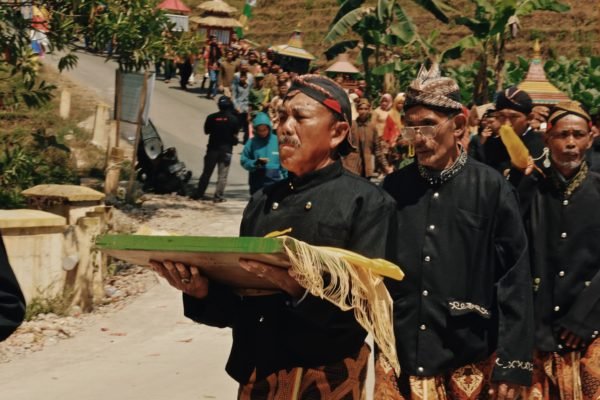
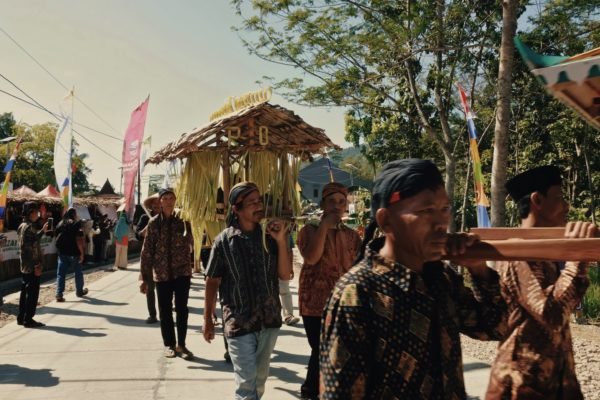
Kalirejo Art and Cultural Festival Parade. Photo: Trees4Trees/Yulianisa Dessenita

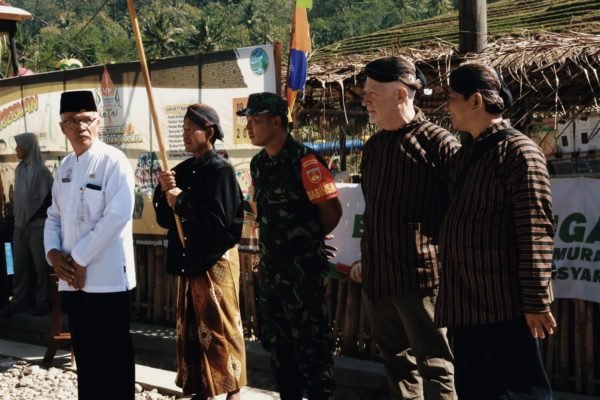
The fertile, volcanic soils of Central Java provide food and livelihoods for the many people who live off the land. In return, these communities give their thanks to nature with offerings and elaborate celebrations. One of these festivals was held recently in a Trees4Trees operation area – Kalirejo Village in Kebumen.  

From August 9–11, the Kalirejo Art and Cultural Festival combined cultural traditions with religious ceremonies, in a show that proudly affirmed the community’s identity. The celebrations included performances of traditional dance, a cultural parade, games, and a shared feast.  

Trees4Trees join the celebrations at Kalirejo Art and Cultural Festival
(Above) Trees4Trees join the celebrations at Kalirejo Art and Cultural Festival

Connection to land and ancestors 

The event showcased a series of performances, including the cepetan and ebeg. Passed down through the generations, these traditional dances have a mystic quality, and connect the dancers to the spirits of their ancestors. 

The festival also featured a performance of the wayang kulit (a traditional Javanese shadow puppet show) as part of the ruwat bumi – a traditional ceremony that aims to secure the peace, security, and prosperity of the village.  

Cepetan dance performed at Kalirejo Art and Cultural Festival_Trees4Trees
(Above) Cepetan dancers wear devil masks to scare evil spirits away from the village. (Below) The ebeg dance features horse-like effigies made from woven bamboo. It symbolizes the bravery of soldiers going to war.

Ebeg dance performed at Kalirejo Art and Cultural Festival_Trees4Trees

Keeping tradition alive  

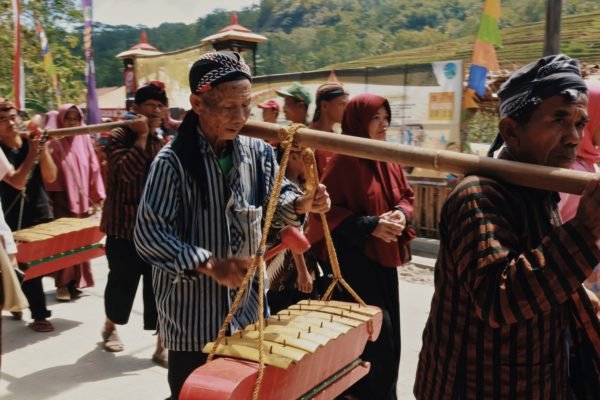
The celebrations came to a climax with a colorful parade, in which the whole community came together to watch or take part. Villagers proudly carried their produce from the fields, which included corn, rice, fruits, vegetables, and tubers. Accompanying the parade were dancers and musicians, who helped create a carnival atmosphere. 

 Villagers carry their produce during the parade
(Above) Villagers carry their produce during the parade.  (Below) A convoy of musicians and dancers help create a carnival atmosphere.

 (Below) A convoy of musicians and dancers help create a carnival atmosphere

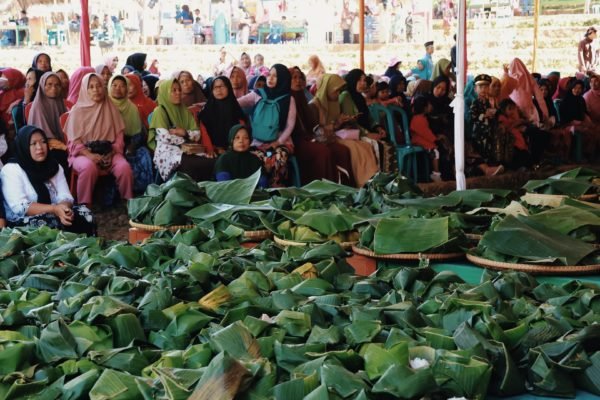
Next came the kenduri giling pitu feast, which involves villagers placing rice and vegetables wrapped in banana leaves onto woven trays. After offering prayers and giving thanks for the bountiful harvest, the food is distributed to all in attendance at the festival.  

According to Ella, a local Trees4Trees Field Coordinator who was born and raised in Kebumen, “the prayers and the distribution of food symbolize the villagers’ gratitude to both God and nature.” 

The kenduri giling pitu feast at Kalirejo Art and Cultural Festival

The traditions of art, music, dance, and traditional ceremonies highlighted by the Kalirejo Art and Cultural Festival dates back centuries. However, some of the village elders are concerned that, unless the younger generation keep them alive, these pastimes may soon fade away. 

“The festival is a way to preserve our ancestral culture, ensuring it stands the passage of time,” says Maratun Chasanah, a Trees4Trees Field Coordinator and a local youth from Kebumen. “This way, the young generation can gain a deeper understanding of their own traditions and arts,” she added. 

A cup of Java: Growing the local economy 

Cultural preservation was not the only aim of the festival. The community also set up a bazaar where villagers could sell their products, which included traditional foods made from crops like cassava and corn, handmade crafts from woven bamboo, fresh fruit and vegetables, and the village’s new up-and-coming commodity: Coffee.  

Together with Tree Ltd, Trees4Trees has been helping local communities in Kalirejo plant coffee trees since 2019. And these activities are already delivering positive results. 

“We harvested approximately one ton of coffee from the trees provided by Trees4Trees and Tree Ltd,” says Sarman, the Head of Kalirejo Village. “This valuable commodity has significantly supported our community, and we eagerly anticipate the continuation of this collaboration,” he added.  

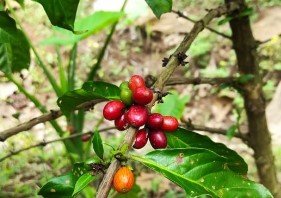
Ripe coffee cherries add color to the fields in Kalirejo
(Above) Ripe coffee cherries add color to the fields in Kalirejo

Read also:

Rasito, Optimizing His Land with Coffee Trees

The Story of Wasis, How a Tree Grower is Making a Difference in Water Conservation 

Planting the seeds of new traditions 

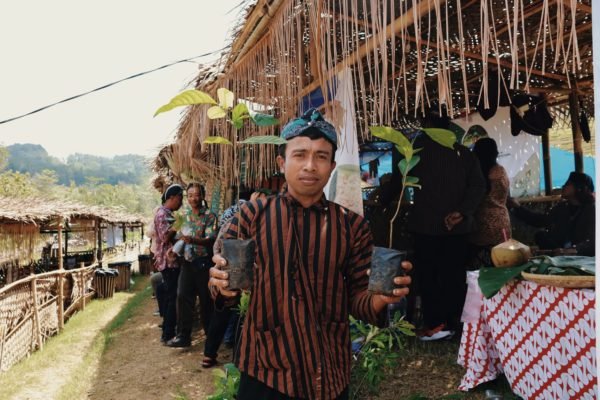
During the festival, Trees4Trees distributed seedlings and organic fertilizer, to support reforestation and promote the adoption of organic farming in Kalirejo. A total of 1,000 trees were distributed to festival attendees,. including suren, duku, gayam, clove, and coffee. 

“Suren leaves can be used as biopesticides, coffee offers a stable income from its berries, and Gayam trees assist in soil and water conservation,” explains Rizky Pradhitya, Trees4Trees’ Unit Manager in Kebumen. 

“We believe that by providing these seedlings we can showcase the trees’ potential to the community – our aim is to help them improve their environment and promote organic agriculture, while also boosting productivity, so everybody wins.”  

Two of the 1,000 seedlings distributed to Kalirejo by Trees4Trees and Trees Ltd

Writer: V. Arnila Wulandani. Editor: Christopher Alexander