Activity Highlights: Distributing Seedlings for Citarum River Restoration

Distributing seedlings for planting community forests may seem like a simple task. After all, it’s just handing out some seedlings to some farmers, right?  

However, a closer look reveals the complexity and scale of this operation. During the 2023–2024 planting season, the Trees4Trees West Java field team distributed approximately 4.1 million seedlings of 14 different tree species to 18,800 farmers. Each of them could choose up to five different tree species. This seedlings’ distribution is part of our effort to restore areas in the Citarum Watershed, encompassing five sub-watersheds: Cisangkuy, Ciwidey, Cirasea, Ciminyak, and Citarik.

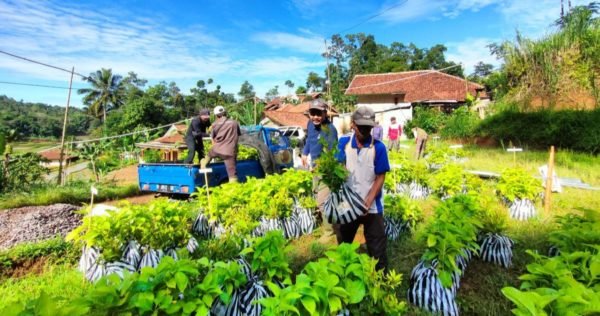
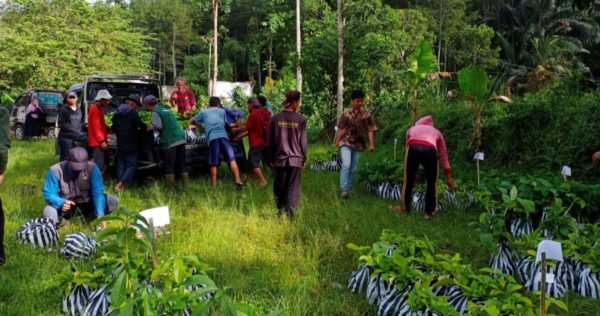
Timber trees were packed 10 to a bag, while fruit trees were packed 8 to a bag. Due to the challenging terrain, with very narrow and steep roads, small pickup trucks were used for delivery. Each truck carried a maximum of 1,500 seedlings to avoid overcrowding and damaging the seedlings.

Adding all this up means there were around 415,000 bags of seedlings individually packed per farmer order and delivered to 176 villages with more than 20,395 planting locations inside a two-month period.

So, on a daily average, 73,000 seedlings were packed into 9,240 bags, each with a unique order quantity and loaded and shipped to the distribution points in 50 trucks. That’s a lot of green for a greener future!

Now, let’s appreciate the hard work and dedication of our field team as they have already completed delivering seedlings to our tree growers around the Citarum Watershed.

Distribution Process

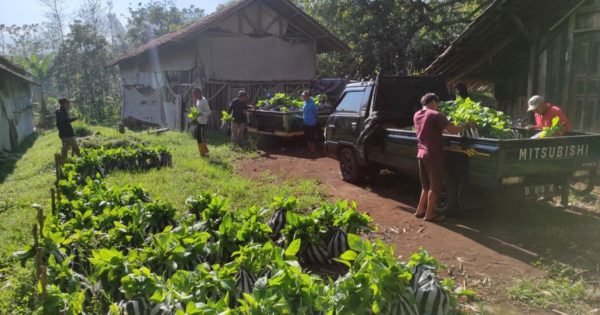
The tree seedlings were placed at the closest meeting point so that it will be easier for residents to pick them up to their lands. (Above) Our field team facilitated the distribution to Sukawening Village in the Ciwidey Sub-watershed. (Below) Our field team managed the distribution to Mekarjaya Village in the Cisangkuy Sub-watershed. 

Tree seedling

Activity hightlights; farmers

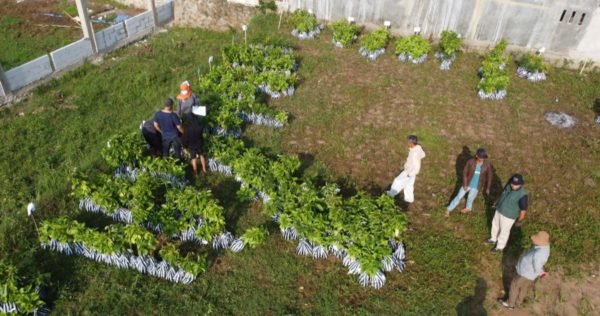
As the tree seedlings arrived at the meeting points, our team, along with the local community, unloaded the trees and grouped them according to each dedicated tree grower who would receive them. Our field teams in Cibenda Village (above) and Pacet Village (below) organized the trees to make distribution easier for each tree grower. 
tree seedling

farmer and tree seedling

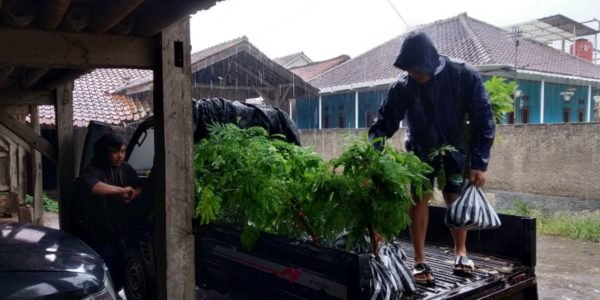
Even though heavy rain fell on the distribution day, our team remained committed to distributing tree seedlings to our tree grower partners in each village. Our team delivered seedlings in Sukawening Village (above) and Neglasari Village (below) in the middle of rainy day. 

distribution process

Activity hightlights; Trees4Trees field team distributed approximately 4.1 million seedlings to 18,800 farmers aiming

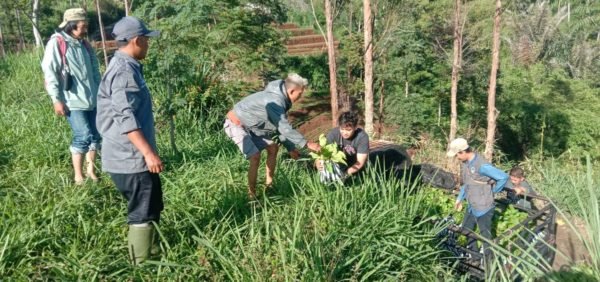
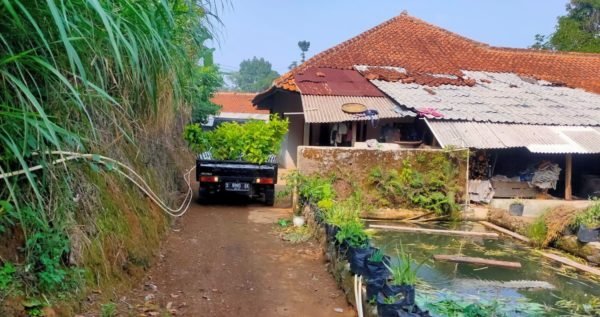
Distributing tree seedlings was sometimes challenging. Our team had to navigate steep and difficult-to-access terrain to reach some villages. In the Cirasea 3 site (above) our team worked hand in hand with the local community to place tree seedlings in locations inaccessible to trucks. (Below) the pickup truck passed through a very narrow road in Loa Village, part of Cirasea 1 site. 
car and tree seedling

The tree-seedlings were all dropped and organized in a meeting point. They are ready to be picked up by the dedicated tree growers. 
Activity hightlights; Trees4Trees field team distributed approximately 4.1 million seedlings to 18,800 farmers aiming

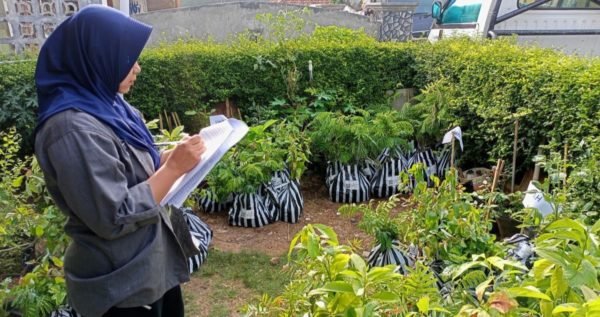
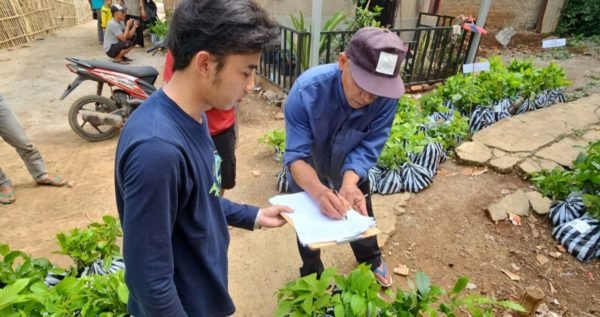
(Above) Before delivering to local farmers, our field team meticulously checks all seedlings, including the total trees, types, and the dedicated tree growers who are supposed to receive them. (Below) Our field team ensured that our tree growers received the correct seedlings according to their requests as in the initial stage before handing the seedlings to them. 
Trees4Trees field team distributed approximately 4.1 million seedlings to 18,800 farmers aiming

Distribution process

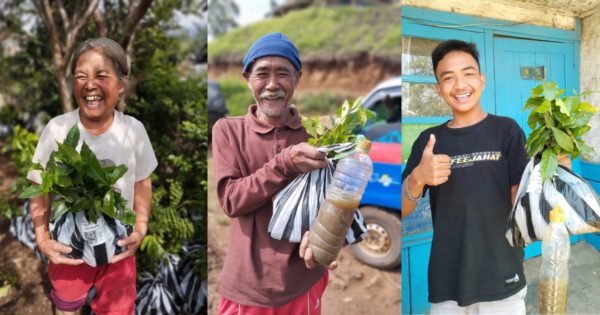
Following the arrival of the tree seedlings in a village around the Ciminyak sub-watershed, local communities enthusiastically welcomed them. They can’t wait to receive the tree seedlings they have been eagerly anticipating. 
Activity hightlights; distribution process

The smiles of the local people are invaluable as they receive trees and organic fertilizers from our team. We are grateful to have an opportunity to support them and see the joy on the faces of our tree grower partners in the Cirasea 3 site! 

Activity hightlights; Distribution process

We were delighted to witness schoolchildren actively assisting their parents in transporting the tree seedlings back home in Weninggalih Village. 
Farmers and tree seedling

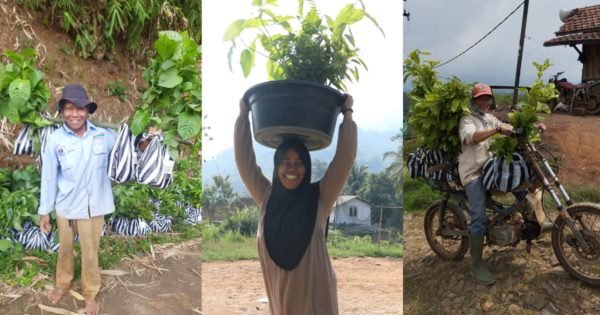
Experiencing our tree growers bringing their trees home was truly thrilling. They transported the trees from the meeting points in a variety of methods, such as carrying them on their backs with bamboo sticks or traditional baskets, placing them on carts, or utilizing off-road motorcycles. Shortly thereafter, they will proceed to plant these trees in their fields in the Citarum watershed surrounding. 

Read also: Nursery Highlight: Tree Seedling Distribution in West Java


Growing Green: Microsoft’s Continued Urban Forestry Initiative

Microsoft tree-planting

Microsoft Tree Planting event

(Microsoft; Growing Green) It was only 8 AM, but already hot as an oven in the GIIC industrial area in Bekasi, just east of Jakarta. Sweltering days are par for the course around here, in one of West Java’s largest and busiest industrial centers, where buildings and factories are scattered all around, and trees are hard to come by.  

But all that is beginning to change. Microsoft Operations Indonesia has teamed up with Trees4Trees and One Tree Planted to launch a tree planting program that will bring shade to the industrial estate and a range of benefits to the surrounding landscape and communities.  

CSR Tree Planting event
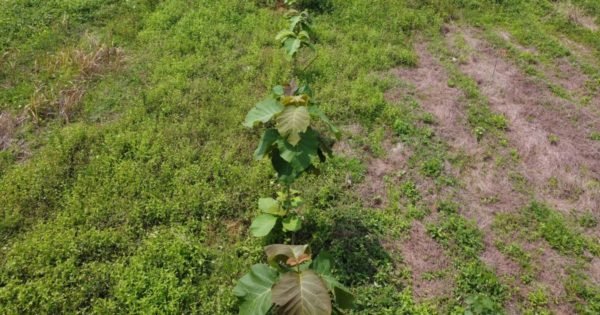
(Above) Seedlings planted in 2022 have taken root and are beginning to grow (Photo: Kemas Duga Muis/Trees4Trees)

Balancing development with environment 

This program kicked off in 2022 – 2023, when 22,800 trees were planted. Following the success of that pilot project, 19,000 more trees are being planted in 2024.  

“Together with Microsoft, our goal is to enhance the greenery and create a healthier environment in industrial areas,” explains Pandu Budi Wahono, Trees4Trees’ Program Manager.  

Trees chosen for the program include gmelina and rain trees, which can provide some much-needed shade. Other, multipurpose trees like petai, durian, and jackfruit have also been chosen, as they can provide fruit and other resources for the local community. 

 tree-planting event

Read also: Regreening Jakarta’s Concrete Jungle through Urban Forest

Regreening the urban jungle 

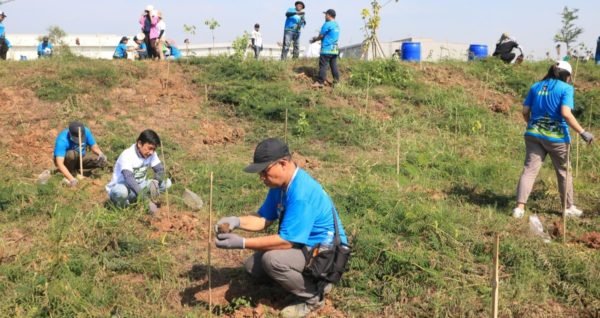
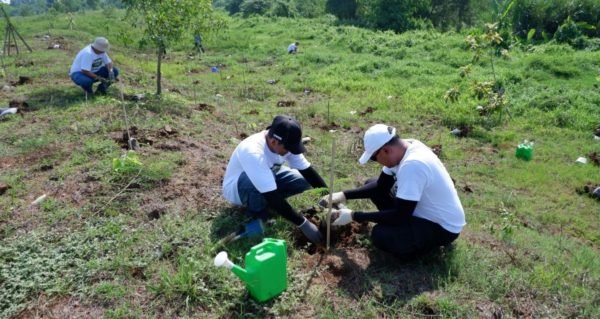
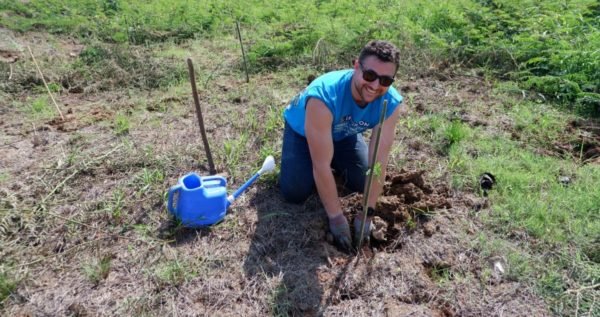
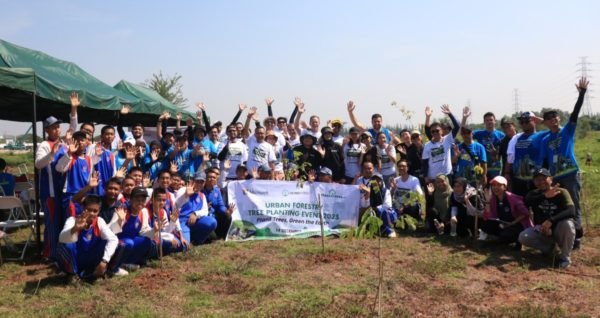
In December 2023, 500 new trees were planted in GIIC by a team of volunteers made up of Microsoft staff, partners, and clients marking the starting of the tree-planting initiative. 

Microsoft Tree-planting
(Above and below) Volunteers from Microsoft plant trees under the hot sun in Bekasi (Photo: Trees4Trees/V. Arnila Wulandani)

photo session with microsoft team

“This tree planting event serves as a reminder for those of us, who work in the technology field, about the significance of environmental protection,” said Elizabeth Simatupang, who is the Data Center Operations Manager at Microsoft Operation Indonesia.  

She also revealed that volunteering had made her more aware of the many benefits trees can offer. “I hope the trees we’ve planted will produce more oxygen and be beneficial to the environment, aligning with our motto: Technology should not cost the Earth,” she added. 

Gavin Hodge is DCD Project Manager at Microsoft Operations Indonesia. This was his second time volunteering with Trees4Trees, and he felt energized to see so many people working to support the environment. 

“It is great to see so many people get involved,” said Gavin, referring to the various Microsoft partners and team members onboard with the project. “I hope big trees will stay here for a long time and remove carbon dioxide, making it a better place to live,” he added.  

Microsoft team
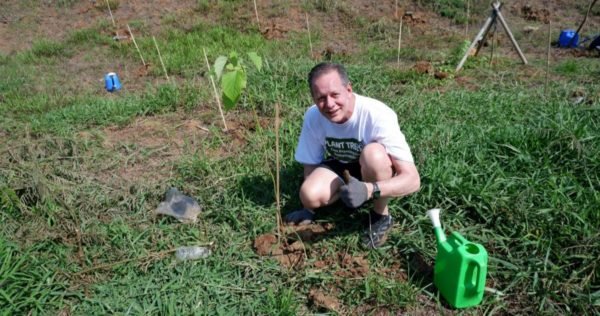
(Above) Gavin Hodge during the tree planting event (Photo: Trees4Trees/V. Arnila Wulandani)

A watershed moment for urban replanting 

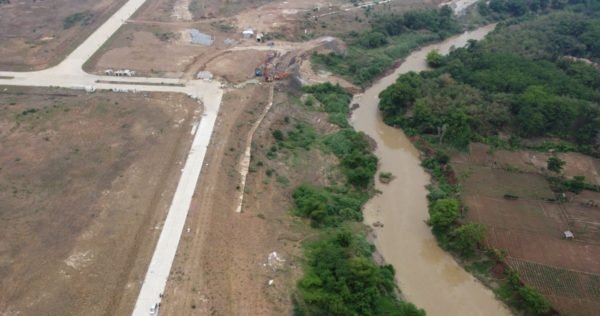
Although the program  focuses on creating an urban forest, improving degraded land and providing tree cover, its goals go even further. The industrial areas are located downstream of the Citarum river, specifically alongside the Cipamingkis and Cikalapa rivers., The program aims to restore the watershed and return forest cover to the region, addressing a range of complex challenges triggered by developmental pressures. 

Microsoft tree-planting
(Above) An aerial view of the Cipamingkis River (Photo: Trees4Trees/Kemas Duga Muis)

Amung is a local farmer and one of the project partners, who helps out by growing trees for the planting activities. In recent times, he’s seen the dangers of deforestation and land degradation firsthand: “Recently, when the river burst its banks and flowed into my field, many of my plants were lost.” He blames excessive upstream development for the flood, noting that severe river siltation left the rainwater with nowhere else to go. 

The benefits of Microsoft’s extended planting program spread beyond the industrial estate and into the surrounding landscape, impacting lives and livelihoods in unexpected ways. In addition to providing shade and restoring the watershed, planting trees here can help prevent flooding and protect local farmers from potential ruin. Technology shouldn’t cost the Earth. Thanks to the latest initiatives by Microsoft and partners, development is headed in a more positive direction.  

Watch the video: Urban Forestry Tree-planting with Microsoft

Writer: V. Arnila Wulandani. Editor: Christopher Alexander

Ayi: Preserving Water Sources Through Tree Planting

Ayi, a tree grower from Drawati Village Bandung_Trees4Trees
Preserving Water Sources Through Tree Planting
Ayi, a tree grower from Drawati Village Bandung_Trees4Trees

Drawati Village, nestled in Paseh District, Bandung Regency. This hillside community rests close to an upstream river—a tributary of the Citarum river watershed. As a result, vital springs dot the area, serving as crucial water sources for the local populace’s daily needs. 

Given the significance of the existing springs, safeguarding the surrounding environment becomes imperative. The preservation of water sources requires rehabilitation and reforestation efforts. To this end, the Drawati village government has been actively promoting reforestation activities among its residents through socialization and various programs. 

Trees4Trees Tree-Planting Program Contributes the Water Spring Conservation 

When the Trees4Trees team introduced a tree planting program funded by AstraZeneca in collaboration with Trees4Trees and One Tree Planted, both the village government and the villagers responded positively. This initiative aligned well with the village’s mission to advance reforestation efforts. 

Later, the tree planting program gained the participation of farmer groups in the village, composed of individuals dedicated to reforestation endeavors. Among these farmers, Ayi emerged as the best farmer of Drawati village due to his unwavering commitment to tree planting and reforestation. Ayi’s accomplishments are a testament to his long-standing dedication to his environment. 

Prior to joining this tree planting initiative, Ayi was actively engaged in reforestation activities alongside fellow villagers. He pointed out that accessing clean water in his village has become increasingly challenging, despite its proximity to the river’s source. This challenge fueled his determination to revitalize the village’s surroundings, ensuring a more abundant flow of water. He also aspires to enhance underutilized lands through increased tree planting. 

Ayi, a tree grower from Drawati Village Bandung is taking care of his trees_Trees4Trees

Planting Trees to Rejuvenate the Environment and Anticipate the Fruitful Yield 

“I plant trees for a better life and a brighter future for this village, not just for myself and my family, but for the entire community. Most importantly, it’s about nurturing a healthy environment around the village” Ayi said.  

He also revealed that many lands around his village are suffering and have been faced a shortage of clean water. This drives his motivation to plant more trees, hoping to rejuvenate our surroundings and ensure the abundant flow of water.  

“Water is a fundamental necessity for human life, making this endeavor worth every effort,” Ayi expressed. 

Furthermore, Ayi emphasized that tree planting not only fosters a healthier environment but also yields fruitful crops. When he joined the tree planting program, Ayi opted for jabon trees (burflower-tree) due to their rapid growth compared to other tree species. 

In addition, Ayi cultivated food crops such as corn, cassava, and various fruits, including orange trees. 

“I’ve also planted orange trees, anticipating a fruitful yield in the future. My aim is to harvest these crops. Planting trees holds immense benefits – it adds greenery to the environment and allows me to save for my future by selling the crops,” Ayi shared. 

Ayi, a tree grower from Drawati Village Bandung with head of village_Trees4Trees
Ayi was visited by Drawati Head Village dur to his dedication in reforestation and water sources preservation efforts.

Recognized for the Environmental Conservation Efforts 

Due to the unwavering dedication to tree planting and reforestation, Ayi and the farmer groups were acknowledged and commended by the head of Drawati Village. According to the village head, the present era mandates a life philosophy centered on nature preservation, as nature has nurtured and sustained us. Therefore, it is our responsibility to reciprocate this care. Ayi and the farmer group’s actions stand as a commendable example in this regard. 

“Greening initiatives contribute to the preservation and conservation of water, a crucial element for sustaining human life. We must prevent our water sources from depleting. We must ensure that our future generations do not shed tears due to a lack of springs. Let us unite to prevent such a future!” emphasized the village head during his encounter with Ayi and the farmer group of Drawati Village. 

Rohmanudin’s Vision: Why Planting Trees is a Better Legacy Than Selling Land 

why Planting Trees is a Better Legacy
Photo: Trees4Trees/Kemas Duga Muis.

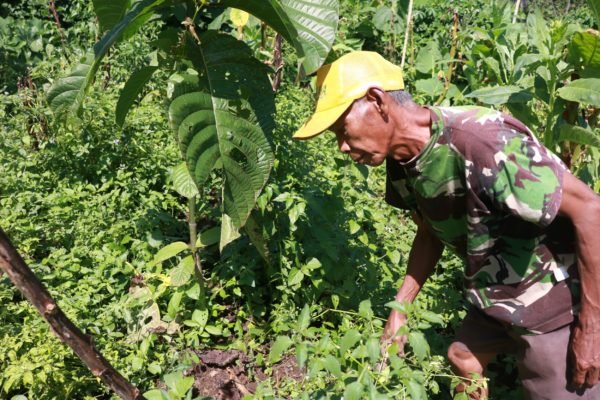
Rohmanudin, 53, has been familiar with farming activities since his childhood, as his parents were farmers who often brought him to the fields. However, Rohmanudin only began farming his own land in 2015. His land, located in Nagrak Village, Cangkuang District in Bandung Regency, was planted with various crops, including several types of trees, fruits, and vegetables. 

“From 2015 to 2016, I began working on my own field, planting various kinds of crops. In 2015, the Indonesia government initiated an agricultural program that led me to grow vegetables for the first time. Thank God, I have been growing different types of plants ever since,” he revealed. 

As part of the government agricultural program, a farmer group was established in Nagrak village, which still exists today. Rohmanudin is one of the most active members of this group.  

Joining to the Tree Planting Program to Improve the Result 

In 2021, Rohmanudin was offered the opportunity to join a tree planting program funded by Astra Zeneca, in collaboration with Trees4Trees and One Tree Planted. He proposed planting tree species that were suitable for his land’s conditions. 

Why Planting Trees is a Better Legacy Than Selling Land 
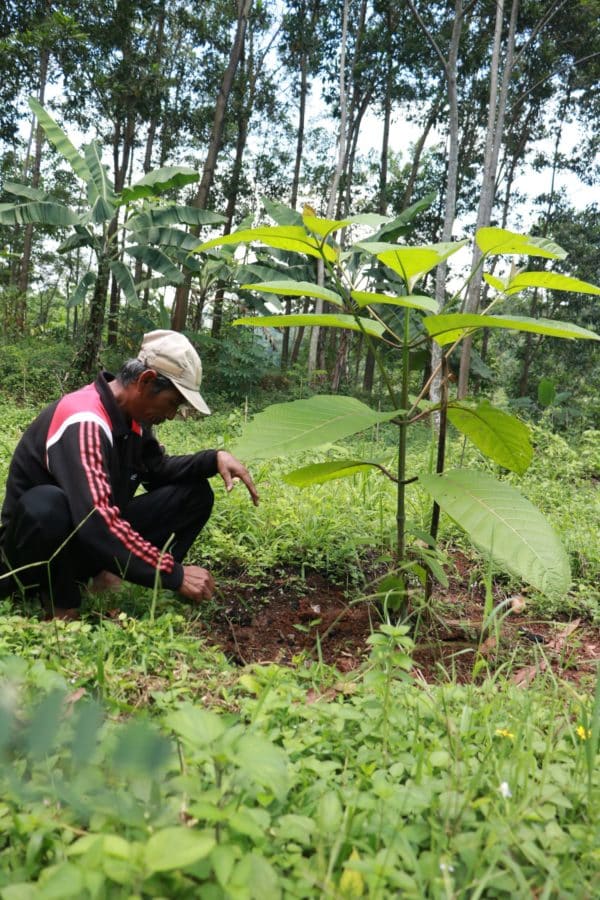
Rohmanudin maintains his land and plants various type of crops and trees. Photo: Trees4Trees/Kemas Duga Muis.

“I proposed then planted jabon (burflowers), sengon (Chinese albizia), and suren (red cedar) because they thrive in this area. I also planted other trees such as stinky beans, as well as fruit trees like sapodilla and rambutan,” Rohmanudin said. 

Since joining the tree planting program, he has noticed significant differences compared to his previous farming activities. He stated that the implementation of the program has improved significantly, and he feels that it is much better now than in the past. 

“In the past, the planting system was not as structured. Now, we have a more structured approach, and I can say that the way we do is the correct one,” Rohmanudin added. 

Read also: A Watershed Moment: Planting Begins at the Citarum River

Effort to Restore the Former Forest in the Village

Rohmanudin is deeply concerned about the vast deforestation that has taken place in his village, where forests have been cleared and replaced with residential areas. As such, he strongly believes that the tree planting program can have a positive impact if implemented effectively, and is therefore highly motivated to care for the trees. 

Planting Trees is a Better Legacy
Planting Trees is a Better Legacy; Rohmanudin with the burflower tree he has grown. Photo: Trees4Trees/Kemas Duga Muis.

“In the past, this area was full of rare birds and big trees. The mornings were beautiful and so refreshing. The land was more fertile than today. But now, look, they’re gone! There’s a lot of dry land, and water is scarce. Why did this happen? Because the land was sold out, and housing was built. In the area behind my house, eight hectares were sold out, and now, ten more hectares are gone! Housing has been built there again,” Rohmanudin lamented. 

Planting Trees Instead of Selling Land for a Better Future

Seeing the reality that is happening in his village, Rohmanudin feels agitated. He worries that if all the land in his village is sold and turned into housing, there will be nothing left for future generations, and not enough land to cultivate. 

“Imagine what will happen to our children and grandchildren in the next 10-20 years? They will have nothing left. Moreover, if everyone builds houses here and there, we will get more pollution and disease,” he said. 

Planting Trees is a Better Legacy
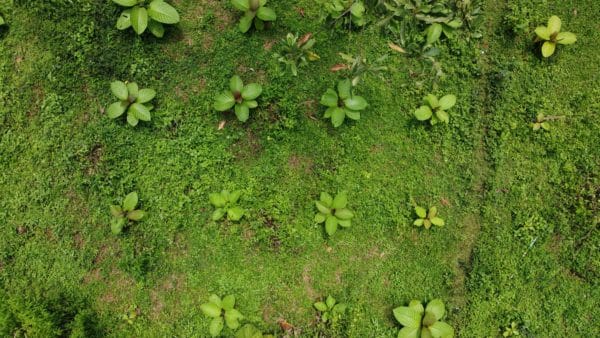
Planting Trees is a Better Legacy; Rohmanudin’s trees grow bigger and greener. Photo: Trees4Trees/Kemas Duga Muis.

He also believes that cutting down a lot of trees will interrupt the process of producing clean air that is essential for human beings. That is why he thinks this tree planting program is necessary. He believes there are advantages that villagers can get, and even planting trees on a little land for the next generations is essential. 

Rohmanudin expects this program will make farmers in his village more aware of protecting their land and keeping it fertile so that more trees could be planted and more results could be harvested. Therefore, they can make a living from the results instead of selling their land to the land developer.