5 Facts About Mangrove You Need to Know

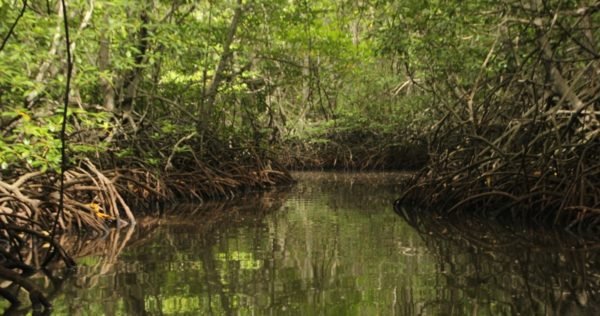
mangrove roots store vast amount of carbon

mangrove roots store vast amount of carbon

Mangrove forests are among the most important ecosystems on Earth. They are crucial for protecting life on Earth. Alongside salt marshes and seagrass beds, mangroves are part of the “big three” coastal ecosystem that is incredibly powerful at saving the planet. With their dense coverage, mangroves act as natural coastal barriers, protecting communities and serving as nursery grounds for biodiversity.  

Their remarkable ability to sequester vast amounts of carbon helps stabilize the planet’s temperature. It makes them as key weapons in the fight against climate change and preventing global warming from worsening. However, global mangroves populations have been threatened by overexploitation and coastal development, leading to significant losses in recent decades.  

Here are some fascinating facts about mangroves and their spectacular ability! These facts are also highlighting the importance of why we should pay more attention to protecting them from damage and disappearance.  

Mangrove forests store greater carbon than terrestrial forests 

Mangroves cover only 0.1 percent of the planet’s surface. However, latest studies suggest that mangrove forests can sequester carbon 10 times greater than mature tropical forests annually. Scientists also estimate that mangroves store an average of three to five times more carbon than tropical forests in the same size of area. Most of the carbon is stored in the sediment beneath the trees. It can remain bound there for decades, centuries, or even millennia. 

However, when these habitats are destroyed, they will lose their capacity in sequestering carbon. Additionally, they will also release a huge amount of carbon, increasing greenhouse gas levels in the atmosphere.  
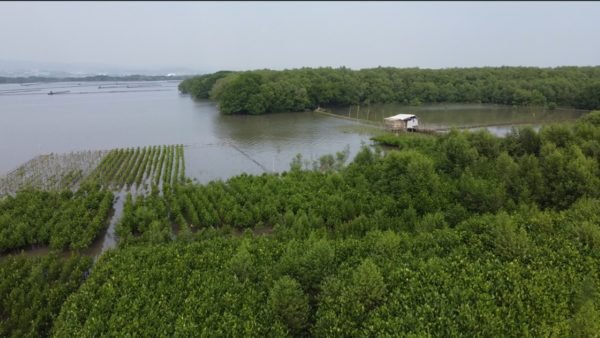
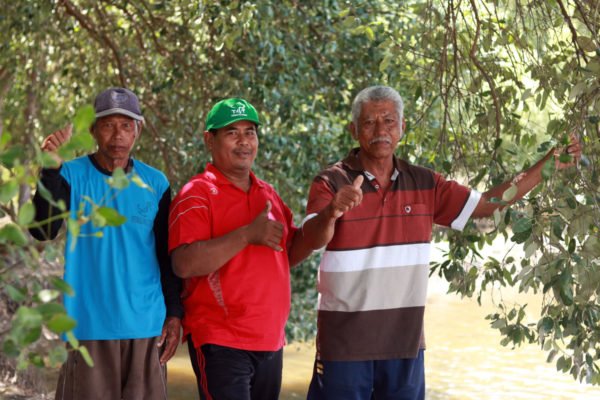
Mangrove covers in Mangunharjo coastal area, Semarang Indonesia
Mangroves flourish in the Semarang coastal area, helping the community in preventing tidal floods and erosion.

Coastal defense against floods and tidal waves  

Mangroves have a strong and intricate root system which helps to bind the soil and prevent coastal erosion. These roots also intertwine to form a dense brush above the water that can break waves and absorb wave energy. It is including the hurricane-generated waves or tsunamis.  

Mangrove forests reduce the impact of tidal waves and floods by decreasing the height and velocity of incoming waves. They distribute water among the creeks and canals within the mangroves. This way will reduce the inundation level and the power of waves striking residential areas, farms, or ponds owned by coastal communities. 

A study found that during the deadly 2004 Indian Ocean tsunami, areas with coastal forests, including mangroves, suffered less damage.  
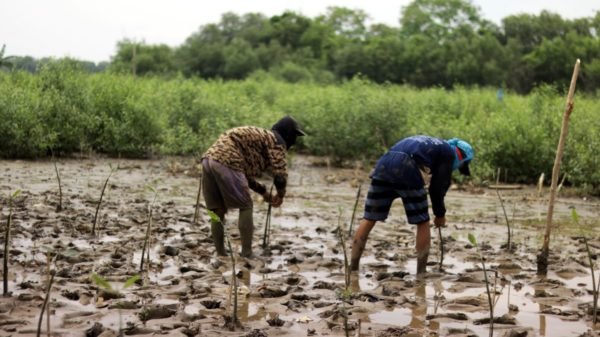
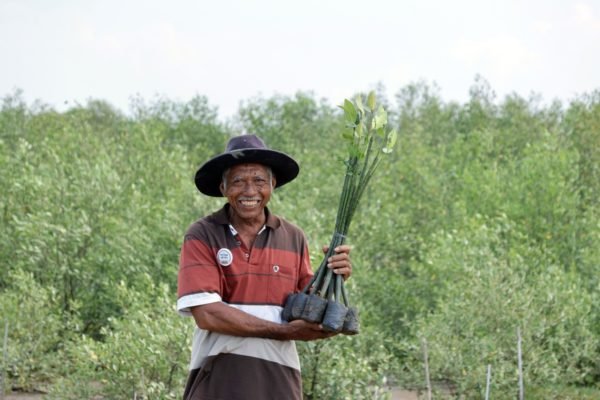
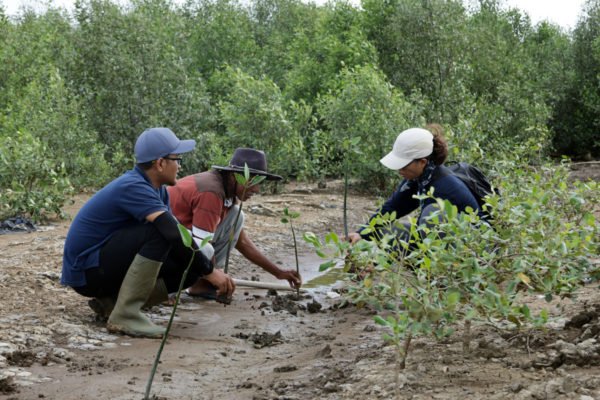
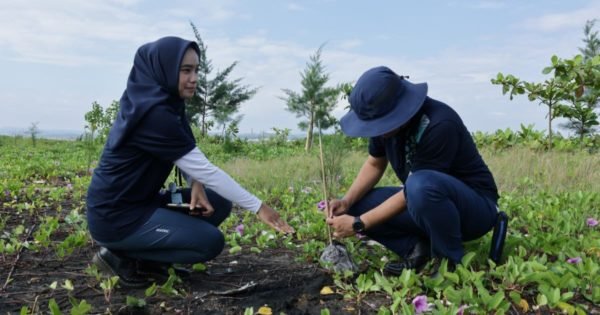
Planting mangroves in Dukuhseti coastal area, Pati, Indonesia
In collaborating with local communities, Trees4Trees plants mangroves in Pati, Semarang, and Cilacap coastal areas.

Incredibly adaptable to the harsh condition and can grow in salty water 

Mangroves are naturally adapted to thrive in coastal zones and harsh coastal conditions. They are highly salt-tolerant, able to survive in water up to 100 times saltier than most plants. Mangroves can filter out up to 90% of the salt in seawater. Furthermore, some species have leaves that excrete excess salt. 

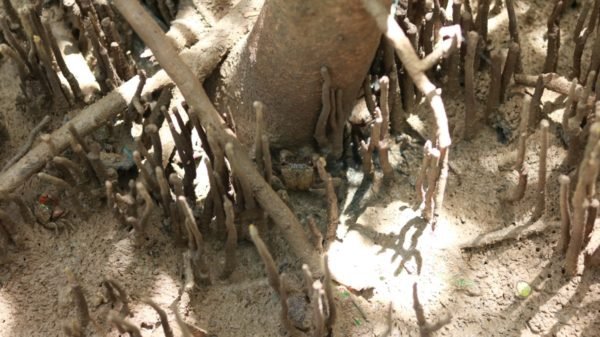
Some mangroves have special roots called pneumatophores that extend above the water to absorb oxygen. These roots, with tiny openings take the oxygen in. However, these parts can easily get clogged by pollutants like oil, be damaged by parasites, or be affected by prolonged flooding. Over time, these environmental stresses can kill large areas of mangrove forests. 
5 Facts About Mangrove
The mangrove root systems make the mangroves can tolerate salty water and harsh coastal condition.

Mangrove ecosystems are among the most biologically diverse on Earth 

It is estimated that there are about 80 mangrove species, making this ecosystem highly diverse. Mangroves thrive in tropical and subtropical latitudes. They range in height from small shrubs to 40-meter-tall trees above the water. Despite their differences, all mangroves grow in low-oxygen, high-salinity coastal environments. Each species has its own unique characteristics suited to its native ecological habitat. Therefore, planting the wrong type in the wrong place will prevent the mangrove from surviving. 
5 Facts About Mangrove
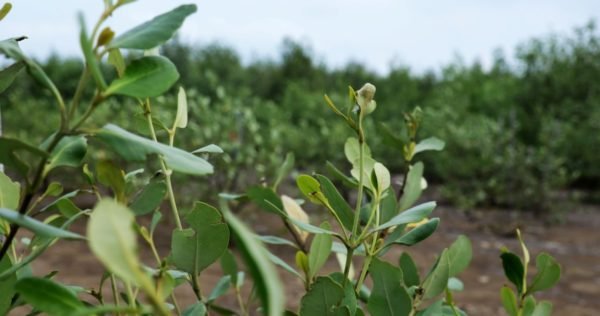
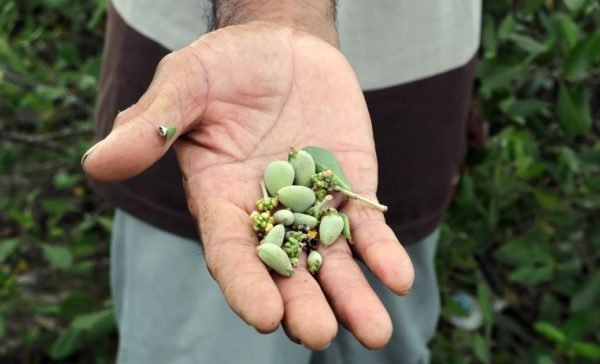
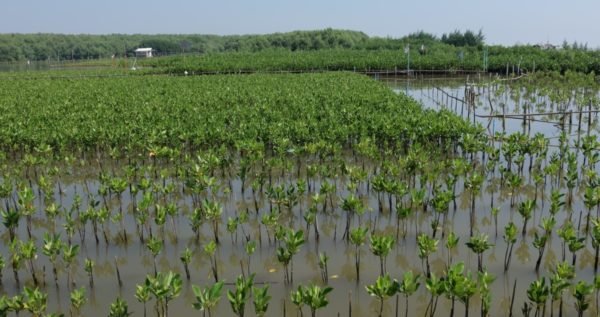
(Above) Young rhizophora (red mangroves) planted in Semarang, Indonesia. (Below) Avicennia (white mangrove) planted in Pati, Indonesia, bearing fruits.

5 Facts About Mangrove

Indonesia boasts the largest mangrove cover in the world 

Indonesia, where Trees4Trees focuses its reforestation efforts, boasts the world’s largest mangrove population. The country accounts for 23% of the global mangrove coverage, with 3 million hectares of mangroves. As the comparation, the size is over 40 times the size of Singapore. Indonesia is home to approximately 45 of the world’s 75 true mangrove species. Some of them are growing as tall as 50 meters. 

However, Indonesia also experiences the highest rate of mangrove destruction globally. From the 1970s to 2007, the FAO reported that around 40% of Indonesia’s mangrove forests were lost. Residential development, agriculture, and aquaculture are the most factors that caused the degradation. 

Read more: Mangrove Types in Indonesia and Their Benefits
Mangrove Cilacap_Trees4Trees
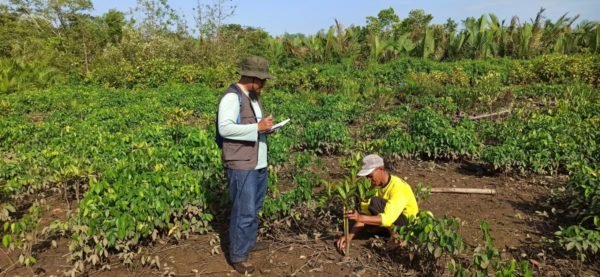
Trees4Trees team monitored one-year mangrove trees that planted in Ujung Alang Village, Cilacap.

Contributing to the mangrove restoration in Indonesia, Trees4Trees has been planting mangroves since 2021. Trees4Trees has planted mangroves in various areas of the Java Islands, including Pati, Semarang, and Cilacap. Over 150,000 mangroves have already been planted, with more to come. In Cilacap, Trees4Trees aims to plant 16,000 mangroves to restore the degraded forests of Ujung Alang Village this year. This village has suffered from land conversion into shrimp ponds. Our mission is to revive the mangrove ecosystem and support the livelihoods of local communities. 

Read also: Restoring Mangrove in Cilacap, Central Java

We invite you to join our mangrove restoration efforts. By partnering with us to plant mangroves, you or your company can make a positive impact on both the environment and the community.

Contact us to get involved in this program! 

All My Efforts Were Worth It: Planting Mangroves, Protecting Livelihoods in Pati

All My Effort

All My Efforts Were Worth It: Planting Mangroves, Protecting Livelihoods in Pati

As the fifth of eleven siblings, Parmi missed out on a formal education in his youth. Instead, he and his two older brothers learned how to manage fishponds from their father. Parmi quickly turned this passion into a profession and now, more than 50 years later, continues to make a living in this way. 

Fishponds at the center of community life 

Central Java’s Pati Regency, where Parmi lives, is well known for its milkfish (ikan bandeng). “I manage two fishponds covering a total of 1.25 hectares,” he explains. “During the harvesting season, I can yield around a ton of milkfish per hectare, and we harvest two or three times a year.”  

With the income he makes from fishponds, Parmi can provide for his family. “This work allows me to give my son and daughter the education opportunities I never had,” he says.

Farmer mangrove
(Above) Parmi (right) with his fellow fishpond farmers, inspecting the mangroves he planted in 2001

Planting trees for protection 

Parmi’s fishponds are located in the coastal village of Dukuhseti, around 100 meters from the shoreline. In 2001, huge waves flooded the coast, destroying ponds and causing enormous damage. “I lost hundreds of millions of rupiahs,” he recalls. At that time, there were no protective barriers along the coast, leaving fishponds vulnerable to floods.  

In response, Parmi and his fellow fishpond farmers took steps to ensure this disaster would not happen again. They planted mangroves along the shoreline to provide a natural buffer against the waves. Now, 23 years later, those mangroves have grown big and strong. But there are not enough of them to guarantee protection. 

In 2022, there was another huge ocean surge. “I lost around 100 million rupiahs (USD 6,190),” Parmi remembers. But he was relatively unscathed, compared to other farmers further up the coast. “Our neighboring village suffered even greater losses because they didn’t have as many mangroves protecting their coast,” he explains. 

All My Efforts Were Worth It: Planting Mangroves
(above) Parmi plants new mangroves with members of the Trees4Trees team

Grab and EcoMatcher team up to plant mangroves 

Back in 2021, Parmi and other members of the Tani Makmur Mandiri farmers’ group were invited to join a mangrove planting initiative run by Trees4Trees, EcoMatcher, and Grab. A total of 30,000 mangrove trees were planted, creating a green belt covering 3.8 hectares along the Dukuhseti shoreline. 

Now, three years later, Parmi and his fellow farmers are reaping the rewards of their efforts. “Planting mangroves is not easy,” he says, remembering how he and his team would work waist-deep in muddy ground. “But seeing these trees grow big and strong (almost all of them are now at least three meters tall), I feel all my efforts were worth it.”  

Ocean waves no longer threaten Parmi’s fishponds as they once did. And the flourishing mangroves offer a range of other, unexpected benefits to the community – the leaves provide a sustainable source of organic fertilizer for the fishponds and the fruits, known locally as brayuh or brayo, can be sold at markets. 

“Local people often come to pick the fruits,” explains Parmi, “which they can sell for 5,000 Rupiah (about thirty US cents) per bucket (500 grams). These fruits are highly in demand here, given their importance to local dishes.”  

Mangrove fruits

Parmi has seen first-hand the protective power and economic potential of mangroves in his community. He insists that caring for these trees and using them sustainably is essential to environmental health and social well-being. “Everyone in the village can freely pick the fruits or leaves, but cutting them down is strictly prohibited,” he says.  

“We would like to thank Grab, Trees4Trees, and EcoMatcher for providing us with these mangroves and the many benefits they offer,” says Parmi.We will continue working to protect and appreciate these mangroves, just as they protect our homes and safeguard our livelihoods.


Trees4Trees Planting Festival, Celebrating 16th Reforestation Journey

Trees4Trees Planting Festival

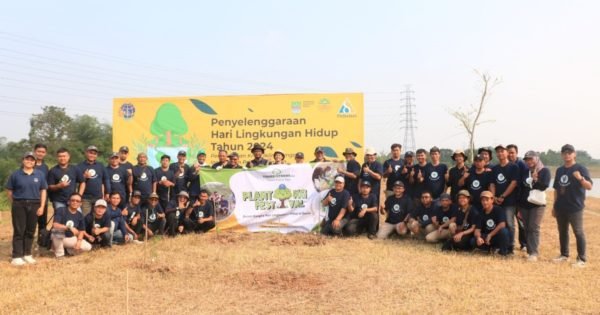
This year, Trees4Trees commemorates its 16th year reforestation journey, marking a significant milestone in its environmental preservation efforts. Celebrating this occasion, Trees4Trees organized the Planting Festival throughout June, which took place in three distinct locations within its operation areas. They included the industrial area of GIIC Bekasi, the coastal area of Mangunharjo Semarang, and Tunjungseto Village in Kebumen.  

Bringing together diverse communities, company partners, government representatives, and students as tree-planting volunteers, this event also aimed at celebrating World Environmental Day and World Ocean Day that fell close to Trees4Trees anniversary on June 11th. 

Tree planting

“By involving various communities and our green partners, this initiative seeks to enhance the integration of our tree-planting efforts with Trees4Trees’ stakeholders,” said Pandu Budi Wahono, Trees4Trees Program Manager. Additionally, he stated that the festival was conducted in various landscapes, focusing on improving urban, rural, and coastal areas.  

Creating Urban Forest within GIIC Industrial Area 

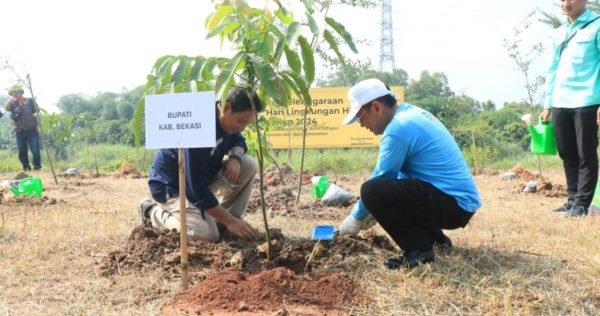
Starting the Planting Festival series, Trees4Trees collaborated with the GIIC Industrial Area to plant 1,000 trees, coinciding with the World Environment Day, June 5th. Around 80 participants from various companies and government representatives joined the event to help create urban forest amidst the bustling Jakarta buffer zone and expect benefits of carbon sequestration from industrial activities.

urban forest

Trees4Trees Planting Festival

“Previously, we planted 25,000 trees here with support from some companies as our green partners. Today, Trees4Trees is contributing an additional 1,000 trees to further green this area,” said Pandu.  

Dani Ramdan, the Regent of Bekasi Regency was also attended the event. He thanked Trees4Trees and the companies committed to environmental preservation by joining this initiative. He said, the effort goes beyond improving the industrial area; it helps the planet globally. “The trees we plant here have a global impact. The effects of global warming are real, and we experience extreme weather ourselves. Hopefully, this tree planting will help address these issues,” he said.    

Helping Coastal Area Restoration in Mangunharjo Semarang 

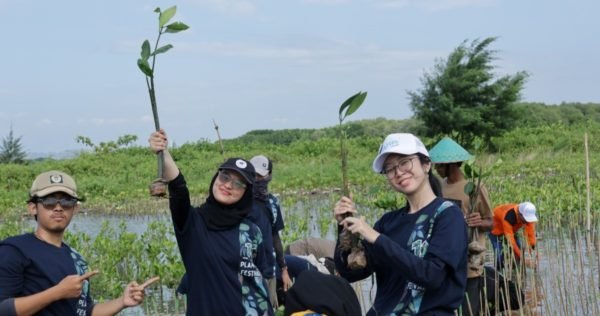
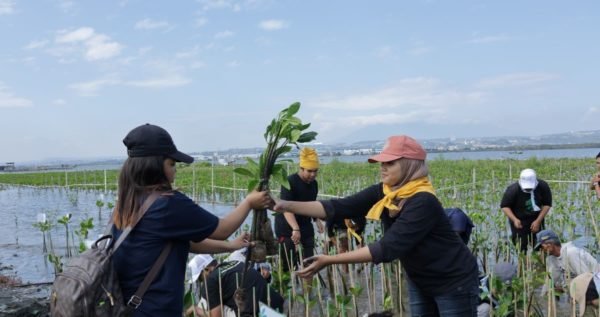
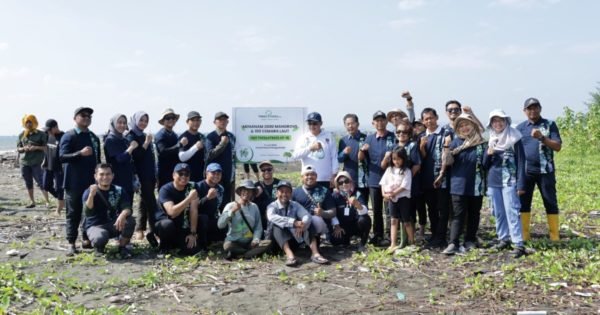
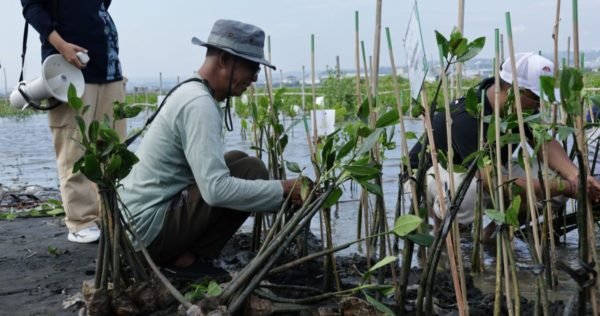
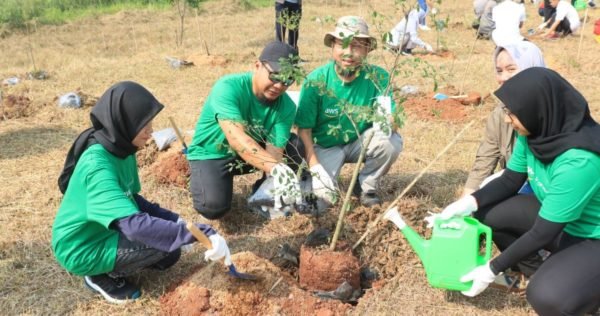
On June 11th, the festival continued by planting 2,000 mangroves and 100 Australian pines to help restore the coastal area of Mangunharjo in Semarang. Around 100 participants came together as tree-planting volunteers. “We invited our green partners to experience tree planting firsthand. We also engaged fifteen communities from twelve universities in Semarang. We’re grateful for their willingness to join us for the future of our planet,” said Erni Setyaningrum, Trees4Trees Office Manager. 

planting mangrove

mangrove planting

Collaborating with Mangunharjo Mangrove Lestari farmer group, the event aimed to help local communities combat coastal erosion, tidal flood, and to protect local fishponds. “We see that many areas here are losing their mangrove ecological habitats and functions. We intentionally aim to green this coastal area by planting mangroves and Australian pine together. It is part of our contribution for coastal ecosystem restoration,” Adi Gani, Trees4Trees Project Manager revealed. 

Trees4Trees Planting Festival

pak sururi

Sururi, the farmer group leader and a recipient of the prestigious Kalpataru Award from the Ministry of Environment and Forestry for his dedication to coastal ecosystem improvement, thanked Trees4Trees for helping them in greening the coastal area. “We hope this effort will continue by planting more trees. Also in other places as well,” he said. Sururi believes that this way, other coastal communities in Central Java can experience the benefits. 

Soil and Water Conservation for Tunjungseto Village’s Tourist Destinations 

Tunjungseto Village in Kebumen is one of the areas where Trees4Trees focuses its reforestation efforts. The village is currently developing two promising tourist destinations: Bukit Kedoya and Tratag waterfall, a main source of local irrigation. As part of the festival series, Trees4Trees supported the village by planting 1,000 trees on June 15th 

“This initiative supports these potential tourist destinations development and promotes environmental preservation, especially soil and water conservation,” said Pandu. 

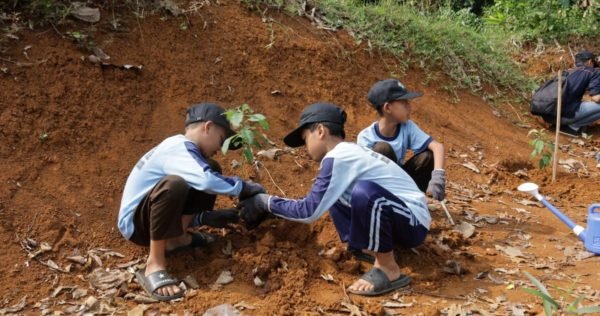
trees planting with children

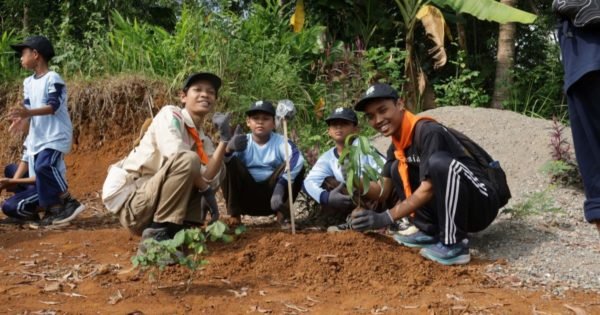
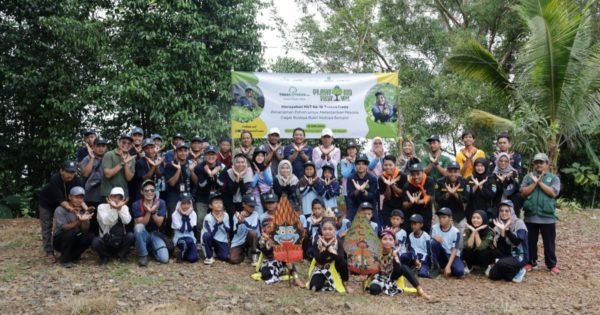
The tree-planting event involved the local environment community of Tunjungseto, 30 elementary school students, three youth communities from different universities, company partners, and government representatives. “We planted 200 fruit trees, including avocado, durian, nutmeg, and mangosteen in Bukit Kedoya to provide shade. The next day, we planted 800 sugar palm trees around Tratag waterfall to enhance water sources,” said Mar’atun Chasanah, Trees4Trees Kebumen Unit Manager 

community

Mar’atun explained that sugar palms are highly effective for water conservation due to the root system which holds a great amount of water. She also emphasized that involving youth and local communities expects to raise awareness among younger generations about the importance of planting trees. 

corporate

As we celebrate 16 years of our reforestation journey, we extend our heartfelt thanks to all the volunteers involved. Our gratitude goes to youth communities, companies, governments, and schools who participated in our events and planted trees with dedication. Furthermore, we deeply grateful to the incredible supports of local communities, collaborators, media, and our generous sponsors—BJB, Bank Mandiri, Pinnacle Outdoors, Basilia Group, Cosi Outdoors, and Delta Mas.  

We also extend our gratitude to all our sponsors and individual donors. Your support over the past 16 years creates great impacts on the environment and the local communities. 

Let’s continue to green the world and make our planet a better place to live! You can plant and donate trees with Trees4Trees to create a greater impact on the environment and the local communities! 
Nursery Highlight: Preparations Underway for the 2024-2025 Planting Season  

As our 2024-2025 planting cycle begins, preparations have been in full swing at our nurseries. We eagerly anticipate the planting season at the end of this year, aiming to plant more trees in diverse areas, including hilly areas, riverbanks, industrial zones, and water sources nearby.  

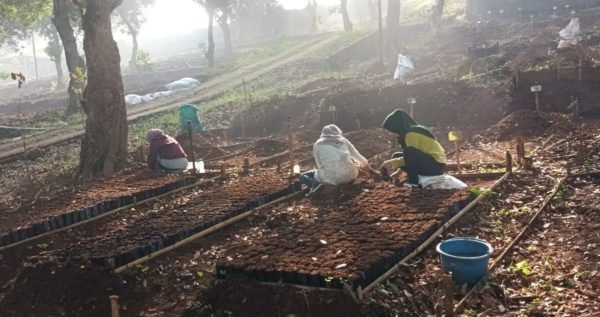
Over the past two months, our dedicated nursery teams have been busy setting up essential infrastructure, such as greenhouses, seedbeds, electricity and watering systems. They have also been improving our in-house nursery management technology. These facilities are crucial for the nursery’s operation and for ensuring timely delivery to our tree growers. By maintaining efficient infrastructure, we aim to achieve our planting goals, maximizing the benefits for both the environment and our tree grower partners. 

This year, we aim to plant five million trees across 20 trees species. We will distribute these tree-seedlings to approximately 23,000 farmers over a two-month period (December to January). These seedlings will be shipped to various locations, amounting to around 3,300 truckloads during the planting season, or approximately 55 trucks per day. 

Explore the early stages of our nurseries’ activities below! 

Nursery Highlight

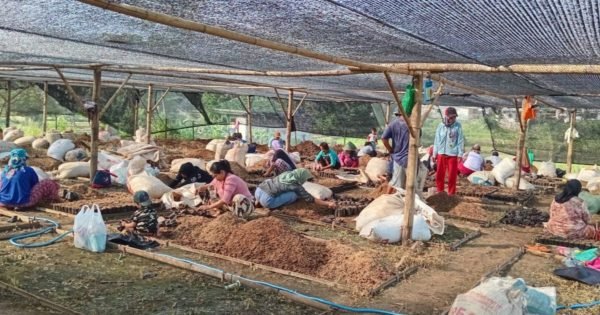
(Above) Our nursery team is diligently preparing planting media (a mix of soil and manure) to fill polybags for planting tree seedlings. As the seedlings grow, during the distribution stage, each tree grower will receive approximately 220 tree seedlings, packed with an average of 12 per bag. This translates to a total of 417,000 bags of seedlings distributed, each customized with a mix of species according to the farmers’ preferences.  

Nursery activity

As part of our commitment to women’s empowerment, we employ women from the local community as seasonal workers in our nurseries, providing them with the opportunity to earn income independently and support their families economically. 

Situ Cisanti

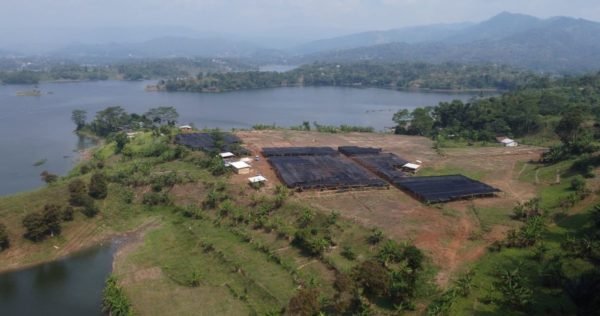
We are also excited to announce that one of our nurseries in Bandung has been relocated from Cililin to Cipongkor District. (Above) The new site, now situated nearby Saguling Reservoir, where the Ciminyak river flows. The relocation is part of our commitment to enhance the tree planting and maximize the trees’ growth this year. 

Nursery Highlight

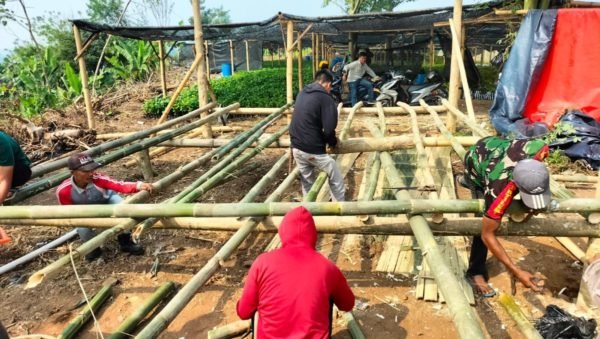
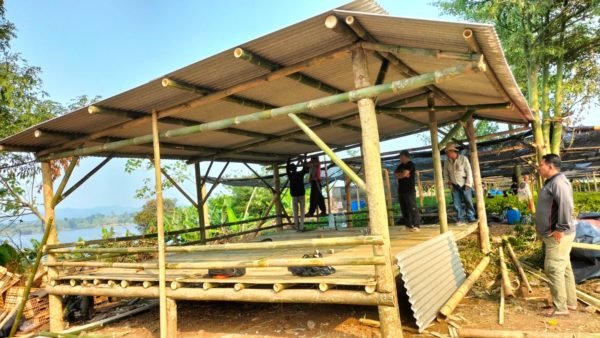
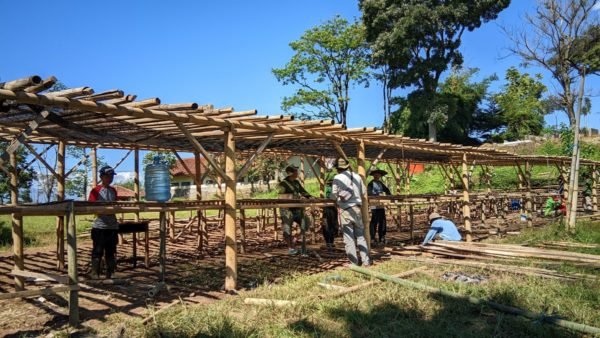
To enhance the new Ciminyak nursery facilities, our team built traditional working spaces using bamboo. These traditional working spaces will be used for meetings and coordination purposes. 

Nursery Highlight


Soreang Nursery

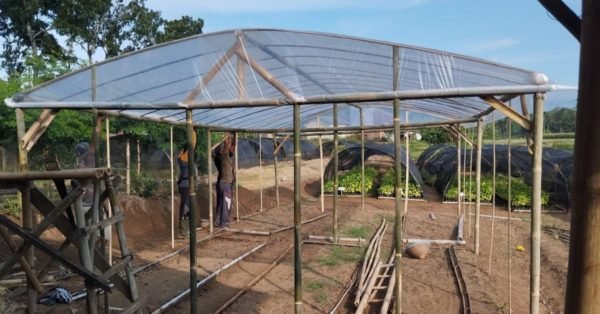
The Soreang nursery team (above) and the Kebumen nursery team (below) are building new greenhouses to grow more tree seedlings this year and optimize their growth. The greenhouse provides the light, warmth, temperature, and air crucial for the seedlings’ survival. It also protects them from extreme heat or cold by maintaining the temperature. 

Nursery Highlight

Nursery

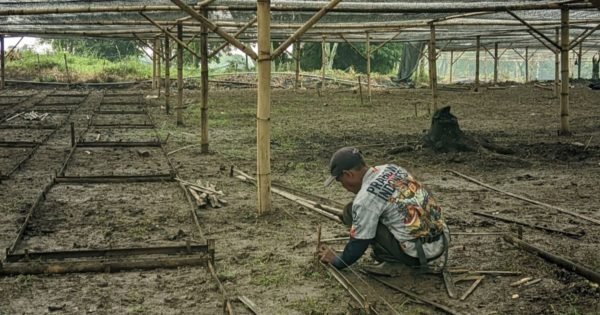
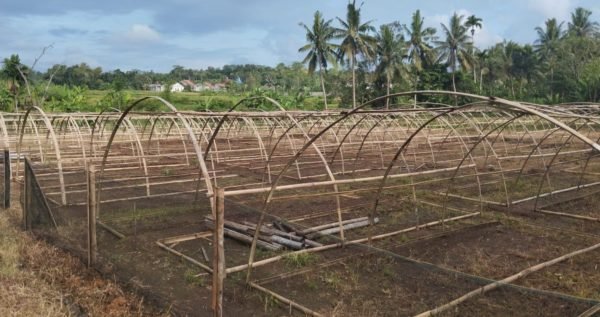
(Above) A nursery worker applies bamboo sticks to create seedbeds. (Below) The Kebumen nursery team has completed establishing new seedbeds along with the frames to apply shading nets. These new seedbeds have been established to enhance the growth of tree-seedlings. These seedbeds will also be used to group the tree seedlings based on type, height, and health. 

Training Nursery

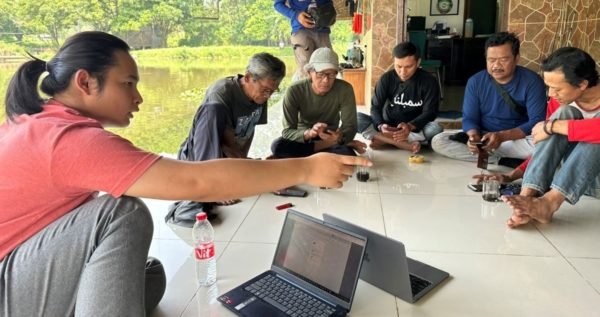
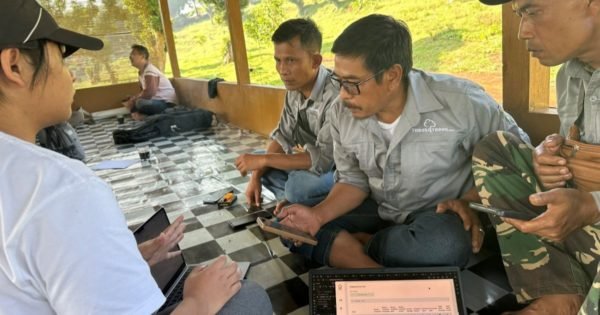
As part of Trees4Trees’ commitment to effective seedling distribution and transparency for our supporters, we utilize in-house technology to record nursery activities. This includes tracking the process of seedlings being grown, distributed, and loaded.  Our IT team  provided Cirasea nursery team (above) and Soreang nursery team (below) with training on the operation of our nursery management system. Similar training was also provided to teams at all Trees4Trees nurseries.

Training Nursery

As a non-profit organization dedicated to reforestation, Trees4Trees not only distributes and plants trees but also produces tree seedlings in-house at our four nurseries across West Java and Central Java.  

Our nurseries operations are vital, enabling us to control and ensure the quality of the seedlings provided to tree growers and used in our reforestation programs. Each tree species has its own growth cycle requirements, making our nursery management system essential for planning and controlling the process. This ensures all seedlings are grown and delivered on schedule as complete orders to the farmers. 

Each year, our nurseries make a substantial impact as they significantly contribute to environmental improvement and create valuable job opportunities for the local community. You can also plant trees with us and join our reforestation program this year to make a positive impact! Contact us at info@trees4trees.treesforplant.com to get involved.  

Planting Trees, Preserving Biodiversity and Heritage in West Java

Planting Trees

One of our main tree-planting locations in West Java is the Citarum River basin, home to over 1,000 tree species and 3,000 flowering plants. These plants are central to ecosystem health and form the basis for many livelihoods in the region. However, in the wake of rapid development, many of these tree species are now threatened by deforestation. In response, a local forest farmer named Sutajaya is determined to reverse the damage. 

Six years ago, Sutajaya was granted free leasehold by the government to manage 2 hectares of land in the foothills of Sangar Mountain near Mekarjaya Village, the village in Bandung Regency that he calls home. “We are allowed to plant crops and manage the land,” says Sutajaya. “But the mandate is that we must plant hardwood trees that we never cut down.”  

Traditional roots, bearing new fruits 

At first, Sutajaya planted coffee trees. However, he quickly noticed that many of the trees he remembered from his childhood were becoming more scarce. He started planting native Indonesian species like rasamala, saninten, damar, kisireum, and tarum areuy. And this process reconnected him to his roots. 

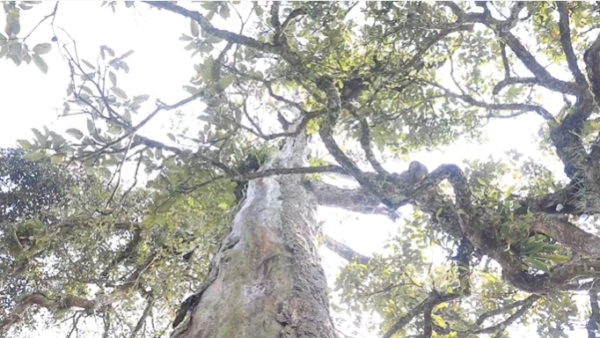
Saninten trees
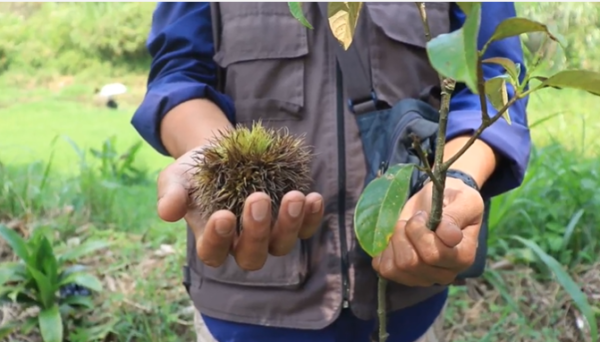
Figure 1 The Saninten tree, one of several native species making a comeback in West Java. Figure 2 The fruit and branches of Saninten tree.

fruits

“This land used to be the home of the powerful Tarumanegara kingdom,” explains Sutajaya, remembering a story passed down from his ancestors. “Their name came from the tarum areuy tree, which used to grow all around – the tree. also gave its name to the river that flows through the region, the Citarum.”. The kingdom was known throughout Southeast Asia for their production of distinctive blue fabrics, made using dye from tarum areuy trees.  

Today, the blue cloth is long forgotten, and the trees are disappearing too. “I don’t want my children to grow up without seeing the native trees so deeply rooted in our culture. So I will do all I can to stop them from disappearing,” said Sutajaya. 

Tarum Tree
Figure 3 Leaves of the tarum tree

Planting the seeds of knowledge 

Unlike most forest farmers in Mekarjaya Village, who manage the land primarily to plant crops and then reap the results, Sutajaya’s main goal in planting native trees is to create an educational forest, or arboretum. “My intention is to safeguard native trees, particularly those of West Java, and prevent further loss in the future,” he explains. “With the arboretum, I want to preserve biodiversity and educate people about the abundance of native trees that form part of our shared culture,” he added. 

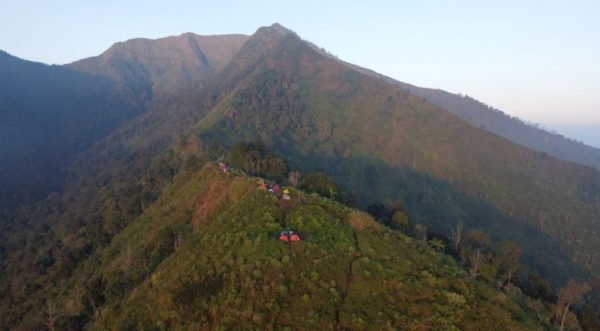
sangar mountain
Figure 4 Sangar Mountain, the location of Sutajaya’s arboretum

He plants these trees in the foothills of Sangar Mountain, a popular hiking track among  young hikers, especially at weekends. He hopes these groups will stop by his arboretum to learn more about native tree species. 

Support from Trees4Trees and TREEO 

Sutajaya is well on his way towards his goal. In 2021, he took a big step forward by joining a tree-planting project with Trees4Trees in collaboration with TREEO. “That was a great opportunity for me to add to my tree collection,” he remembers, “and I really thank Trees4Trees for helping me realize my dream.” 

Planting Trees
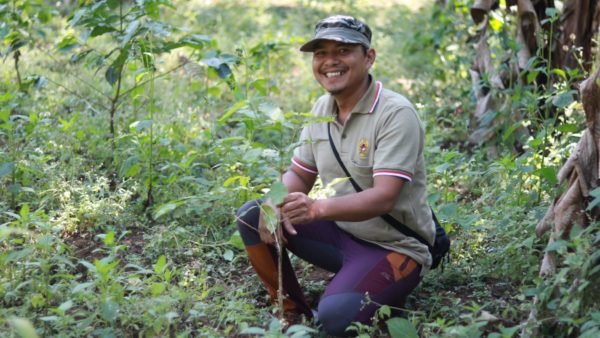
Figure 5 Sutajaya, on the ancestral lands he has almost single-handedly helped to re-green.

Together with Trees4Trees, he planted 1,600 sawo, damar, rasamala, and avocado trees, most of which have survived and are growing well to this day. From the sawo and avocado trees, he can harvest fruits to sell. From the damar trees, he collects sap, which also has economic value. The tarum areuy he planted provides leaves for organic fertilizer and fodder for his cattle. But the real value of these trees is something that can’t be bought or sold: a connection to heritage, and a glimpse of a greener future in the Citarum River basin. 

In spite of everything he has achieved, Sutajaya is not satisfied. “There are still many native trees out there that I haven’t inventoried yet,” he says. “I hope I can find them soon.”  

Trees4Trees is working closely with local forest farmers like Sutajaya to restore biodiversity and preserve natural heritage in West Java and beyond. To learn more about our tree-planting activities and get involved, please visit the Trees4Trees website.  


10 Iconic Flora & Fauna of the Citarum River Basin: A Showcase of Biodiversity (Part 2)

10 Iconic Flora & Fauna of the Citarum River Basin

Read the previous article on: 10 Iconic Flora & Fauna of the Citarum River Basin: A Showcase of Biodiversity (Part 1)

Trees and Plants 

The landscape of the Citarum Basin boasts a rich diversity with at least 1,000 tree species and 3,000 flowering plants. Some of these species are deeply woven into the local culture, passed down through generations. Many of them also hold significant value that supports the local people’s livelihoods. 

Tarum areuy (Indigofera) 

This species refers to the indigo tree, from which the name Citarum is derived. Once abundant along the riverbanks, locals used it as a natural dye for fabrics. They also used the leaves as organic fertilizer and livestock fodder, while the root network was effective in preventing soil erosion. However, the tree is now slowly disappearing due to environmental degradation and extensive development. 

Flora in citarum river basin

Sugar palm (Aren) 

The sugar palm tree (known locally as aren or tangkal kawung) thrives abundantly in the basin. Apart from its ecological function of conserving water, the tree provides communities with income derived from its sap, fruit, palm fibers, and leaves. The locals in the areas surrounding Trees4Trees’ tree-planting sites benefit from making traditional sugar from the sap. 

Rasamala 

The rasamala tree is an evergreen that grows plentifully in the mountainous areas of West Java, including Trees4Trees’ planting sites. Several mountains in West Java are habitats for rasamala trees. These trees provide homes for more than 20 bird species, including the rare bird species like Javan hawk-eagle, and endemic primate, the Javan gibbon (owa jawa). The trees also produce aromatic resin commonly used as a room fragrance, providing a source of income for local people. 

Tree

Saninten  

The saninten tree, or forest rambutan tree, is an endemic species endemic to Indonesia, particularly found on the islands of Java and Sumatra. It thrives in mountainous regions. The nuts hold significant economic value, often processed into traditional snacks and sold by local communities. The trees are still relatively abundant in West Java, including in areas where Trees4Trees plants. Unfortunately, in Sumatra, the tree is listed as endangered due to deforestation and land conversion into plantations. 

Saninten tree

Puspa  

The puspa tree belongs to the tea family. People also call it needle wood or Chinese guger tree. It is renowned for its resistance to various soil conditions, climates, and habitats, making it a popular choice for land degradation restoration projects. The puspa tree is native to South Asia, China, and Southeast Asia. In Indonesia, the dispersion of puspa trees spread in Java island, particularly in West Java, making them an iconic tree of the region. 

10 Iconic Flora & Fauna

Trees4Trees’ reforestation efforts in the Citarum Basin aim to enhance the environment through tree planting and local community education, thereby improving habitats for flora and fauna. Through these initiatives, we hope to contribute to the preservation of rare and endangered species. We invite you to join us in planting trees to support and enhance biodiversity preservation.