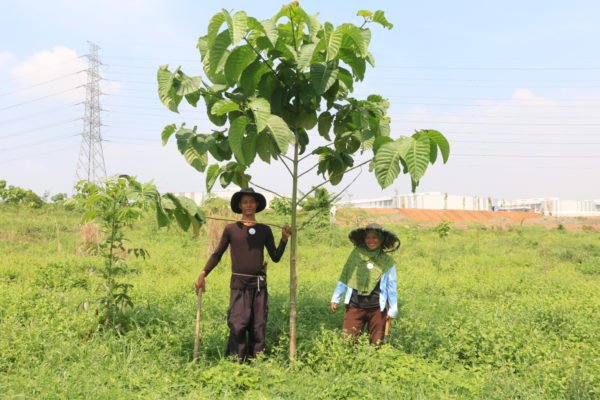
Supporting Women Farmers Through Reforestation in the Citarum Watershed

Supporting Women Farmers

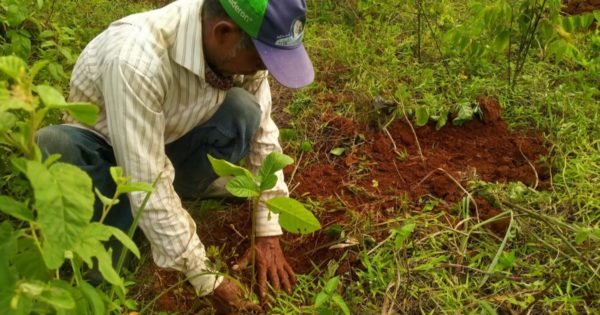
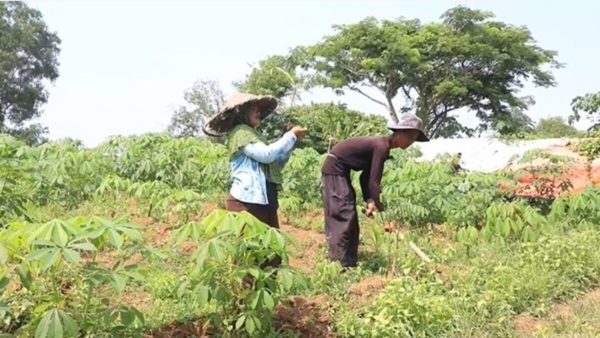
Most people living upstream of the Citarum watershed, which spans West Bandung Regency in West Java, make their living from farming. For Sundanese – the main ethnic group in West Java – this is more than just a source of income. It is a tradition passed down through generations. Many of the farming community here are women, most of whom have been working the land from an early age. 

Over 5,000 woman farmers have participated in tree-planting activities since Trees4Trees first began its Citarum watershed reforestation efforts in 2021 (around a quarter of the total turnout). With funding support from AstraZeneca and One Tree Planted, these women have been able to preserve family traditions and improve their economic independence; their participation also highlights the key role women must play in restoring the environment and strengthening communities.  

Read also: The Story of Euis Maryati: Widowed and Planting Trees to Support Her Family

Family, Farming and Tradition: Continuing the Legacy in West Java  

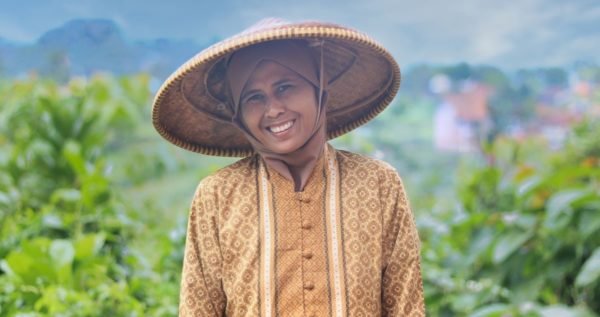
“I’ve never left my village and have worked the soil with my family since I was a teenager,” explains Aisha (60), from Ancolmekar Village. She is one of many local women who have dedicated their lives to farming.  

Aisha joined Trees4Trees as a grower in 2021 and quickly demonstrated her exceptional skills. In 2022, she was recognized as one of the best farmers in the area. “My farming skills have improved over time,” she explains, “because farming has been my habit for decades, sharpening my ability to nurture every plant I grow.” 

Iis Hasanah (47), from Cijambu Village, spent 11 years working abroad as a household servant in Saudi Arabia before returning home to settle down and continue her family legacy of farming.  “After elementary school, my mother often brought me to the field,” she remembers, “which showed me how to sow seeds and grow trees and crops.” She now splits her time between farming and caring for her son, passing her skills on to the next generation. 

Iis Hasanah and Aisyah
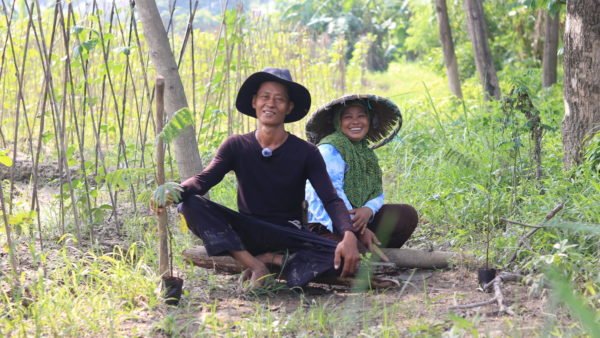
Iis Hasanah (left) and Aisah (right) have determined to work the land and continue their family legacy.

Nurturing Families by Caring for Nature 

For some women, farming offers a connection to their roots. For others, it is a way to provide for their families. Maryati (43) from Kutawaringin Village began farming in her 20s to supplement her family’s income and put her two children through school.   

“In addition to shade trees, I chose to plant fruit and coffee trees due to their competitive prices,” says Maryati. “This way, I can help my husband earn additional income and save more money to secure our family’s economy.”  

Supporting Women Farmers
Maryati prunes the leaves of a burflower-tree, part of her daily commitment to care for trees she has planted.

Kokom, from Mekarjaya Village, has been farming for 10 years. On her plot measuring 700 sqm, she grows cassava and peanuts, along with fruit trees. “I sell fruits like avocado, along with coffee and cloves, to cover my children’s needs,” she says. “Crops like cassava, peanuts, and vegetables are for family consumption, which helps us save money on food.”  

Read also: Reviving Clean Water Access in Lebak Muncang Tourism Village: Elis’ Tree Planting Initiative

Women’s Empowerment: The Key to Environmental Preservation  

The active participation of women in Trees4Trees’ Citarum watershed restoration efforts demonstrate their determination to be productive. Andini Mulyani, a woman farmer from Mekarjaya Village, believes women are equally capable of contributing to their communities as men. “It’s not about competing with men,” she says, “but having equal opportunities and roles. Farming isn’t only for men, women can do it too.” 

Supporting Women Farmers
Kokom (left) and Andini Mulyani (right) believe women farmers are equally capable in contributing to both the community and environment.

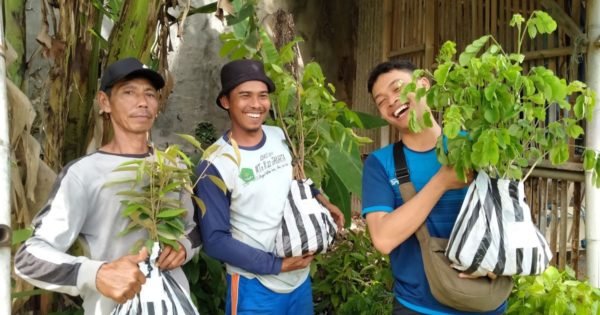
Through the Citarum watershed reforestation initiative, women are given equal opportunities in tree-planting, including access to seedlings, training and capacity building, and various other benefits. These resources empower them, not only to contribute to their community and families, but to positively impact the surrounding environment. “We receive free seedlings, the yield is ours, and the training sessions help women farmers like us improve our knowledge,” says Iis. 

Despite living near the watershed, many areas in the Citarum watershed face drought and water scarcity. Aisha believes tree-planting activities enable women to collectively address these environmental challenges.  

“Drought, landslides, and water shortages are common issues here,” she says. “The planting initiative from Trees4Trees gives us the chance to preserve water, prevent disasters, and develop our livelihoods while improving the surrounding environment.” 

By empowering women farmers as tree-growing partners, Trees4Trees’ Citarum watershed reforestation program is restoring degraded lands and building community resilience to the impacts of climate change. Crucially, these positive impacts are rooted in local tradition and the principles of gender equality within sustainable social forestry practices. 

Writer: V. Arnila Wulandani. Editor: Chris Alexander. Photos: Zaki Luqman, Giri Satriyo, Adia Mufidz, Kemas Duga Muis for Trees4Trees 

7 Eco-Friendly DIY Christmas and New Year Decorations Using Tree Parts

7 Eco-Friendly DIY Christmas

Christmas and New Year are just around the corner. Decorating a Christmas tree, adding festive touches to your home, and preparing meaningful gifts for loved ones are some of the most exciting traditions of the season.  

As the classic colors of red, green, and gold are the hallmark colors of Christmas and New Year that bring ambience of warmth and joy, this year why not try something different by creating eco-friendly decorations that connect you more with nature?  

Tree twigs, leaves, fruits, or even planted trees can be transformed into stunning Christmas and New Year decor. Best of all, you can make them yourself at home! Here, we present 7 eco-friendly DIY Christmas and New Year decoration ideas using tree parts and planted trees. Let’s explore these simple projects and make your holidays even more special! 

Pine cones decoration 

When walking through a pine forest or along streets lined with pine trees, don’t forget to look around and collect fallen pine cones. Add a touch of gold or white glitter to the tips of the cones for a shimmering effect. These glittery pine cones can be used as hanging decorations for your Christmas tree, decorating candle holders, or Christmas wreath. 

Pine Cones

Source: Pinterest

Dried oranges hanging decoration 

Slices of dried oranges can be a unique, affordable, eco-friendly, and fragrant way to decorate your home. What you need to do is just to slice oranges you do not want to eat into thin slices, then dry them. You can heat them with an oven or if you live in a tropical country, you can dry them in the sunlight. You can insert a thread to a single or few slices of oranges to make a hanging decoration for your Christmas tree. You can also mix them with star anise, cinnamon bar, or dried cherry. 

7 Eco-Friendly DIY Christmas

Source: Pinterest

Leaves and grasses Christmas wreath 

Fallen leaves and grass often seem invaluable. However, they can be transformed into a beautiful and eco-friendly Christmas wreath. Arrange grasses and various types of leaves in different shapes onto a circle rattan, cardboard, or braided tree root as a base. You can use glue or thread to arrange them. Enhance the design by adding pine cones, dried flowers or fruits, and decorative ribbons. Hang your stunning wreath on your door or wall to bring eco-friendly and fresh ambience to your home. 

DIY Christmas

Source: Pinterest

Dried leaves and flowers greetings card 

Real leaves and flowers can also be transformed into stunning decorations for greeting cards. You can use them fresh or dried, depending on your preference. Start with folded recycled paper and glue uniquely shaped leaves and a flower piece to the front. Add a ribbon, dried roots, thread, or a splash of paint to enhance its aesthetic appeal. These handmade greeting cards can be displayed as home decorations or sent alongside gifts to your loved ones. 

7 Eco-Friendly DIY Christmas

Source: Pinterest

Twigs Christmas tree 

Fallen twigs can be transformed into a creative and eco-friendly alternative to a Christmas tree. You can design them as either a hanging tree or a stacked tree.  

For a hanging twig tree, gather five to ten twigs of varying lengths. Arrange them in order from shortest to longest, then tie the ends of each twig to one another using rope or string, leaving spaces between them. Hang the structure on a wall and decorate it with fairy lights and small hanging ornaments. 

Christmas Trees

Source: Pinterest

For a stacked twig tree, you’ll need an upright stick as the base. Drill a hole through the center of each twig, then slide them onto the base stick, starting with the longest twig at the bottom and ending with the shortest at the top. Finish the look with string lights and festive decorations.

Source: Pinterest

Pot mini Christmas tree  

A mini live tree is an excellent choice for an eco-friendly Christmas decoration. You can select a young pine or another lush potted tree. Simply decorate it with small hanging ornaments and place it in a corner of the room.  

Source: Pinterest

Planted poinsettia Christmas decoration 

Did you know that the vibrant red flowers associated with Christmas decorations are poinsettia flowers? These shrub plants, native to Mexico and Central America, have spread worldwide and well-known as a Christmas decoration due to their bold red color and the star-shaped crown. Instead of using artificial flowers, consider decorating your home with live potted poinsettias to create a festive ambiance in red and green.

Source: Pinterest

These DIY decorations can also be thoughtful and eco-friendly gifts for your loved ones this Christmas and New Year season! For an even more meaningful gesture, consider gifting Trees4Trees planted trees alongside your handmade creations. 
Our planted trees provide immense benefits to the environment and communities. They have been planted in degraded areas and help local farmers enhance their livelihoods. To gift trees, simply visit our donation page, make a contribution, and provide the recipient’s email address along with a personalized message. We will email a tree planting e-certificate featuring a unique code that allows the recipient to view their trees online. You’ll also be notified once the certificate has been sent to your loved one. 

Click this LINK to learn how to gift trees with us! 

Writer: V. Arnila Wulandani

Expanding Green Spaces: Urban Forestry in Gunung Putri, Bogor

Expanding Green Spaces: Urban Forestry
(Above) Local volunteers at the tree-planting program in Bojong Nangka Village, Gunung Putri District

Gunung Putri District is located near Bantar Gebang, home to West Java’s largest landfill site. Like many other areas on the outskirts of Jakarta, Gunung Putri struggles with a range of environmental problems, from air pollution caused by traffic jams to overpopulation, unchecked residential development, and the disappearance of green spaces. During the dry season, a lack of tree cover makes the region unbearably hot, and when the rains arrive there is flooding caused by poor drainage and soil erosion.  

But look a little closer, and green shoots of progress are beginning to break through the concrete of Gunung Putri. Supported by One Tree Planted (OTP), Trees4Trees has teamed up with local communities to rejuvenate the local environment with an urban forestry program. By replanting and raising awareness, these activities are helping mother nature in Gunung Putri (meaning ‘Princess Mountain’ in Indonesian), rediscover her former beauty. 

Planting Trees
(Above) A key feature of the program was outreach in schools, designed to engage the younger generation in nature preservation and demonstrate the benefits of a greener environment.

Nurturing the next generation 

Earlier this year, the urban forestry program from Trees4Trees and One Tree Planted kicked off in nine villages spanning Gunung Putri District. Planting activities targeted public spaces, privately owned land, schools, and universities. The aim was to regreen the local environment, while also helping reduce pollution and provide some relief from the heat. Another key objective was raising awareness of environmental issues in local communities. 
“Today we planted trees at SD Negeri Nagrak 04 (a local elementary school),” says Agus Susanto, one of several local volunteers in Nagrak Village who helped to plant teak, jabon, durian, jackfruit, and mango trees. “We would like to thank One Tree Planted and Trees4Trees for their support in planting trees in this village, including in this school,” he added.  
Focusing on schools was a key feature of the program. The objective was to instill the younger generation with a passion for nature preservation and demonstrate the benefits offered by greener surroundings. “Hopefully the trees we have planted will grow strong and make this school a greener place to be,” said Agus. “I hope the students can also see the benefits, making the school shadier and cooler, so they can study in comfort.” 

Fsrmers
Planting activities covered a range of places in Gunung Putri District, including schools, private lands, and public park. Providing community benefits.

Expanding Green Spaces: Urban Forestry

In nearby Bojong Nangka Village, the joint planting program mixed timber and multi-purpose trees, including mahogany, trembesi, pulai, jabon, and gmelina, which have wide canopies and are able to provide shade in public spaces. Other multi-purpose trees included durian, mango, clove, avocado, and petai, which have the potential to provide local communities with an alternative source of income.  

“This afternoon was amazing,” explains Amir Arsyad, the head of the village, following the planting activities. “On behalf of the residents of Bojong Nangka Village, we would like to thank Trees4Trees for providing assistance in the form of seedlings – hopefully they will grow well and provide benefits to the environment around us.” 
Trees
(Above) Keep on truckin’: T4T and OTP have delivered 12,000 new trees to locations in Gunung Putri District, including here, on the campus of Trisakti Nagrak

The multiple benefits of tree planting 

The One Tree Planted program has already planted around 12,000 trees in Gunung Putri District this year. With support from Trees4Trees and local communities, this urban forestry project aims to rejuvenate local ecosystems, reduce air pollution, provide shade, reduce soil erosion, improve water retention, sequester carbon, and build the awareness of environmental protection among local communities. 
Amir Arsyad is one of many participants in the program who has seen the benefits of this development and is now committed to nature restoration. “When we protect nature, nature will protect us,” he explains, before noting it is the community’s responsibility to care for their surroundings. “If not us,” he says, “who else will protect the nature around us?”   

Writer: V. Arnila Wulandani. Editor: Chris Alexander. Photos: Rusmanto Manulang/Trees4Trees
Trees4Trees Joins Forces Youth: Reviving Fire-Affected Lands of Merbabu Mountain

Trees4Trees

It still resonates in our minds that last 2023 was marked by unusually hot days. According to several studies, it was recorded as the hottest year in global temperature since this data was first recorded in 1850. The year was also impacted by El Niño, a natural climate warming phenomenon that can affect global weather. Climate change exacerbated the effects of El Nino in 2023  leading to prolonged droughts and heatwaves, which triggered severe wildfires in various regions, including Indonesia. 

One of the major events linked to the phenomenon was the wildfires that devastated several forests in Indonesia’s mountainous areas, with over 140 incidents recorded throughout the year. Merbabu Mountain in Central Java Province suffered some of the worst damage, with over 480 hectares of forest burned. The fire was allegedly caused by natural leaves friction, although human actions like discarded cigarette butts or burning trash may have also played a role. 

Read also: Weathering the Storm: Natural Solutions to El Nino 

A Year After the Wildfire: Youth Community Reforests Fire-Damaged Area 

One year has passed since the devastating wildfire on Merbabu Mountain in October 2023. It destroyed much of the forest cover, including valuable vegetation, such as edelweiss, cantigi, and tree species like puspa, pines, cinnamon, and wilodo. While some parts of the forests have been reforested, other fire-affected areas remain barren. This has motivated the youth community of the Executive Student Board (BEM) Diponegoro University to take action, mobilizing youth communities to restore the land by planting trees.

Trees4Trees
Diponegoro University students went to an altitude of 1,500 meters above sea level together to plant 500 trees in the fire-affected area of Merbabu Mountain.

Collaborating with Trees4Trees, they organized a tree-planting event through an annual environmental program, Gerakan Aksi Tanam Pohon (GESIT) or the Tree Planting Action Movement. The event took place on October 20, 2024 – exactly one year after the wildfires struck. 

“Aligned with our program in conservation, we initiated this tree-planting activity. In total, 70 volunteers from twelve faculties joined as tree-planting volunteers to help the environment, particularly by reforesting fire-affected areas,” said Jania, a student of Diponegoro University and coordinator of the tree-planting activity. 

Green Action
Three species of trees were planted in the area: puspa, cinnamon, and wilodo, all the characteristic trees of Merbabu.

A Green Collaboration to Recover the Environment 

Together with Trees4Trees, the Gen Z volunteers planted 500 trees along the Thekelan hiking trail on the slope of Merbabu Mountain, in Getasan District, Semarang Regency.  

“This tree-planting aims to support ecosystem recovery, allowing the trees to produce more oxygen to benefit all living beings. This small action reflects our care as young generations for the environment,” said Izza, a Diponegoro University student and leader of the Conservation and Disaster Division. 

As part of its mission in education and sustainability promotion, Trees4Trees provided volunteers with essential training on tree-planting techniques and preparations a week before the event. Danang Pambudi, a Trees4Trees forester who led the training, emphasized the importance of sharing tree-planting knowledge with young people. “We hope this education encourages them not only to plant trees at this event but to continue planting more in the future, wherever they can,” he said. 

Aksi Hijau
Trees4Trees’ forester was presenting the tree-planting technique to the tree-planting volunteers.

Why Is It Important to Plant Trees in the Fire-Affected Area? 

Danang revealed, Trees4Trees supported the tree-planting event by providing three species of trees: puspa, cinnamon, and wilodo, all of which are characteristic of Merbabu Mountain. Some of them were diminished during the wildfire. 

“We selected the trees to fit the existing ecosystem. Merbabu is the natural habitat for these species, and by planting them, we help restore the ecosystem. In fact, the puspa tree is even fire-resistant,” said Danang. He also emphasized that if fire-affected areas are left neglected, they will eventually recover on their own. Birds and wind will disperse the seeds of native trees naturally, encouraging regrowth, but it takes time. “By planting these characteristic trees in their natural habitat, we help to accelerate ecosystem recovery. Additionally, we also help enhance carbon sequestration, contributing to fight climate change,” he explained. 

Penanaman
Each tree was planted in 30 cm depth with 3 meters distance from each other to ensure their growth.
Empowering Youth through Trees4Trees Youth4Change 

Trees4Trees‘ involvement in this collaborative tree-planting event was backed with the aim to raise awareness about environmental preservation among the young generation. This initiative is part of the Trees4Trees Youth4Change program, designed to empower youth to express their concerns and take action for a greener planet. 

Trees4Trees
Trees4Trees Youth4Change collaborates with 70 students of Diponegoro University to make an environmental impact in the Merbabu tree-planting

Hatta Iskandar, the Trees4Trees Fundraising Manager, noted that Youth4Change offers opportunities for youth to engage in impactful actions for environmental preservation. “We are excited to collaborate with young communities, especially in tree-planting activities. We hope to continue this collaboration in the future and involve more youth in the green movement,” he stated. 

In the other hand, Danang emphasized the younger generation holds the key to a sustainable future. “It’s vital to cultivate a sense of environmental responsibility in young people. By supporting positive initiatives and sharing knowledge, we can inspire a deep commitment to protecting our planet,” he said. 

Writer: V. Arnila Wulandani. Photo: Yulianisa Dessenita & Doc. BEM UNDIP 

Amung and Tami: Regreening the Concrete Jungle

Amung and Tami
(Above) Amung and Tami

The Greenland International Industrial Center (GIIC) in Cikarang is one of Jakarta’s biggest industrial zones. And yet, even here, pockets of nature continue to proliferate. Through the enlightened approach of the GIIC management, and with critical support from local people, these patches of green within the estate are being stitched together. 

Trees4Trees, One Tree Planted (OTP) and Microsoft have teamed up with local farmers to help catalyze the regreening process. Amung and his wife, Tami, are two of many who are ensuring ‘Greenland’ remains an integral part of the GIIC. In the process, they’re bringing relief to the area, finding a connection to the past, and planting hope for the future.  

Nature and nurture 

For as long as he can remember, Amung has had an affinity with farming – nurturing plants to nourish his family. Together with his wife, he grows vegetable crops and fruit trees on disused industrial land in the GIIC.  

I’ve been farming here since 2014,” he explains. “It’s been about 10 years now. The land I work on provides us with vegetables, cassava, and many other crops and fruits.”   

Income from his farming has allowed Amung to provide for his family, while also covering school expenses for his two children. “Although it’s not a lot, we’re grateful,” he says.

Amung and Tami
(Above) Amung and Tami, in the shade of one of many trees they have planted on the GIIC industrial estate in Cikarang, West Java.

Staying connected to their roots 

For Tami, working the land brings back memories. Before this area became an industrial zone, it was the site of her ancestral home. “One day, I visited and found the land where my house used to be had been abandoned. I told my husband and asked him to farm here,” she explained.  

Before long, Tami and Amung brought the land back to life. “I used to farm in other locations, but this land is the best,” says Amung. “Most plants can grow easily here. It is also close to the river for irrigation.” 

local Farmer
Above) With support from Microsoft, Trees4Trees and One Tree Planted, Tami and Amung have reconnected with their ancestral lands and helped keep the GIIC green.

Tree-planting support from Microsoft  

In 2022, Trees4Trees, with funding from Microsoft and support from One Tree Planted, launched a tree-planting program around the GIIC. The aim was to restore degraded land and increase tree cover to create an urban forest.  

“In 2022, we got 350 seedlings in total, consisting of fruit trees like mango, petai, and durian, as well as timber like mahogany, teak, and jabon,” says Amung. “We’re thankful to be able to plant them and benefit from them in the future. This program really supports us.”  

The program successfully planted 21,000 trees in public spaces and on local community lands. In 2023, Microsoft added another 19,000 trees. This year, the initiative will continue, expanding tree cover throughout the industrial zone. 

Amung and Tami hope all their trees will survive and bear fruit such as mangoes and petai, which they can sell. They are also looking forward to planting more new trees in future and contributing to the regreening of the local area. 

GIIC Farmers
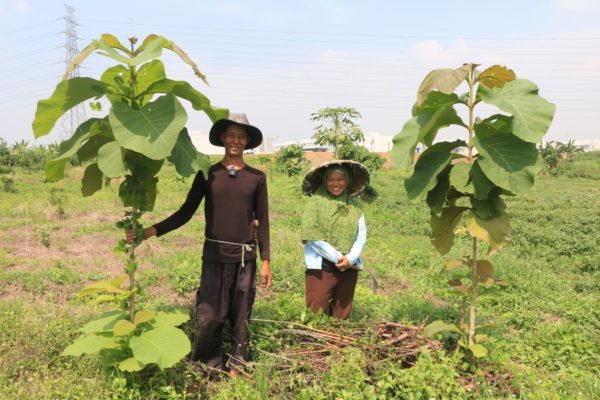
(Above) It’s been a year since the planting activities, and now the trees are nearly 2 meters tall.
Progress towards a greener future 

In just over a year, Amung and Tami have already transformed around 0.5 hectares of unused land in the GIIC area into a lush, green space that is filled with teak, jabon, and mango. Amung attributes this success to nature: “I think the soil is perfect for these trees to thrive, even without special treatment,” he says. 

Amung and Tami’s actions have played a vital role in keeping the GIIC green. In addition to providing shade, clean air, and water to the surrounding environment, the green spaces of the GIIC also deliver sustainable livelihood opportunities to local farmers. This also provides a blueprint for a more sustainable, more equitable future; a collaborative model that benefits local communities, business, and nature. 

Writer: V. Arnila Wulandani. Editor: Chris Alexander. Photos: Kemas Duga Muis/Trees4Trees

Sururi’s Story: Rejuvenating Mangroves in Semarang

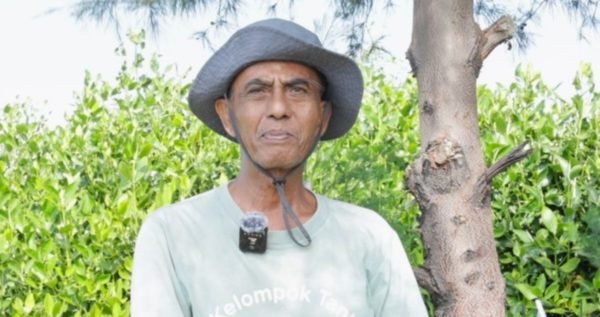
Sururi, Penerima penghargaan Kalpataru 2024

Sururi, Penerima penghargaan Kalpataru 2024

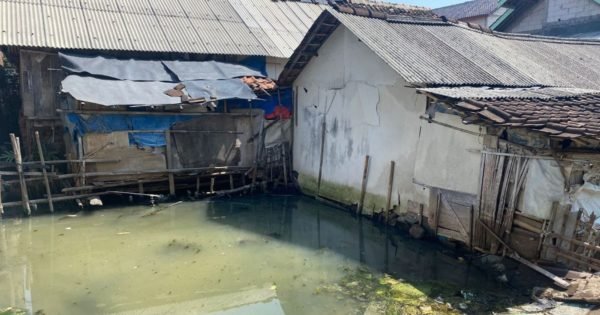
Mangunharjo Wetan is a quiet little village on the north coast near Semarang in Central Java. Here, many local residents earn their living from fishponds. However, these industries have become increasingly vulnerable to flooding caused by coastal erosion and subsidence, rising sea levels, and a lack of coastal barriers. 

These problems are directly impacting lives and livelihoods. For local fishpond farmers like Sururi, solutions are sorely needed. Back in 1995, he started planting mangroves around the village, creating a natural greenbelt that also acts as a flood barrier. 

Sururi’s Story
Flooding is a regular occurrence in Mangunharjo. Photo: Naila Kamalia/Trees4Trees

Starting from Scratch: Building Nature-based Solutions 

When Sururi began planting mangroves almost three decades ago, the area was a coastal sea. “In the past we had no natural barriers. The shoreline was directly exposed to the sea, causing coastal erosion because the shoreline was hit with the waves again and again,” he remembers. “But after we started planting mangroves, they held soil and sands behind the mangroves and slowed down the erosion.” Pointing to the thriving mangrove forest behind him, he explains that, as the mangroves grow bigger, they encourage the land held behind the mangroves to collect and form a natural defense against coastal erosion that triggers tidal floods. 

During the past 29 years, Sururi has seen his fair share of difficulties. The first two years were the hardest,” he explains. Finding seedlings was very difficult, and I had no one to teach me,” he says. In 1997, this changed when Sururi met a professor who mentored him on the proper way to plant mangroves 

Sururi’s Story
Sururi, sitting in front of the mangrove forest he helped to create .

Read also: Five Facts About Mangrove You Need to Know

Recognition for Reforestation: Sururi Receives a Prestigious Kalpataru Award 

Sururi’s efforts have not gone unnoticed. In May 2024, he was awarded the prestigious Kalpataru Award by the Ministry of Environment and Forestry. “I’m grateful, after nearly 30 years of effort, we have achieved the Kalpataru Award. It motivates us to preserve the coastal area better,” he says. 

But despite the personal accolade, Sururi maintains he could not have achieved anything by working alone; for replanting activities to really take root, it takes a village. Having worked together to make it happen, the communities are also enjoying the dividends of this collective endeavor, as the return to ecosystem health has impacted positively on the local economy.  

“Now, local communities can reap the benefit,” says Sururi. “There is a green mussel nursery here, providing an additional source of income for fishermen.”  

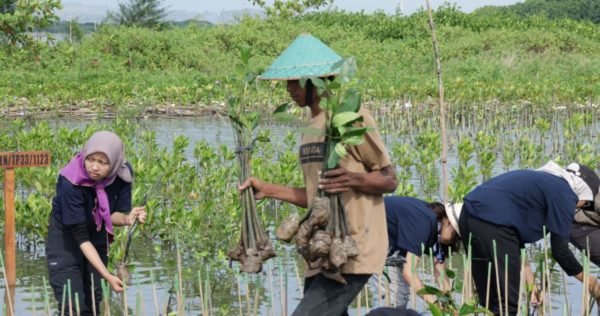
Planting mangrove in Mangunharjo coastal area
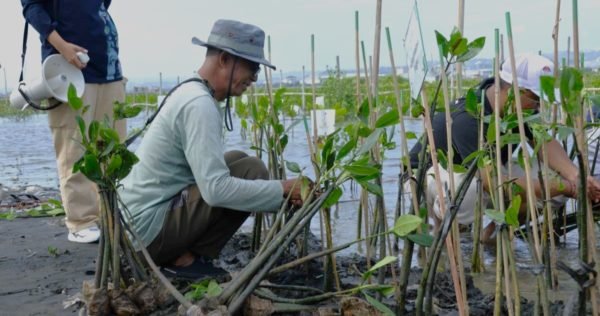
‘It takes a village’. Local volunteers help plant new mangrove seedlings in Mangunharjo

Trees4Trees Support for Mangrove Restoration in Mangunharjo  

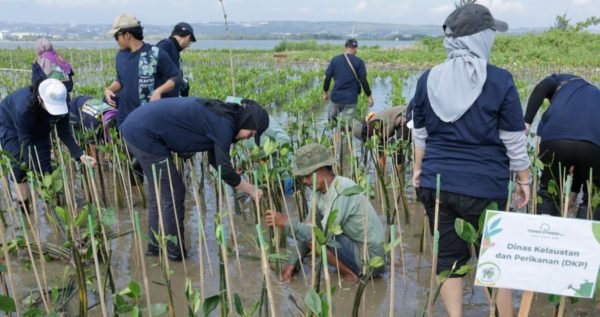
While the mangroves in Mangunharjo have certainly helped prevent a repeat of recent disasters, the area needs more trees to sure up its defenses. To support these efforts, Trees4Trees teamed up with 90 local volunteers, including Sururi and his Mangrove Lestari Farmer Group, to plant 2,000 new mangrove seedlings and 100 Australian pine trees over an area covering 1200 square meters. The activities formed part of the Trees4Trees Planting Festival, held on June 11, 2024. 

Read also: Trees4Trees Planting Festival Celebrating 16th Reforestation Journey 

“We’ve noticed many areas are losing their natural mangrove habitats and their ecological functions,” explains Adi Gani, Project Manager at Trees4Trees. “By planting mangroves and Australian pines together, we aim to enhance the greening of this coastal area; this effort is our contribution to coastal ecosystem restoration in Mangunharjo, and we plan to continue expanding it in the future,” he added. 

Mangrove planting in Mangunharjo_Trees4Trees
Some of the 90 volunteers who took part in Trees4Trees’ Planting Festival

For Sururi, the benefits of these activities are clear: “Biodiversity has flourished, including shrimp and fish. Birds are more abundant in the evenings now too. In the past, we needed the military to protect this area, but now the thriving habitat safeguards itself.”  

Sururi sends his thanks to Trees4Trees, along with hopes for the future:. “We hope this initiative will continue and expand to other locations as well.”  

Writer: V. Arnila Wulandani. Editor: Christopher Alexander. Photos: Yulianisa Dessenita