Trees4Trees Collaborates with BRIN to Strengthen Program Effectiveness

Trees4Trees collaborates with BRIN to strengthen reforestation program effectiveness_1

Trees4Trees collaborates with BRIN to strengthen reforestation program effectiveness_1

Trees4Trees Collaborates and the National Research and Innovation Agency of Indonesia (BRIN) are establishing a collaboration to accelerate the development of Trees4Trees programs related to research, education, and community service. The project will reinforce all Trees4Trees programs and will be rolled out in the Citarum watershed reforestation program funded by AstraZeneca Forests and One Tree Planted.  

Through the guidance and training from professional forestry experts and researchers of BRIN, it is hoped that Trees4Trees programs can create a greater impact in the local communities and environment and also contribute real world research results of BRIN’s innovation goals. 

Trees4Trees collaborates with BRIN to strengthen reforestation program effectiveness_2

Trees4Trees Collaborates is in its Early Stage 

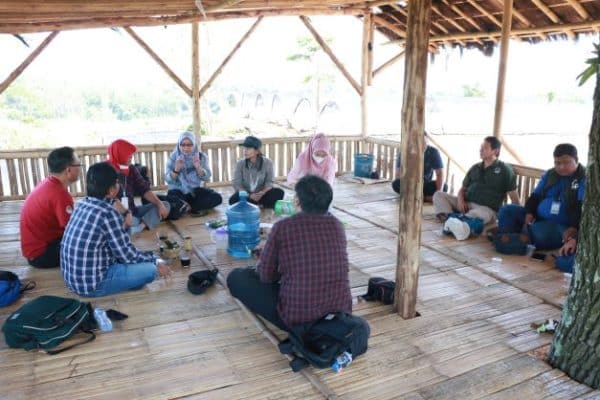
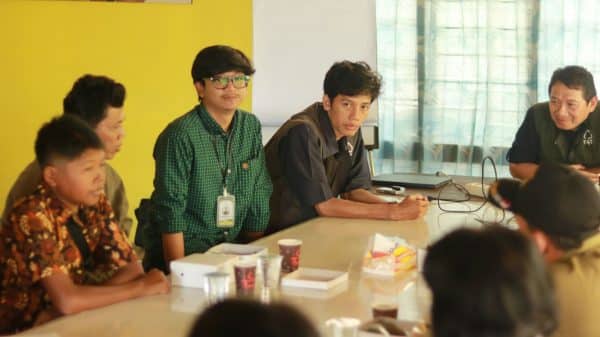
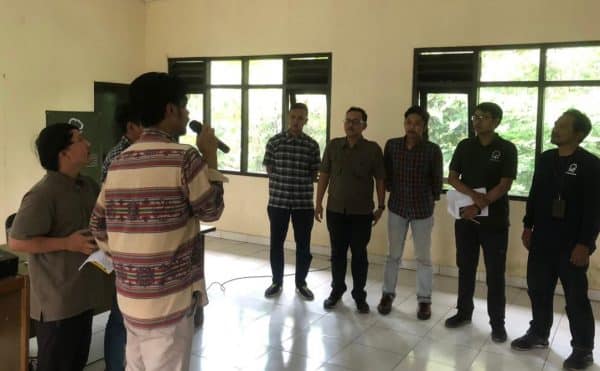
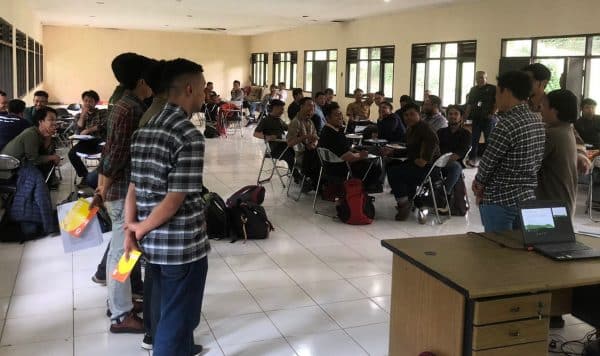
Currently, the collaboration is in its early stages. It started by holding a training session conducted by BRIN last month. A four-day training was held at Trees4Trees Arjasari, Bandung Regency, and attended by Trees4Trees technical officers, and Field Coordinators.  

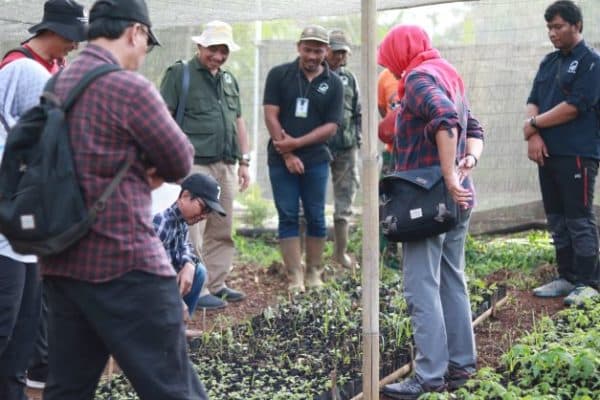
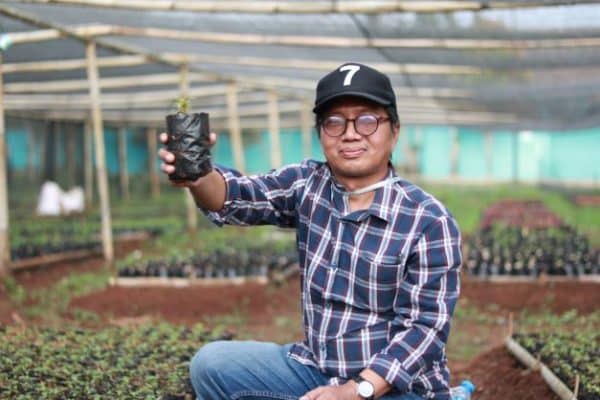
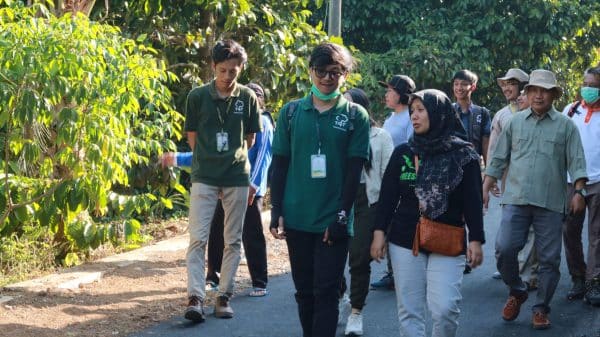
As part of the event, the BRIN team visited T4T tree-planting sites at local farmers’ fields to review and evaluate the agroforestry and conservation cropping patterns that had been applied. The team also recorded data on tree growth and pests found on the young trees. In addition to the discovery event, the team also visited impact measurement locations and seedling nurseries.  

Trees4Trees collaborates with BRIN to strengthen reforestation program effectiveness_3

Advancing Trees4Trees program development 

The project is expected to advance the success of eight aspects of the Trees4Trees’ program development; agroforestry demonstration plots, conservation demonstration plots, pest control, organic fertilizer and pesticide production, environmental impacts, social impacts, nursery and seedlings production training, and development of mangrove rehabilitation. 

“Currently, Trees4Trees is running a program for rehabilitation of critical areas working with local communities around Citarum watershed. To strengthen this program, Trees4Trees initiated research collaboration with BRIN which is the most relevant institution that can support this program development. In the early stages of the collaboration, starting with agroforestry plot research and research on social and ecological impacts, it is expected that the collaboration can provide great benefits,” Anto Wartono, Forestry Planning Manager of Trees4Trees commented.  

Author: V. Arnila Wulandani

Photos: Kemas Duga Muis

Sumeri, Find Happiness Through Farming

Sumeri, Farmer in Kalirejo Village, Kebumen

Sumeri, Farmer in Kalirejo Village, Kebumen

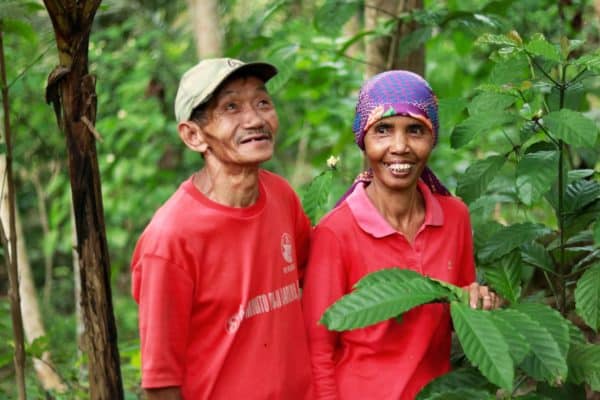
That afternoon, when we visited Kalirejo Village in Kebumen Regency, Sumeri (75) and his wife had just returned from their field. Although he is old, Sumeri is still farming actively. Every day, he begins his routine in his field starting from 8 AM to 3 PM. His fields are in two locations. The one is right behind his house. While the other one is in a higher location, around one kilometer away from his house. Each of them covers an area of 7.000 meters square.   

Sumeri took us walking around his field behind his house. His fields are quite fertile because their locations are near the water spring which is also the main clean water source for the villagers. According to Sumeri, this water spring never recedes even in the dry season.  

Planting Coffee Trees 

At the moment, most of his fields are planted with coffee trees. However, he also plants sengon trees, cassava, taro, corn, peanuts, and any kind of rhizomes such as curcuma, ginger, turmeric, and aromatic ginger. 

“Some of the coffee trees I planted came from tree planting program of Trees4Trees and Tree Ltd in 2019. While some others are the result of saplings from coffee seedlings I brought from Sumatra,” he revealed.  

Sumeri once migrated to Palembang and Central Lampung in Sumatra Island to work in the coffee plantations for more than 16 years. It was a long journey for him. “I worked there since 1988. Then I decided to come home because I wanted to farm in my own field. From the plantations I worked on, I know how to grow coffee trees in the right way,” said the father of six.  
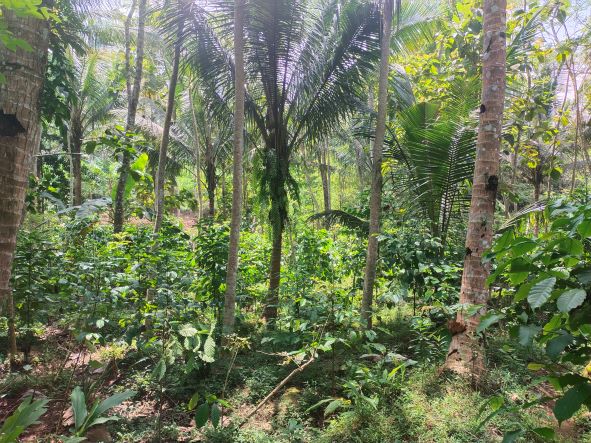
Coffee trees planted in farmer's field in kalirejo village, kebumen

He remembered when he heard about the tree planting program and tree seedlings distribution last 2019, he applied for it immediately because he really wanted to get various seedlings especially coffee. At that time, he intended to increase coffee trees in his fields, which previously were planted with cassava, corn, and coconut. 

Read also: Aan and Sugiman, Young People from Kalirejo Village Who Left the City for Farming 

“In fact, the demand for cassava is always high because many people use them as the main ingredient of various traditional food and snacks. But sadly, the price is not quite competitive. The highest price for cassava is only 2.000 per kilogram. When coffee and cassava are compared, coffee can bring more income for sure. The price of ground coffee can reach 30.000 rupiahs,” Sumeri added. 

Harvesting coffee 

Since being planted three years ago, now coffee trees he received from the tree planting program reached more than 1,5 meters in height. With his skillful hand, he has successfully grown most of the coffee seedlings he received. However, he was disappointed because a few of them died attacked by pests and eaten by bats. Sumeri has harvested it once this year. Based on his calculation, around February next year he can harvest his coffee trees for the second time. He also has sold his ground coffee at the price of 25.000 per kilogram.  

His wife greatly supports him in farming  

His success in growing trees is also because of his wife’s great support. Every day, his wife helps Sumeri after she has finished her household chores. “Every day, I pull the weeds around the plants. Sometimes, I help my husband to put tree seedlings into planting holes he digs. I cannot bear not to help him because he is old now. Even though he is old, I like to see him very enthusiastic every time he works in his field and takes care of his plants,” she admitted. 
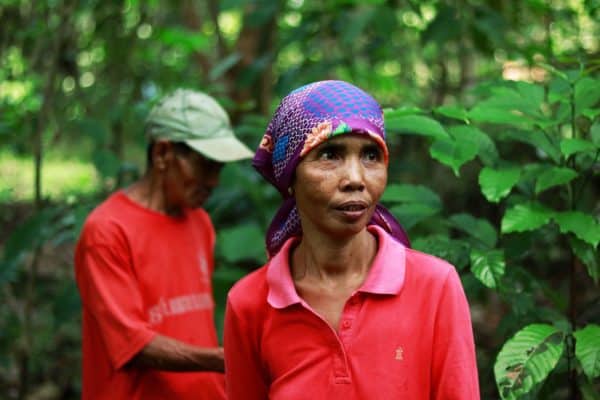
Sumeri, a farmer from kalirejo village, kebumen 

In their village, there are only a few women who are interested in farming. Sumeri’s wife realizes that farming is not an easy job for women. However, she enjoys farming with her husband and feels grateful because she learns a lot of farming knowledge.  

She hopes her husband is healthy enough to keep working in his fields. She knows that her husband wants to take care of his fields as best as he can until his children come home later to take over. 

Always Find a Joy through Farming
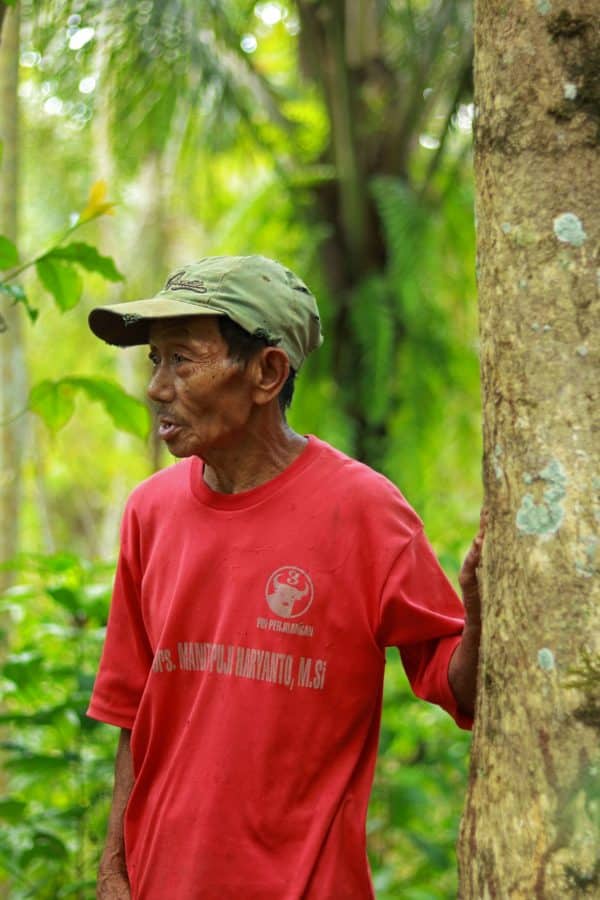
Sumeri, a farmer from kalirejo village kebumen

Sumeri pointed out the 15 meters in height of sengon trees in his field. He said he will pass them to his youngest son. Likewise with the coffee trees he planted. “In the future, these fields will be handled by my youngest son. But now, he is still working in Jakarta. So, I am taking care of trees during waiting my son come back home. Among my six children, he has the most knowledge of how to grow trees,” he said.

robusta coffee from kalirejo village, kebumen

Sumeri also revealed that he keeps farming in his old age because he always find a joy by working in his field. “Farming is always be my happiness from I was young until today, in my old age. But I am getting older and weaker now. I am not as strong as before. I think in a few years ahead, I have to take a rest and pass it to my son,” he added. 

After walking around his field, Sumeri’s wife invited us to stop by their house. She served us a cup of homemade coffee and curcuma pudding that were grown by Sumeri himself. It seemed their sincerity in growing them makes the taste of both was really good!  

Preventing Clean Water Shortages and Landslides in Kenteng Village

Preventing clean water shortage and landslides in Kenteng Village Kebumen

Preventing clean water shortage and landslides in Kenteng Village Kebumen

Water is important for living. However, not everyone accessible to get clean water. Even though it is located not far from a dam and rivers, ironically, Kenteng Village always experiences drought and lacks clean water every during the dry season.  

In addition, the village which is located in Kebumen Regency, Central Java, Indonesia is also prone to landslides during the rainy season. 

Hard to get clean water during the dry season 

Ginardi, the secretary of Kenteng Village said that drought always occurs in his village during the dry season.  “When the dry season lasts more than two months, the water will be harder to get. People must go to the nearest springs to get clean water for their daily needs. Most of springs are located about two kilometers away,” he said.  

Arif, a villager of Kenteng also told the same story about the clean water problem he has been experiencing for the last ten years. He has lived in the village since 2012. For a decade living in the village, Arif must queue for hours to get clean water like other villagers when the dry season comes. “In the long dry season, usually we don’t sleep at night because we must queue in the water spring to get clean water. I can queue from 10 PM to 3 AM,” Arif said.  

Preventing clean water shortages and landslide in Kenteng Village, Kebumen, Central Java

The location of the springs is not easily accessible making the effort to get clean water to become much harder. “During the dry season, not many springs have much water coming out. From the nearest springs that have water availability, we have to carry the water manually on our shoulders to the village’s main road. Then we transport the water by motorcycle to our house. If the dry season is longer, it is even more difficult, but we do not have another choice,” he said. 

Threatened by landslides during the rainy season  

The clean water might be easier to get when the rainy season comes. However, this does not mean that the village free from other environmental problems. A landslide is also a potential disaster that endangers the village during the rainy season.  

Farmer group leader of the village, Rokhimin revealed that several areas in the village are prone to landslides due to the soil structure. In 2017, a tremendous landslide destroyed houses, a mosque, and cattle in the village.  “We are worried that landslides will occur again. Because not just one location that is prone to landslide in the village, but there are many,” added Rokhimin.

Although the villagers have planted trees and crops in the former landslide area, there has been no ecological prevention of landslide recurrences. Most of the farmers do not know what types of trees they have to plant that can prevent landslides. 
Preventing Clean Water Shortages and Landslides in Kenteng Village, Kebumen, Central Java

“The results from our study and survey show that Kenteng Village has a large critical area. The stakeholder of the village also conveyed that there are environmental problems. A destructive landslide occurred in 2017 and droughts in every dry season. That’s why we need to plant trees here. Trees4Trees targets to plant 20,000 trees in this village, “said Faris, unit manager of Trees4Trees Kebumen. 

Planting 20.000 trees for environmental rehabilitation 

preventing clean water shortages and landslides in kenteng village, kebumen, central java

The two ecological problems are very affecting the villagers’ life, especially to meet their daily needs. So the villagers hope they can plant trees that are able to prevent erosion and maintain the availability of water as well as improve their income by harvesting the results. 

“The villagers are enthusiastic about the tree-planting plan. We are hoping by planting more trees, the problems in this village are slowly solved,” concluded Ginardi.

Arif also expects tree species that have the ability to store a lot of water can be planted around the springs to restore the water sources. “I hope there will be no more problems with accessing clean water in this village, even in the dry season.”

To help the villagers to plant trees in the village, Trees4Trees is inviting you to take part in #GivingTuesdayForTree campaign and GIVING TREES for Kenteng village from 7 to 29 November 2022. You can donate trees through GIVING TUESDAY 

Author: V. Arnila Wulandani

Photos: Yulianisa Dessenita


Fairventures Worldwide Visited Trees4Trees for a Comparative Study 

fairventures worldwide visited trees4trees nursery in pati central java for reforestation comparative study in pati central java

fairventures worldwide visited trees4trees for reforestation comparative study in pati central java

A few weeks ago, Trees4Trees was visited by Fairventures Worldwide, a non-profit organization that is also focused on reforestation and environmental restoration activities. The visit was carried out in Pati Central Java and aimed to conduct a comparative study from the Trees4Tres reforestation program.  

Learning Agroforestry Through Comparative Study

The purpose of the comparative study especially was to learn about the cultivation of sengon trees (Paraserianthes falcataria), community empowerment and mentoring techniques of the tree planting program, collaboration with off-takers and factories, also agroforestry systems developed by Trees4Trees and farmers as well as the marketing strategies. 

fairventures worldwide visited trees4trees nursery in pati central java for reforestation comparative study in pati central java

During the three-day visit, the team had the opportunity to visit Pati nursery to see how tree seedlings were grown and treated until they were ready to be distributed to farmers and planted. 

Through the discussion sessions, Trees4Trees shared stories, experiences, and efforts in environmental restoration as well as education, involvement, and empowerment of local farmers in planting trees.  

The team also visited the farmers’ field and observe the agroforestry patterns that have been applied to the farmers’ field. One of the patterns shown was by combining sengon trees, fruit, and coffee plants in one area. Sengon trees and fruits act as shades for the coffee plants. 

fairventures worldwide visited trees4trees for reforestation comparative study in pati central java

“We have a lot of things to learn from this visit and we thank Trees4Trees for the opportunity. From this trip, we can take new things that have not yet been applied in Central Kalimantan. We will bring the new knowledge and experiences that we already got from Trees4Trees to be implemented with our farmers and our staff in Central Kalimantan,” said Raya, Fairventures Worldwide Country Manager of Indonesia.  

Sharing Knowledge for Greener Earth

This comparative study also not only aims to share knowledge and experience to achieve the same goal of making the environment healthier but also marks that the two organizations support each other for environmental restoration through planting trees.  

“We hope this comparative study can be a good reference to the program run by Fairventures Worldwide in Central Kalimantan. Hopefully, the reforestation we have conducted not only provides a great impact on the environment and local communities but also brings more benefits to the farmers. It is important to share good things for a greener earth and for a more prosperous society”, Novita, Trees4Trees Forestry Coordinator revealed.

Author: V. Arnila Wulandani 

Sundanese Language Training to Strengthen Communication Skill to Local Communities

trees4trees sundanese language training 1

trees4trees sundanese language training 1

West Java is one of Trees4trees’ work areas where most of the population speaks Sundanese as their first language. Although Bahasa Indonesia is used as a formal language, Sundanese as a local language is deeply attached in their daily life and daily conversation.  

Interaction and communication skills with local communities are one of the most important things to achieve successful program implementation in the villages. For this reason, field coordinators need to have good skills to communicate with them using the local language as one of effective approaches.  

Regarding the importance of mastering local language skills, Trees4Trees West Java work area held a training of communication and interaction with Suge ndanese Languaand Culture in Arjasari, Bandung. The activity aimed to improve the communication skills of the field coordinators using language properly and correctly while working around the local communities. It was also purposed to enhance the ability of field coordinators to deliver program materials to villagers in Sundanese language. 

Read also: One Tree Planted Visited Trees4Trees’ West Java Nursery

The activity was held for two days and attended by 96 staff members of West Java Trees4Trees. The workshop was delivered interactively by Elis Mia, a Widyaswara Sundanese Language Expertise. 

trees4trees sundanese language training 

“The Sundanese language skill is very important in the implementation of Trees4Trees program in areas where people speak Sundanese. It will be easier for our team in the field to communicate and to convey program information using the everyday language of farmers or the local community. It is a good way to approach them. In the Sundanese language test during the training, we had a participant who got a perfect score of 100, and two participants got a good score of 95. We really appreciated them. We hope more field coordinators will have a good skill in mastering culture after this training,” said Rahmat Syamsudin, Social Forestry of Trees4Trees.  

Rahmat also revealed that this training was expected to be a basic skill for field coordinators who work closely to local communities. In the future, capacity building trainings in communicating and interacting with local communities will continue to be carried out.  

Indonesian Forest, One of the Largest in the World

Indonesia forest cover is one of the largest in the world and a significant proportion of the world's remaining virgin forest stands.
Indonesian Forest, One of the Largest in the World

This August, Indonesia has not only celebrated Indonesia 77th Independence Day on August 17 but also Indonesia Forest Day on August 7. These two momentous days in August mark the natural richness of Indonesia as one of the largest archipelagos in the world. It has more than 17.000 islands. For Indonesian people, forests and all the biodiversity inside are part of their identity as well as part of their culture.  

Indonesia forest cover is one of the largest in the world and a significant proportion of the world’s remaining virgin forest stands.  

Indonesia Has a Diverse Types of Forest  

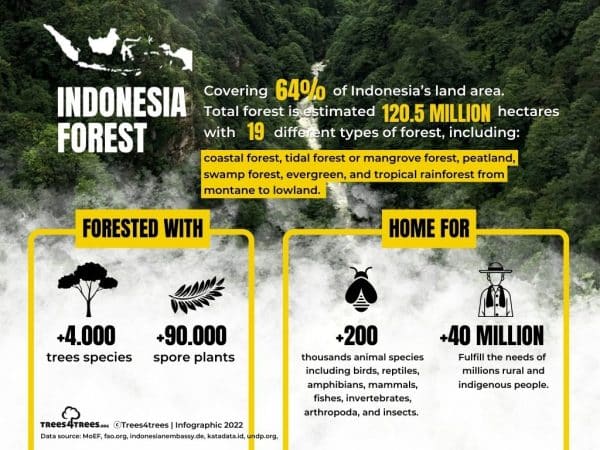
Of the total forest area, estimated to be around 120,5 million hectares, Indonesia has 19 diverse types of forest. The Indonesia tropical rainforest itself is the third largest in the world after Amazon and Congo rainforests. Indonesian mangrove forests and peatland are the largest in the world. They make Indonesia as one of mega biodiversity country in the world. 

Read also: The Incredible Benefits of Mangroves Ecosystem 

Indonesia forest infographic
Indonesia Forest One of the Largest in The World

Data source: MoEF, fao.org, indonesianembassy.de, katadata.id, IBSAAP 2015-2020

Indonesia Biodiversity 

The Indonesia archipelago spans the equator. It lies between the two tectonic continental plates, Eurasian Plate and Australian Plate. This tropical location creates conditions for biodiversity as well as a high level of animal and plant native only to Indonesia which also makes it the second largest mega biodiversity country after Brazil.  

Indonesia is forested with an enormous number of trees species and a home for hundred animal species. One of the most remarkable things, Indonesia is also a home for 150 thousand species of insects.  

According to Indonesian government Statistics in 2010, Indonesia is populated with 1.340 ethnic groups who speak in more than 700 different languages. Many of them depend on the forest for their daily needs. 

Indonesia Forest Contributions  

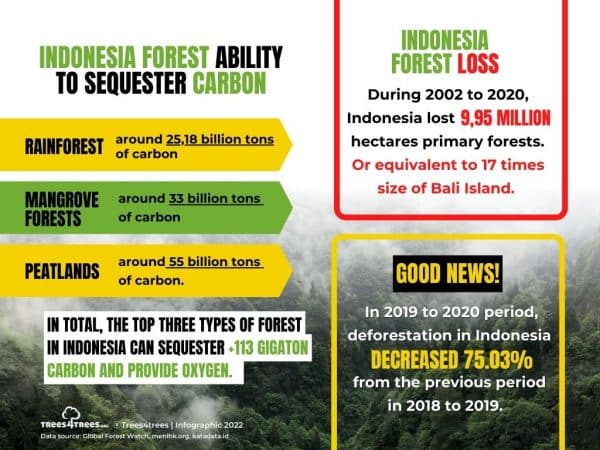
The tropical rainforest, mangrove forests, and peatlands in Indonesia absorb a vast amount of carbon. The total carbon stored by these top three types of forest is about 113,18 gigaton carbon. Super!  

Those forests not only act as a carbon sink but also provide fresh air, water, food, shelter and homes, medicine and fulfil the needs of living creatures. They also make an enormous contribution to ecosystem balance and climate stability worldwide. 

Data Indonesia forest

Data source: Global Forest Watch, menlhk.org, katadata.id 

Forest Loss in Indonesia   

Even though Indonesia has an enormous forest area, unfortunately Indonesia has been also one of five top countries to lose their forests in the last 20 years. Land conversion and illegal logging are deemed as the main causes of forest loss.  

Although the rate of deforestation in the 2019 to 2020 period has significantly decreased compared to 2018 to 2019 period, deforestation in Indonesia needs serious attention. The drivers of deforestation are inseparable from the economic factor of the community. So that, community involvement is needed to find solutions and continue to make efforts to prevent the increasing rate of deforestation. 

Read also: Planting One Hundred Trees with Students and Villagers in Kalibeji Village 

One of the solutions to reduce deforestation is agroforestry. In the agroforestry system, forest trees are combined with crops that produce results economically on a regular schedule to support the local communities. Traditional practices in social forestry, including agroforestry, have been proven to be able to meet the needs of community socially and economically, also protecting the forest ecologically.  

To get involved in reducing deforestation through agroforestry, you can support farmers in our community to implement an agroforestry system by planting trees on the lands where they live. Click HERE to learn more about how to get involved! 

Author: V. Arnila Wulandani