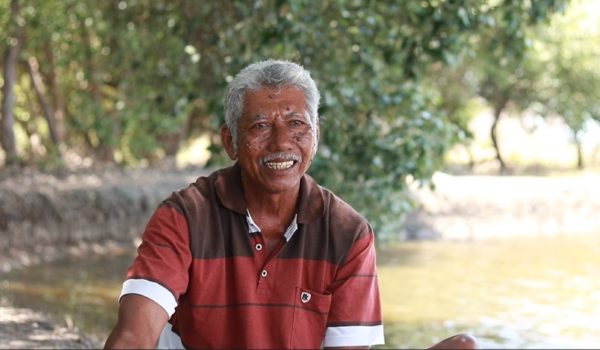
The Story of Euis Maryati: Widowed and Planting Trees to Support Her Family

Euis Maryati
Euis Maryati: Widowed and Planting Trees to Support Her Family
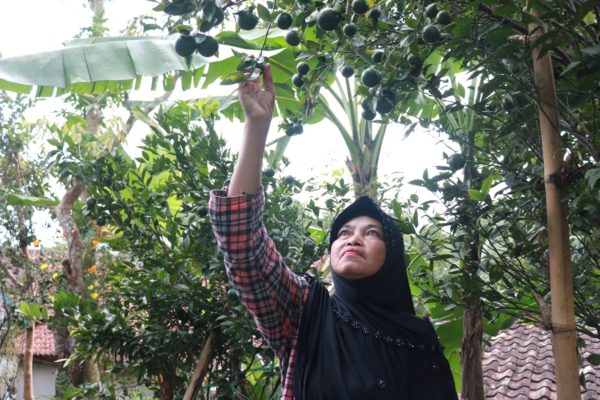
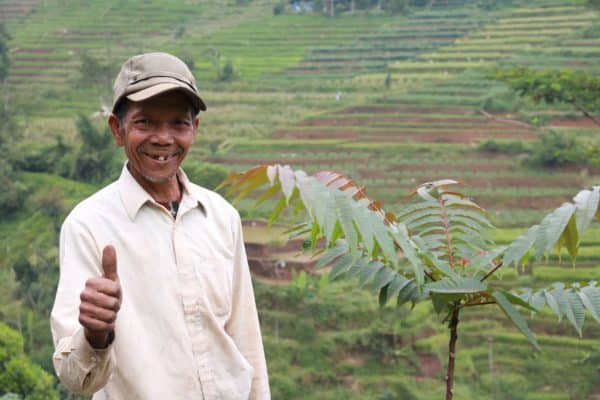
For a woman with four children, it is never easy being a single parent. This is how Euis Maryati (57) feels. She is one of the farmers in Patrolsari Village, Arjasari District. Since a few years ago, she had to be a mother and also head of the family.

As a widower, her life is struggling. Even though, she keeps herself motivated to be a strong woman for the sake of her family. Unlike common life of most women in her village, her daily life is not only about taking care of the household things, but also making income to fulfill her family’s needs. Otherwise, she has to work harder than anyone else. 

Farming Crops is not Enough to Fulfill Her Family’s Daily Needs

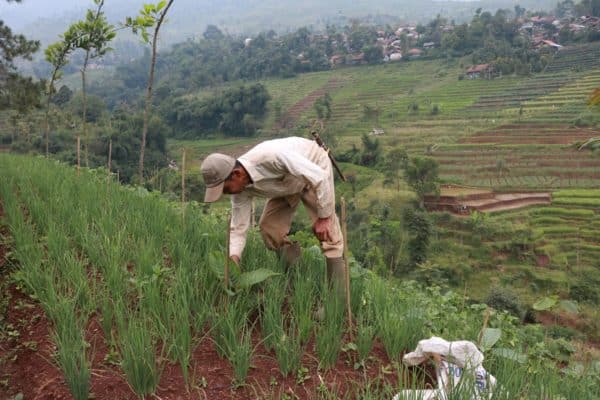
Fortunately, Euis Maryati has a field that she can plant many kinds of plants. Most of them are seasonal food crops. Through her field, she can depend her life to the crops’ yield. “Here, I planted various kind of food crops. I planted chilies, cassava, ground nuts, and red bean. There is also corn. Usually, I harvest my seasonal crops once in every two to three months,” said Euis Maryati.  

Afterwards, she sells her crops in a traditional market around her village. Some of the crops are also self-consumed by her family. According to Euis Maryati, by planting crops, at least she does not have to worry if some days she does not have enough money to buy food. Still, she can pick some food crops from her field for her own family consumption.  
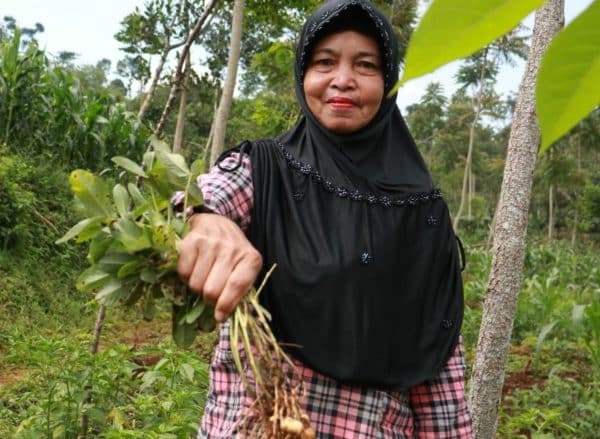
Euis Maryati: Widowed and Planting Trees to Support Her Family
Euis Maryati has harvested crops from her field. Photo: Trees4Trees/Kemas Duga Muis

Even though, to meet her family’s daily needs, she cannot avoid doing double jobs at one time. Besides farming, she also sells snacks. “If I do not farm, I cannot support my family’s needs. However, farming crops is not enough. So, I have also opened a small business selling snacks. It is to increase my income to meet my family’s daily needs,” she conveyed. 

Planting Trees: Cultivating a Better Future for Her Family

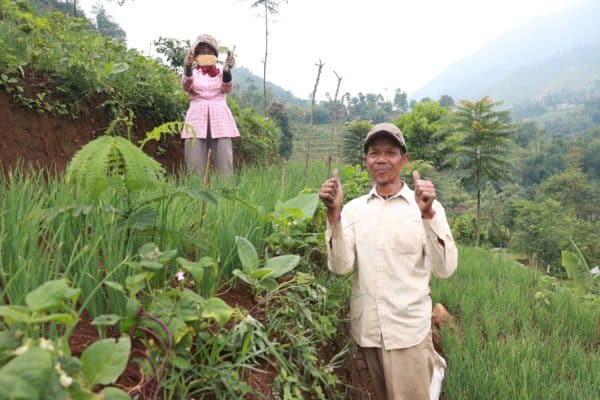
In 2021, when she was offered a partnership program of tree planting funded by Astra Zeneca collaborated with Trees4Trees and One Tree Planted, Euis Maryati planted burflower-tree, avocado, mango, and orange. She planted those trees among her seasonal crops in her field. She admitted that she was lucky to get plants from the tree planting program. She hopes a lot from trees she planted for the future of her family. 

She has been persevering in taking care of her trees. She cleans the grass every day so that all the plants grow well. She also applies her plants with organic fertilizer that she made herself from animal dung. 
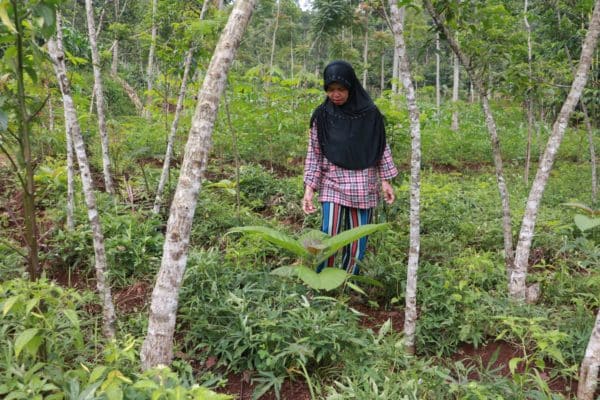
Euis Maryati: Widowed and Planting Trees to Support Her Family
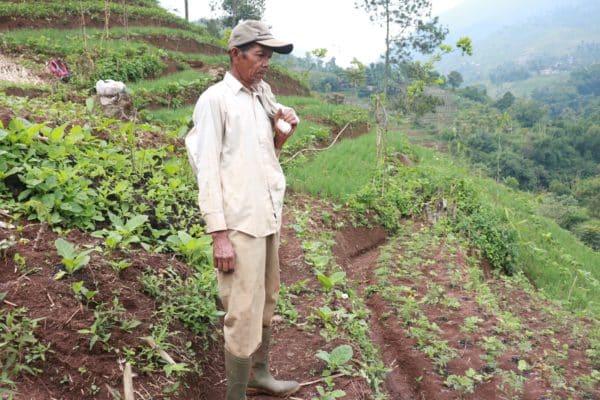
Euis Maryati is checking her jabon trees planted in her field along with various crops.

She expects, by taking good care of those trees, she will be able to harvest the good results. Moreover, now plants in her field are more varied. With more types of trees planted, she hopes she can sell more yields in the future, then she can fulfil her family’s needs much better than today. 

“My life has been difficult for years. So I am hoping that it does not get any harder. If not myself, who else will  support my family? I realize that I am both the mother and the head of the family. It is not easy. But for my children and their future, I will continue to work harder,” she stated.  

She thanks to the tree planting program and she hopes it can bring more prosperity and a better future for women farmers and single parents like her. 


Travels in Java: Legok Dayeuh, Where Nature and Culture Converge

Travels in Java: Legok Dayeuh
Photo: Trees4Trees/V. Arnila Wulandani

“We provide a place where tourists can sit, drink a glass of coffee together, take a photo, and enjoy the view,” says Asep, a young entrepreneur in West Java. We’re sitting together in Legok Dayeuh in West Bandung regency, sipping coffee grown in the patchwork of plantations that covers the surrounding landscape. Up here, at 900 meters above sea level in the foothills of Mount Puntang, the air is fresh and cool, and the views are truly beautiful.  

Since 2020, and with support from local government, young people like Asep in the nearby village of Campaka Mulya have been working to develop Legok Dayeuh and turn it into a tourist destination. They’ve been constructing saungs – a kind of traditional bamboo pavilion, where visitors can relax and enjoy panoramic views. These structures add a touch of cultural magic to the natural wonders that surround them.  

Stunning Views of Verdant Surroundings 

Asep explains the saung were a natural choice for the designers and builders of the Legok Dayeuh development project, as they are emblematic of local Sundanese culture. “The tourism spot was initiated by young people in the village and the saung were also built by hand by members of local communities, working together,” says Asep. 

Legok Dayeuh is situated close to the Cigereuh River; a tributary of the Cisangkuy River, which is in the sub-watershed of the Citarum – the longest and largest river in West Java. Campaka Mulya village is located less than two miles (3 km) from the foot of Puntang Mountain and around 9 miles (15 km) from downtown Bandung. 

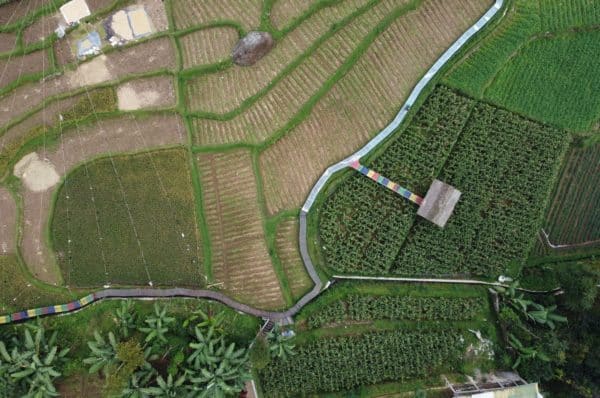
Legok Dayeuh’s main attraction is the vast expanse of rice and corn fields, which cover an area of around five hectares and feature footbridges that allow visitors to immerse themselves in the landscape. Two traditional saung huts, made from bamboo and with roofs of dried sugar palm leaves, provide eye-catching landmarks in the valley. 

Travels in Java: Legok Dayeuh, Where Nature and Culture Converge
(Above) a birds-eye view of Legok Dayeuh. Photo: Trees4Trees/Kemas Duga Muis.

Plenty to See and Do  

“We have welcomed many visitors, including a group of tourists from Japan,” explains Asep. “At the moment, due to ongoing development of the tourism spot, we can only offer tour activity packages for groups,” he added.  

These package tours put an emphasis on nature, discovery and authenticity. Visitors can get their hands dirty, explore the landscape, and experience activities in the fields like planting or harvesting rice paddies with local farmers, swimming and paddling in the river, hiking through the hills, and picking coffee beans.  

“In the future, there will be also a campsite on the hill,” says Asep. “But we’re still in the process of setting it up.” 

Legok Dayeuh: Nature and Culture Converge
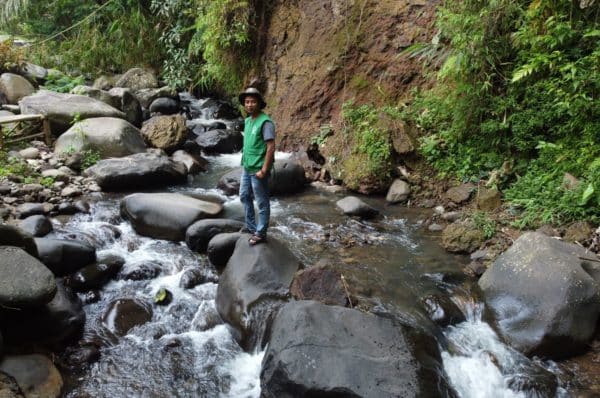
(Above) Asep stands on a rock in the Cigereuh River. Photo: Trees4Trees/Kemas Duga Muis.

Cup of Java: A Taste of Local Tradition  

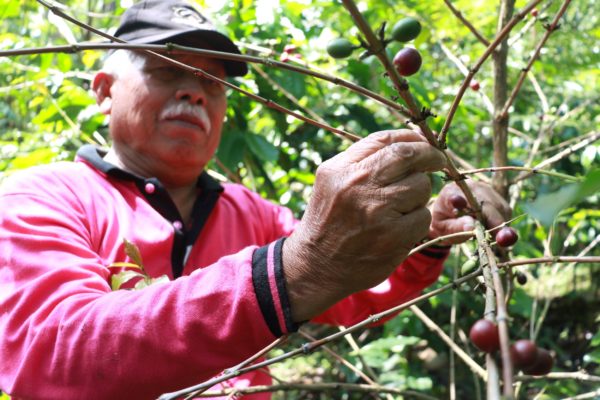
These high altitudes are perfect for growing coffee – particularly arabica. Many farmers in Campaka Mulya plant coffee trees, and the region is developing a global reputation for the quality of its coffee beans.  

In 2015, a local brand (called Puntang Coffee) actually won the Coffee Specialty Competition in Atlanta, USA. “From that moment on,” explains Asep, “farmers’ interest in growing coffee trees has increased.” 

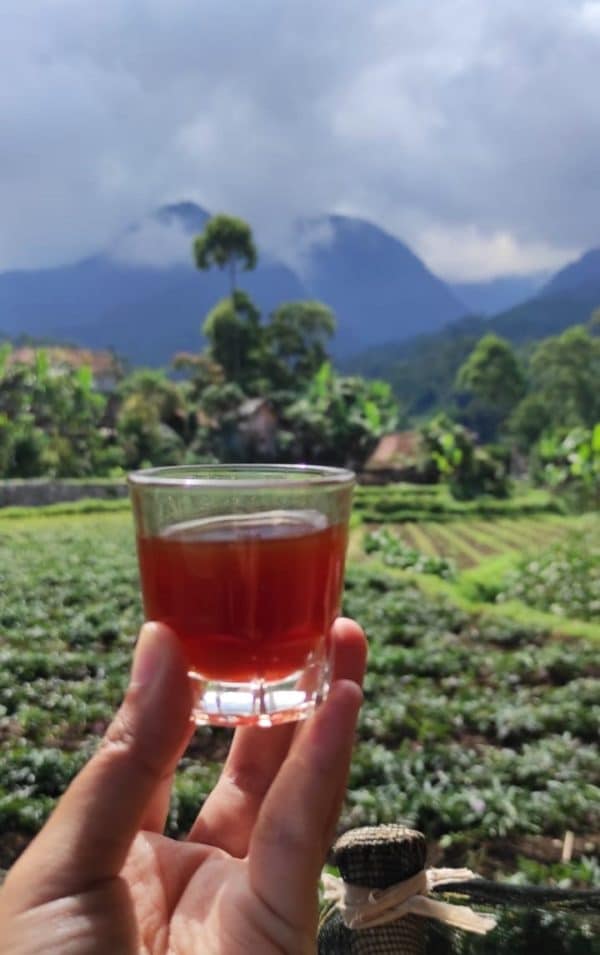
From planting to picking and from roasting to grinding, every step in the Puntang coffee process is done by hand. Locals like Asep are only too happy to walk visitors through the process, or brew up a special cup for them to taste. Visitors can also take home a 200-gram pack of Puntang coffee for just IDR 100,000 (US$ 6.50). 

Travels in Java: Legok Dayeuh, Where Nature and Culture Converge
(Above) A glass of Puntang arabica coffee, brewed by Asep. Photo: Trees4Trees/V. Arnila Wulandani. (Below) Abah Usin, a coffee farmer picking the coffee beans. Photo: Trees4Trees/Kemas Duga Muis.

Coffee Farmer

Plant Trees, Empower Locals, Preserve the Environment 

To preserve the natural wonders of Campaka Mulya and help the village develop its tourism potential, Trees4Trees has been planting trees here since 2020. “We plant some types of trees, including jabon (burflower tree), mindi (chinaberry), eucalyptus, and coffee, says Anggy Firmansyah, who is Unit Manager of Trees4Trees in the Cisangkuy planting area. “Particularly for coffee, we aim to support local farmers, who depend on (coffee) as their main source of income.”  

Trees4Trees has also been busy planting trees along the riverbank of the planned camping ground area, to prevent erosion and provide shade. “We hope the trees not only serve to preserve the environment but also support the effort of establishing this tourism destination,” Anggy added. 

Writer: V. Arnila Wulandani. Editor: Christopher Alexander

Empowering Women Farmers: Trees4Trees and Tree HK Join Forces


Trees4Trees and Tree HK Strengthen the Empowerment of Women Farmers

In Central Java province, particularly in Kebumen regency, not only men work as farmers, but also women. Some women in the regency work in the field to support their husbands who are farmers. Some of them also work as farmers because of their role as the backbone of the family. They fulfill their main responsibility to meet the family’s needs through farming activity, then sell the results.  

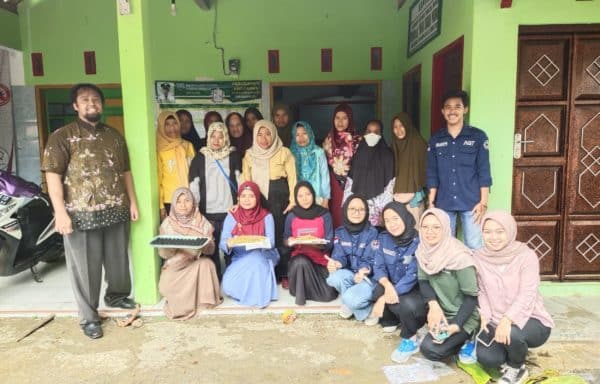
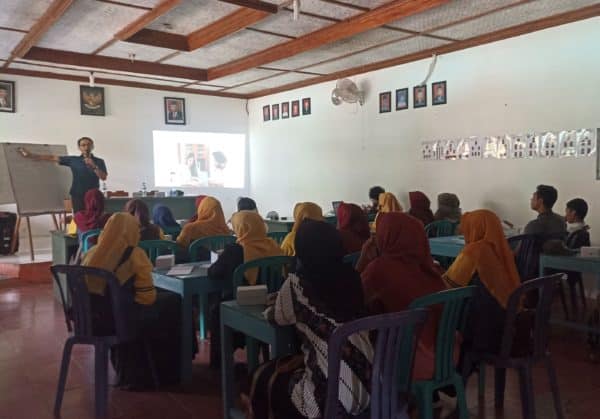
As part of Tree HK’s support to women farmers involved in the tree planting program, recently, Tree HK and Trees4Trees held training in Kebumen regency, Central Java. The training was conducted in two villages, Gunungsari and Kalirejo, where both locations are the tree-planting areas with the support of Tree HK.   

Related to the workshop, Trees4Trees and Tree HK delivered two different topics in two days. Despite the training being more focused on women’s empowerment in the household economy enhancement, men were also welcome to join.  

Household Economic Management Training 

A woman is a pillar of a family’s financial management. However, it is important for women to know how to establish a good family economy. Considering the importance of this, Tree HK and Trees4Trees conveyed household economics management as one of the training topics.  

Trees4Trees and Tree HK Household Economic Management Training 
Trees4Trees and Tree HK delivered two different topics in two days

Muhamad Haris Maknun, a Lecturer of the Faculty of Industrial Technology, Nahdlatul Ulama University, Cilacap lead the training. A group of women farmers and representatives of the Family Welfare Movement with a total of 35 people participated in the event. In this workshop, the speaker shared knowledge on how to manage the household economy with good family financial management for achieving the family goals. The workshop session also allowed the participants to share their experiences on how they manage their daily household expenses and income in a forum. They shared with each other and discussed finding solutions for the household challenges they encountered.  

Bio-briquette Making from Corn Wastes Training 

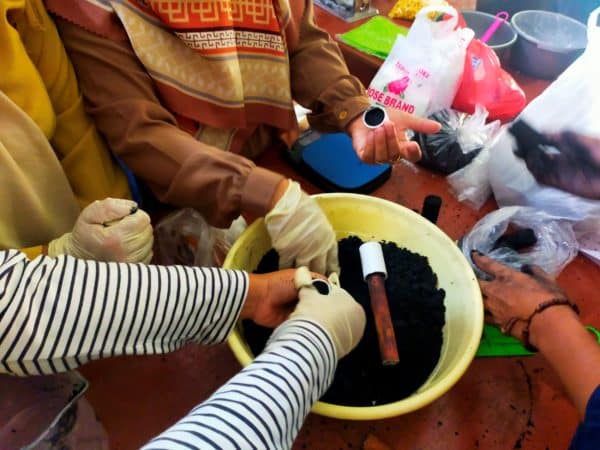
The second training topic was to utilize corn waste and corn post-harvest processing. The corncob is the part where the kernels attach. This part is often considered to be of no use and most farmers throw it away. This is commonly found in many cornproducing areas, including Kalirejo Village. For this reason, Trees4Trees and Tree HK conducted training on how to utilize corn waste and change it into bio-briquettes. This training topic was determined as it is easy to be applied as well as easy to find the raw material. 

Arif Prashadi Santosa, a Lecturer of the Faculty of Agrotechnology, Muhammadiyah Purwokerto University lead the training which participated with about 25 participants. The training encouraged farmer participants to use the technology of bio-briquette making as an alternative source of their income.  

Household Economic Management Training 
articipated with about 25 participants. The training encouraged farmer participants to use the technology of bio-briquette making as an alternative source of their income.

The training discussed the raw materials, procedures, and advantages of charcoal briquetting, and the marketability of bio-briquettes. The process of charcoaling was also demonstrated using corncobs.  

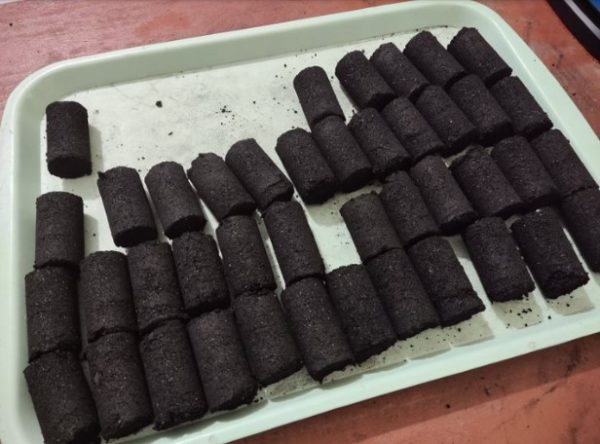
The bio-briquette
The bio-briquette-making technology is an alternative source of energy for cooking and heating

“Corncob is a potent raw material for briquette production as it has high heating value. The bio-briquette-making technology is an alternative source of energy for cooking and heating,” Arif Prashadi Santosa, the Training Coordinator said.  

The participants said the skill of bio-briquette making they have obtained from the training would be useful in their community as it could be a new source of income and meet the existing needs for fuel.

Iju’s Passion for Planting Trees: Beyond the Harvest

Farmer story: Iju, one of Trees4Trees best farmers from Neglasari village
Iju, one of Trees4Trees best farmers from Neglasari village, Bandung Regency. Photo: Trees4Trees/Kemas Duga Muis

Since returning to his home village in Neglasari Village a few years ago, Iju (60) has decided to manage his family’s land. His home village is located in Ibun District, Bandung Regency. Before, he had worked in a rubber and oil palm plantation in Sumatera Island for years. However, his longing for his home village made him decide to return home.  

After returning from Sumatra, Iju began to plant bamboo trees. Unfortunately, the results were not good and the price was not favorable. Meanwhile, he had to support his family. His four children were married, while one of the youngest was still in senior high school and he needed income to meet his family’s daily needs. 

Switching From Growing Bamboo to Polyculture Planting System 

In the midst of his struggle in planting bamboo trees, he was offered to join planting trees program which initiated by Astra Zeneca and collaborates with Trees4Trees and One Tree Planted. He was excited to join the program and received support and training in agriculture from the Trees4Trees team. He did not only receive trees for free, but also obtained trainings and more knowledge of agriculture he needed from the team. 

Iju also got a suggestion and assistance from the team to manage his land by applying a polyculture or intercropping system. Indonesian called the system as tumpang sari. This system works by planting several types of trees and crops in a field. It allows farmers to reap short-term and long-term yields from several different trees and crops. Through this system, he potentially can get greater results than planting just one type of tree.

Based on the suggestion, Iju then decided to plant several food crops on his land whose results could be harvested in short term, such as onions, cassava, sweet potatoes, and chilies. Meanwhile, from the tree planting program with Trees4Trees, Iju received burflower-tree, gmelina, durian, and avocado trees. He can reap the long-term benefit from those types of trees.

Farmer story: Iju, one of Trees4Trees best farmers from Neglasari village
Iju is taking care of onion in his field. Photo: Trees4Trees/Kemas Duga Muis

Planting Trees to Restore the Former Forest in the Village

According to Iju, he intended to dedicate the long term-harvested trees he planted for his next generation. He said those trees will be his legacy for them. “I will not harvest or cut down these trees. I will pass them to my children and my grandchildren, so they will be able to enjoy the result and the benefit of trees I planted,” Iju said.  

For Iju, planting trees is beyond harvesting and using the result to meet his family daily needs. He believes that trees have much bigger role than that. Trees provide clean air to breathe, water, shelter, and preserve the life to all of living creature on earth. He realizes clean air and water are the most essential needs of human beings, including for the next generations. 

Planting Trees to Restore the Former Forest in the Village
Iju is applying polyculture system in his field. Photo: Trees4Trees/Kemas Duga Muis

“I plant trees because it provides great benefits not only for myself and my family. But also for the environment. They also produce oxygen and store water that keeps us alive. I want my children and grandchildren will have a good life in the future, so I plant trees,” he added.

Iju’s strong will to plant trees was also fueled by the disappearance of the former forest around her village years ago.  

Planting trees: Iju, one of Trees4Trees best farmers from Neglasari village
Iju and his wife are working in their field. They thank Trees4Trees along with the support of Astra Zeneca and One Tree Planted for tree seedlings and agricultural support they have received. Photo: Trees4Trees/Kemas Duga Muis.

“In the past, this village had a dense and natural forest. But the forest is lost and now it becomes a critical land due to excessive use. I have a dream to return the forest back. Who knows, if I keep planting trees, I may see the forest return to the way it was before,” said Iju optimistic. 

Travels in Java: Journey to Curug Kedondong Waterfall in Kebumen

Travels in Java: Journey to Curug Kedondong Waterfall in Kebumen

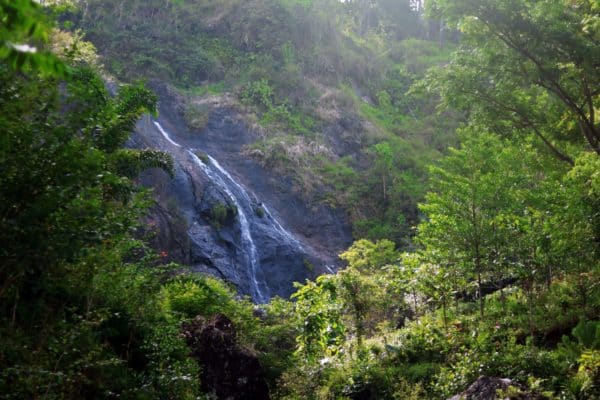
From beaches lining the southern shores of Java to the verdant hills inland, Kebumen is home to extraordinary natural beauty. For travelers, the landscape offers many treasures to be explored. During Trees4Trees’ recent planting excursions, we encountered one of the region’s hidden gems, tucked away in the forest. 

People in the nearby village of Gunungsari call it Curug Kedondong (kedondong is a type of fruit tree that grows locally, and this name is also given to the nearest sub-village). Surrounded by natural woodland, this breathtaking waterfall in Kebumen regency is a great example of why our mission to re-green Java is so important; a process of rehabilitating degraded areas, but also preserving the natural wonders we already have. 

How to Get There 

The waterfall is located around 15 miles (24 kilometers) southwest of downtown Kebumen. Traveling by car or motorbike, the road winds through idyllic pine forests and farmland along the way.   

At the end of the road, the entrance gate is less than 1500 feet (450 meters) from the nearest houses. Entrance costs just IDR 5,000 (US$ 0.33) per person.  

What Makes it Worth the Trip 

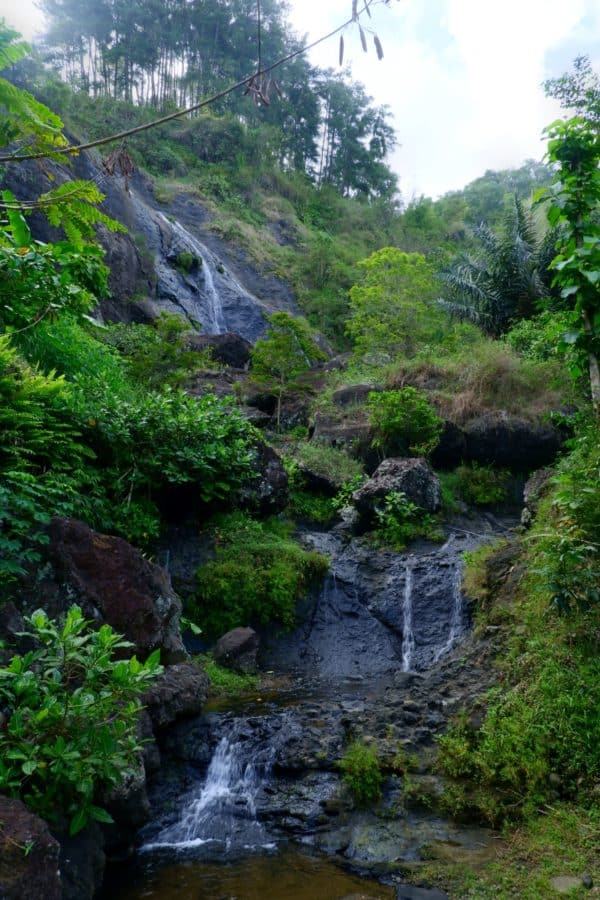
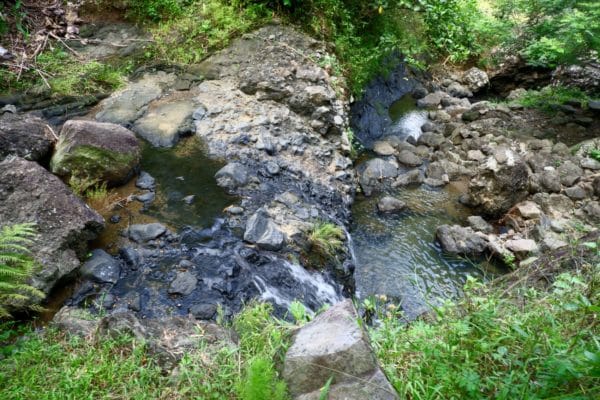
The waterfall itself stands around 82 feet (25m) tall. The water cascades into an ancient canyon of andesite rocks, framed by verdant jungle ferns. At the base of the falls there is a natural freshwater pool – the perfect spot for a refreshing dip after the long trek.  

And speaking of trekking, those with an adventurous streak can hike to the top of the falls. From up here, you can sit and enjoy panoramic views of the hills surrounding Gunungsari Village.  

Curug Kedondong, Kebumen_3
(above) Kedondong Waterfall cascades over giant andesite rocks

Making a Splash: The Growing Popularity of Kedondong Waterfall  

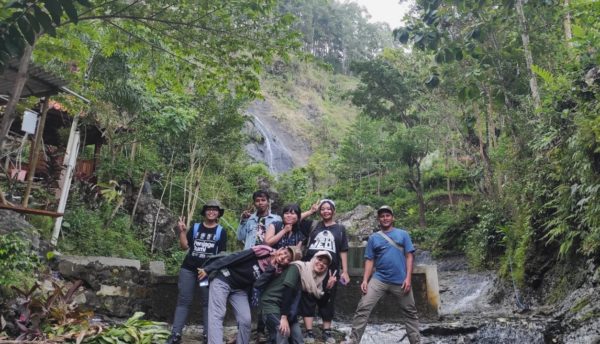
For many years, this spot had been a well-kept secret, known only to the people of Gunungsari. But in 2018, a group of local youngsters decided it was time to put this place on the map – so they began promoting the falls as a unique tourist destination. 

In 2019, and with support from the village government, they officially unveiled the falls and began welcoming visitors from far and wide. Since then, the site has been made more accessible to the public, with new facilities like gazebos, bridges, toilets, a parking area, and food stalls.  

Jasmun is one of several young people in Gunungsari to have been actively involved in – and subsequently benefitted from – development of the falls. He lives nearby with his wife, and together they have converted their home into a food shop for tourists.   

“Previously, it was like our own private waterfall because the location was just behind our house,” says Jasmun. “Now, we’re grateful that many visitors come to this place, because we can make income from this shop.”  

Travels in Java: Journey to Curug Kedondong Waterfall in Kebumen
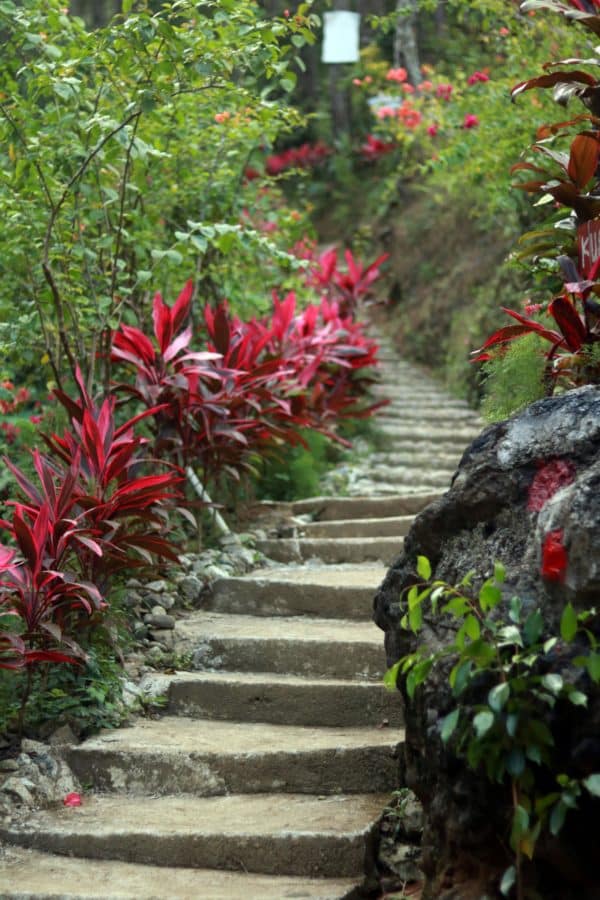
(Above) “Our own private waterfall.” Young people in Gunungsari offer tours for visitors and help keep the falls clean. Photo: Trees4Trees/V. Arnila Wulandani. (Below) Stairs to pine forest. Photo: Trees4Trees/Yulianisa Dessenita.
Stairs to pine forest in Curug Kedondong
Travels in Java: Journey to Curug Kedondong Waterfall in Kebumen

Putting Down Roots: Reforestation the Key to Future of the Falls 

“This waterfall originated from a source spring above,” explains Jasmun, who is part of a group that is working together to preserve the surrounding forests and keep the river system healthy. Recent years have given them cause for concern. 

“In the dry season, the rivers never fully dried up,” he says. “But lately, the water coming from the spring is dwindling. It’s a major worry for us.,” The natural spring feeds the waterfall, but also represents the main source of clean water for villagers in the area.   

Source water of Curug Kedondong in Kebumen
Crystal-clear spring water in the river above the falls. Photo: Trees4Trees/V. Arnila Wulandani

In an effort to protect the spring and preserve the waterfall, local people have planted trees in the area. This offers a range of ecosystem benefits: trees help intercept rainfall, thereby reducing soil erosion; they also support infiltration, which means rainfall reaches the water table; they store water in their roots and branches, which keeps wellsprings flowing; and they also help to improve the quality and cleanliness of drinking water.  

Trees4Trees has been supporting these efforts with a combination of resources and expertise. “In 2021, we helped the people plant 500 trees for spring conservation purposes,” explains Lailatul Khasanah, Field Coordinator of the Trees4Trees unit in Kebumen. “We planted sugar palm (aren), pangi (picung), and Tahitian chestnut (Gayam) trees, because they have a great ability to store water.”  

In the most recent planting season, Lailatul and her team  planted 500 more trees in the area – both on nearby farmland and in public areas around the waterfall. By working together with local people and giving nature a helping hand, Trees4Trees hopes to preserve the wonders of the waterfall for generations to come. 

“By planting trees, says Lailatul, “we hope the beauty of Kedondong waterfall will last forever.”  

Writer: V. Arnila Wulandani. Editor: Christopher Alexander

Replanting Mangroves, Rebuilding Futures in Central Java

Trees4Trees has been working with local communities to replant mangroves in Central Java
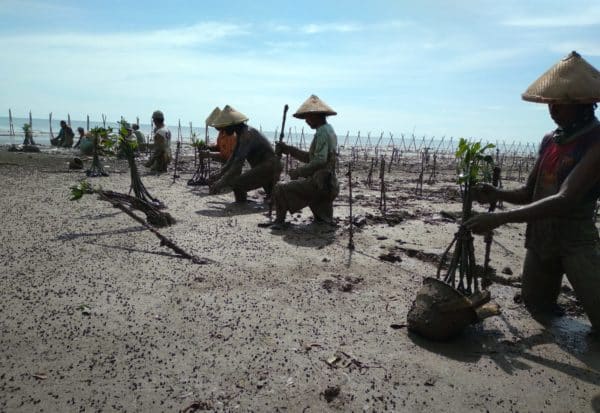
Trees4Trees has been working with local communities to replant mangroves in Central Java. Photo: Doc. Trees4Trees

On New Year’s Eve, Pati Regency in Central Java was inundated by heavy rains. This caused flooding that destroyed more than 600 hectares of agricultural land and damaged thousands of homes. But there was one silver lining to the black clouds that surrounded Pati in December – residents noticed that the areas least affected by the floods were also places with the highest coverage of mangrove forests.  

From the wreckage came the green shoots of a solution. Now, with support from local government and outside help from investors like EcoMatcher, Trees4Trees is working with communities in Pati to restore mangrove forests and rebuild for the future.  

Read also: Mangrove Planting Program with EcoMatcher Inspires Villagers to Plant More Mangrove Trees

A Rising Tide: Building Awareness of Mangroves 

“In recent years, local people’s awareness of mangroves has increased,” says Fauzan Timurlang, who is the Trees4Trees Unit Manager in Pati. He believes the benefits provided by mangroves have become clearer since the recent floods, with many people ready to take action. “They have seen that mangroves can act as barriers that break the waves and reduce the damaging impact,” he explains.  

Andi Lestari is a mangrove activist in Pati, working alongside Trees4Trees. He too has noticed an increase in community awareness. “Many people have seen for themselves the great benefits of mangroves,” he explains. “They have seen that areas with mangrove cover suffer less damage compared to areas that did not have any,” he added. 

Read also: The Incredible Benefits of Mangroves Ecosystem  

Root and Branch: Combining Community Action with Government Support 

Pati Regency stretches 37 miles (60 km) along the coastline of Central Java. Officials here have decided to double mangrove coverage from 300 to 600 hectares, effectively creating a natural barrier that can prevent coastal erosion and protect local homes and livelihoods from flooding. 

“We want to create a green belt from Pencangaan to Puncel,” explains Edy Martanto, Head of the Maritime Affairs and Fisheries Service (DKP) for Pati, in a recent interview with Muria News. “The green belt will function like a beach embankment – if there are waves, the mangroves will form a barrier – when the mangroves are strong, the ponds are also safe.”  

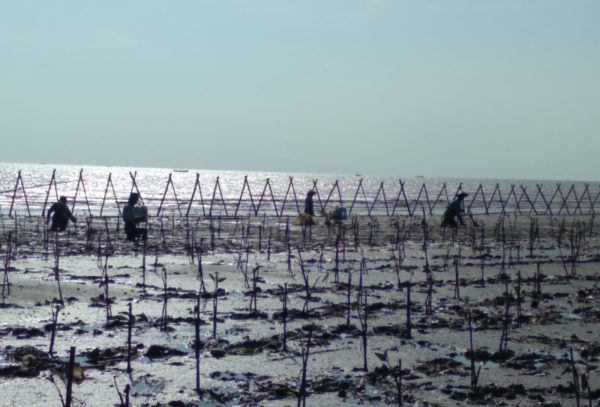
(Above) In areas like Kalikalong village in Pati Regency, Trees4Trees has been working to double mangrove cover

Planning into Planting: Trees4Trees Takes Action in Pati 

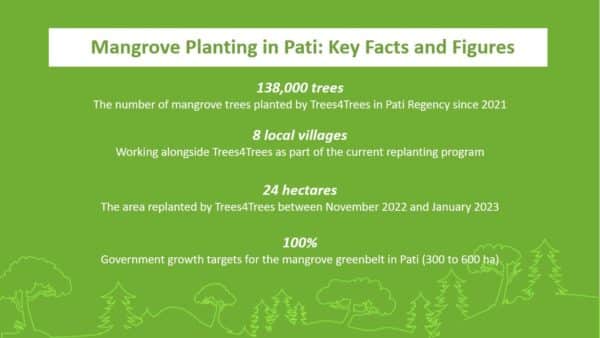
To help bring this green belt to fruition, Trees4Trees began planting mangroves along the Pati coastline from November 2022 to January 2023, as part of the recent planting season. By employing members of the community from eight local villages, Trees4Trees has already planted a total of 108,000 mangrove trees in an area covering 24 hectares.  

These seedlings (consisting of Red Mangrove or Rhizophora mucronata and White Mangrove or Avicennia marina), are endemic to the area, so will help replenish wild populations. They are currently being monitored to ensure they stay healthy and continue to grow. Back in 2021, and with support from EcoMatcher, Trees4Trees also planted around 30,000 mangrove seedlings across 3.8 hectares surrounding Dukuhseti village.

Read also: Mangrove Types in Indonesia and Their Benefits


Trees4Trees has planted more than 138,000 mangrove trees in Pati since 2021.

“The thicker the mangrove cover, the safer our fishponds will be – that’s why we’re so keen to be a part of the Trees4Trees mangrove planting program.”  Musthofa, Tani Makmur farmers’ group 


Local Communities on the Frontline of Mangrove Restoration 

To ensure mangrove restoration takes root in Pati, Trees4Trees has also involved local village officers and members of the forestry service. Six groups of local fishpond farmers have also been employed as mangrove planters.  

“Farmers in our group have become aware of the benefits provided by healthy mangrove ecosystems,” explains Musthofa, leader of the Tani Makmur farmer group. “The thicker the mangrove cover, the safer our fishponds will be; that’s why we’re so keen to be a part of the Trees4Trees mangrove planting program,” he added. 

(Above) Parmi is one of many fishpond farmers joining in the Trees4Trees planting program in Dukuhseti village

Another of the fishpond farmers who joined the mangrove planting program is Parmi. Like many people here, he makes a living by farming fish and shrimp. With support from Trees4Trees, he is looking forward to a safer and more prosperous future. 

“Thick mangrove cover helps to protect our fishponds from strong waves, resulting in a higher abundance of fish,” explains Parmi. “I hope the mangroves we plant now will grow into a full forest like before, so they can continue to provide benefits for us and future generations.”  

Trees4Trees™ is a non-profit foundation focused on renewing the environment and empowering local communities through reforestation and education. For more information about the work we do, and to make a donation in planting mangroves, please go to devtrees4trees.portopaper.com. 

Writer: V.Arnila Wulandani. Editor: Christopher Alexander.