Abah Dayat: Planting the Seeds of a More Sustainable Future

Abah Dayat

Abah Dayat

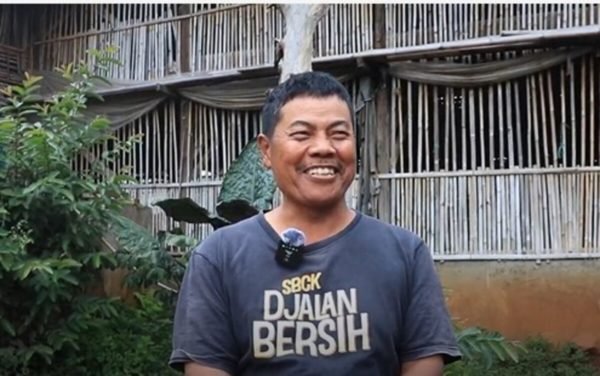
For Abah Dayat, farming is more than a job; it is a passion that has consumed him since he was young. Now 70 years of age, with nine children and 13 grandchildren, he still works the land, planting trees and caring for his livestock. Through a combination of crops and seasonal construction work, he continues to provide for his large family. 

Now in his twilight years, Abah’s focus is shifting beyond seasonal harvests to a more sustainable long-term future; ensuring his descendants grow up in a world that is green, clean, and fertile. With support from Better Green and Trees4Trees, Abah is making this dream come true. 

Creating shade, shedding light on new opportunities 

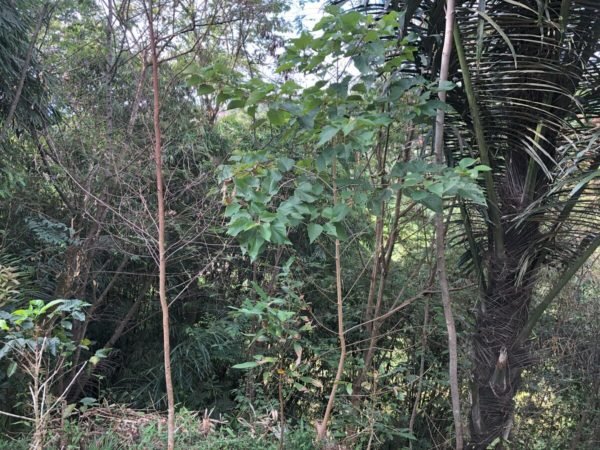
Abah Dayat lives in Citaman Village, in the Nagreg District of Bandung, where he is a member of a farmers’ collective called Hutan Karya Tani Mandiri Utama. On a plot of land covering 2,800 m2, he has spent years farming cassava, corn, and tobacco. But with a lack of shade, his crops tended to suffer under the equatorial sun. 

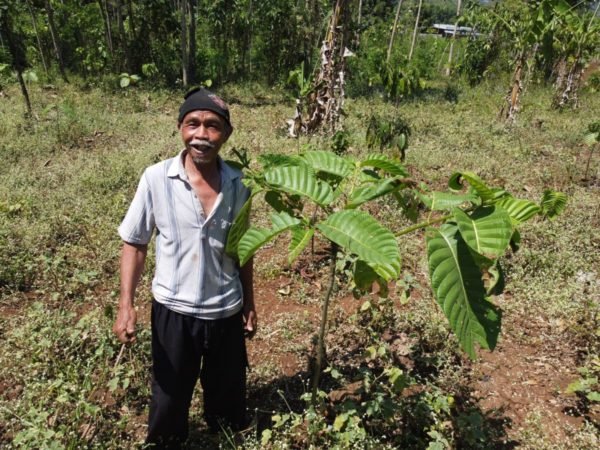
In search of solutions, Abah joined the Trees4Trees tree-planting program in 2022 and quickly began planting seedlings. The new trees have already had a transformative effect on the landscape, providing shade, fresh air, and helping the soil to retain moisture. The fruits provided by these new trees also offer a new source of income. 

“I take care of my plants in a simple way, so they become fertile,” explains Abah. “First I clean away the grass and weeds, then I give them organic fertilizer that comes from the manure of my chickens and goats, then I water them regularly to help them grow.” With this careful and caring approach, Abah has been successful; only a small number of seedlings have failed to take root – the majority have flourished. 
Abah Dayat
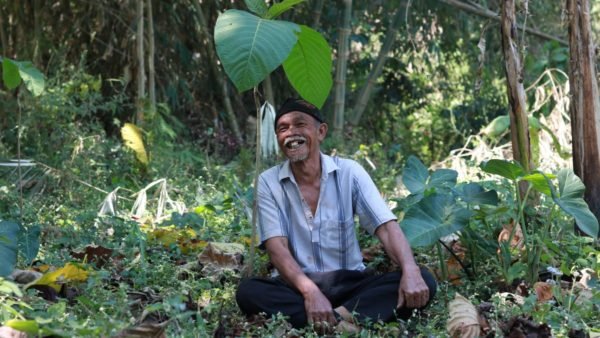
Abah Dayat, standing next to one of his young burflower (jabon) trees provided by Better Green and Trees4Trees. Photo: Trees4Trees.

Working with nature to provide for people 

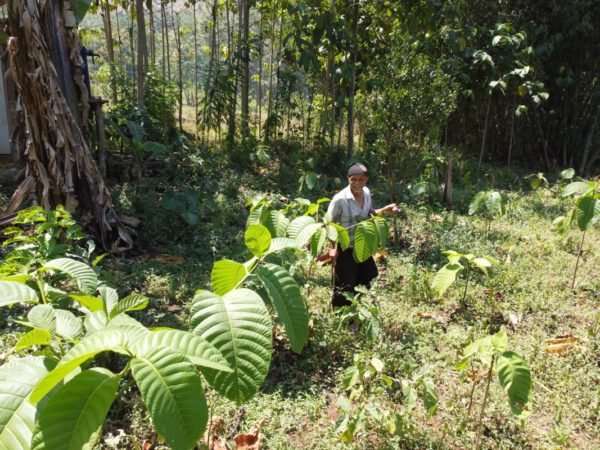
This tale of fertility is a relatively new chapter, changing the narrative in a story that had long been characterized by failure. “Previously there were no trees on my land, only secondary crops,” says Abah, who believes the turning point came with his involvement in the Trees4Trees planting program. “After receiving tree planting assistance from Trees4Trees, now my land is greener because lots of fruits, timber, and other multi-purpose trees are growing.” 
Abah Dayat
Abah Dayat, caring for the next generation of trees planted in Citaman Village, West Java.

Citaman Village is located in the Citarik sub-watershed, on the banks of a tributary to the Citarum River. Trees4Trees has committed to rejuvenating this area, regreening the banks of the Citarum and its tributaries in order to support ecosystem health and improve quality of life for those living off the land. 

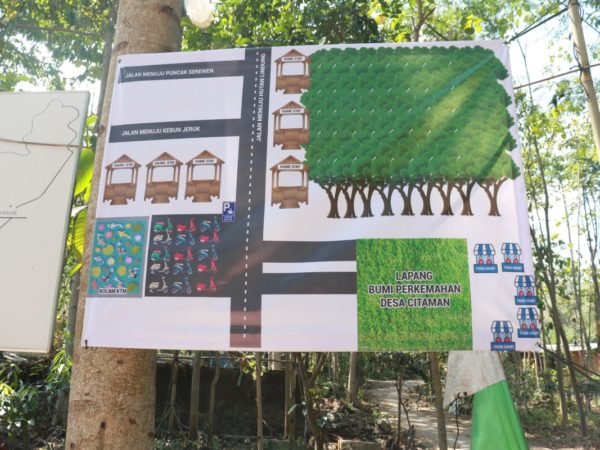
Part of this approach includes supporting local livelihood opportunities with an emphasis on sustainable practices. One such initiative is centered around a public camping ground. Every weekend, around 100 tourists come here to enjoy the views, breathe the fresh air, and hike the nearby hills. 

Since he began planting trees around this camping ground, Abah has noticed the interconnectedness of natural health and the well-being of local people. “The trees I planted not only provide shade,” he explains, “but also improve the fertility of the land, making nature and the environment around here more sustainable.” The new trees have also made the area more attractive to visitors, offering Abah and his community additional income opportunities through ecotourism.  
camping grounds
The camping grounds in Citaman Village welcome around 100 ecotourists each week, providing sustainable livelihood opportunities for residents. Photo: Trees4Trees

Hopes for the future 

Abah Dayat is one of several farmers sponsored by Better Green. With support from Trees4Trees as program implementer, Better Green has committed to planting 30,000 trees between 2022 and 2027. To date, 12,000 have already been planted, including those on Abah’s land. 

For Abah, this partnership represents the promise of a better tomorrow. “I see these trees as an investment in the future, which I hope will be enjoyed by my children and grandchildren after I am gone,” he says, before describing replanting is a kind of social responsibility. Now, after a lifetime lived as a farmer, Abah describes himself simply as “a human being committed to preserving nature.” 

Looking back on the past two years, and planning for the future, Abah has a simple message for his supporters: “I would like to thank Better Green and Trees4Trees for the seedlings they have given to me. With their help, I believe my land will become fertile again and provide benefits to nature, my family, and my community for many years to come.” 

Trees4School: Empowering Children to Protect Semarang’s Coastal Ecosystem

Trees4School

Mangunharjo and Mangkang Wetan are two villages in the Tugu District of Semarang City, located in the northern coastal area of Central Java. Situated on the edge of coastal areas facing the Java Sea, the villages frequently experience tidal flooding.  

During the rainy season, or when tidal waves rise and strong winds blow, the villages are inundated by floodwaters. Sometimes, the flooding reaches the chest height of adult people, making children particularly vulnerable as the environment around them becomes unsafe for playing or even going to school. 

Modern development exacerbates tidal flooding 

In the past, the coastal areas of Semarang were dominated by agricultural land and surrounded by mangrove forests. However, with the onset of modern development, excessive exploitation and land conversion into industrial and residential areas have placed a heavy burden on the coastal area.  

The expansion of industrial areas causes land subsidence and the loss of natural barriers, as mangrove forests have been deforested. These issues then triggered coastal erosion and tidal flooding, harming the well-being of the local communities living nearby, including children.   

Mangrove Planting
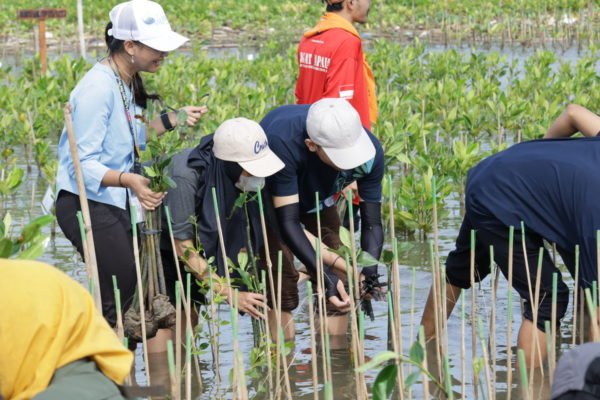
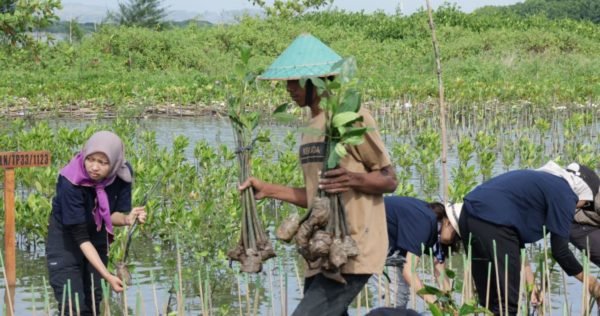
Trees4Trees along with volunteers from universities, companies, and government officials planted mangroves to support mangrove restoration in Mangunharjo coastal area.

Children vulnerable to tidal flooding’s impact  

Living in the midst of a tidal disaster-prone area, children are the most vulnerable group affected by these conditions. When tidal flooding occurs, inundated houses, roads, and even schools disrupt their studies, hinder their way to school, and limit their freedom to play around.  

“When the tidal flood high, there many students who cannot attend the class for days because their homes inundated with flood as well as the access from their homes to school,” Slamet, the headmaster of Mangkang Wetan 01 Elementary School revealed. 

Slamet believes that coastal environmental protection should be taught to children from an early age to prepare them with the knowledge and skills needed to mitigate the impact of tidal flooding and reduce its severity. 

Trees4School
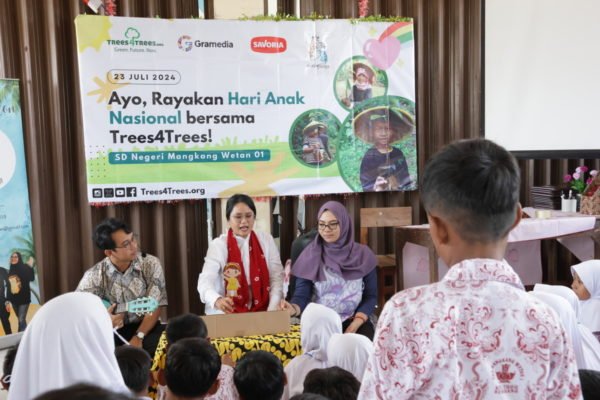
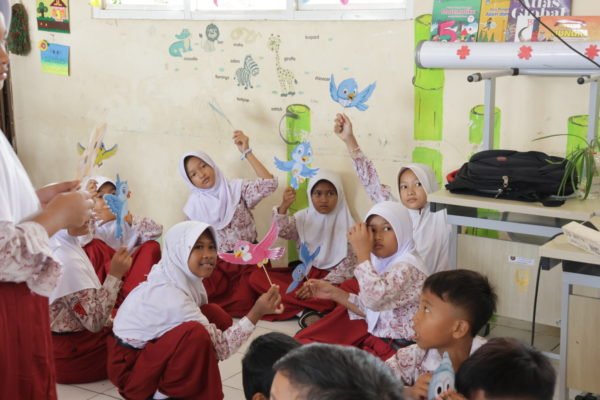
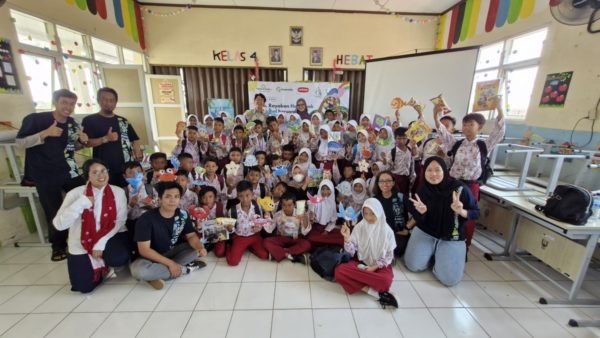
Students at Mangkang Wetan 01 Elementary School were engaged in the mangrove education session led by Trees4Trees and the Lanang Wadon community.

Trees4School

Trees4Trees initiated a coastal protection and mangrove education at school  

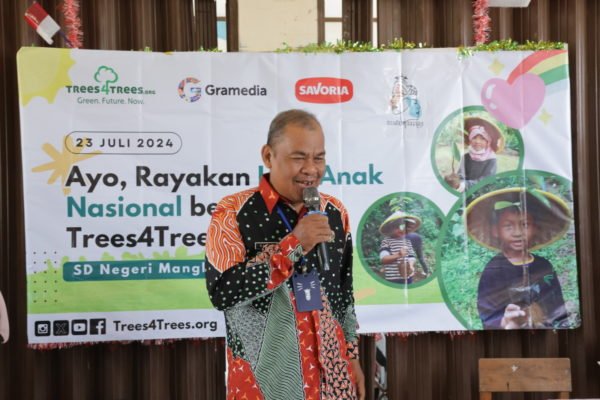
To provide children in both villages with essential knowledge on coastal protection and mangrove conservation, Trees4Trees organized an educational event through its Trees4School program. Coinciding with National Children’s Day on July 23rd, the event was held at Mangkang Wetan 01 Elementary School. 

The event was also part of the Trees4Trees Planting Festival, held in June 2024, where 2,000 mangroves and 100 coastal pine trees were planted in the Mangunharjo coastal area. This initiative supports the local community’s efforts to restore mangrove forests as natural barriers against tidal flooding. 

planting mangrove
The planting of mangroves brings renewed hope to the Mangunharjo coastal area, as they protect against tidal surges.

“Most of the children in Mangunharjo and Mangkang Wetan villages attend this elementary school. Since this area is prone to tidal flooding and is surrounded by mangrove covers planted by the local community in recent years, we believe it’s important for children to understand the value of caring for mangroves as natural barriers for their homes,” said Slamet. 

In collaboration with the Lanang Wadon Storytelling community, Trees4School included a storytelling session about the superpowers of mangroves. The session highlighted how mangroves sequester carbon dioxide at a rate 10 times greater than other trees, help stabilize the Earth’s temperature to prevent the worsening of global warming, provide habitat for coastal biodiversity, and most importantly, protect coastal areas from storm, erosion, and tidal flooding, which the children experience annually. 

Trees4School
Slamet, the headmaster of Mangkang Wetan 01 Elementary School, thanked Trees4Trees for educating the students on coastal issues.

“Through the Trees4School program’s coastal ecosystem and mangrove education, we aim to instill an early understanding of coastal preservation in children. Previously, we planted mangroves along the shoreline, and by engaging children in interactive activities such as games, storytelling, and short films, we hope to inspire them to protect mangroves and coastal ecosystems. Healthy mangrove forests contribute to robust coastal ecosystems, safeguarding their homes, schools, and their parents’ livelihoods,” said Adi Gani, Trees4Trees Project Manager. 

Read Also:Trees4Trees Planting Festival, Celebrating 16th Reforestation Journey 

Interested in supporting environmental education for the next generation? Sponsor the Trees4School program along with your tree donations. In addition to implementing Trees4School in our project areas, Trees4Trees offers hands-on tree-planting experiences and valuable environmental knowledge to students in public and private schools. Contact us to get involved! 

Writer: V. Arnila Wulandani. Photos: Yulianisa Dessenita  

Conserving Nature, Preserving Sundanese Traditional Culture in West Java

Conserving Nature

“I train my sheep to run and swim, build their body strength with massages, and provide them with nutritious food,” explains Maman Abdurohman, a farmer and sheep breeder from Ibun Village in West Java. “This includes vitamins, eggs, honey, and leaves like gmelina,” he added. 

Like most farmers in this region, Maman is a member of the Sundanese tribe, an ethnic group famed for their performance arts. One of their most iconic traditions is a sheep festival which traces its roots back to the 1800s, when these gatherings offered a way for farmers to meet, barter for livestock, and share their knowledge. 

Generations later, the annual sheep show continues to draw the crowds. And now, with support from Trees4Trees, farmers are combining animal husbandry with reforestation efforts; keeping traditions alive, while helping West Java stay green. 

The value of tradition  

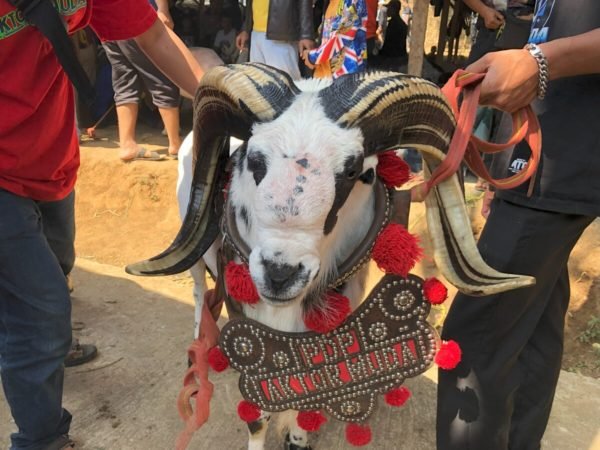
The annual sheep gathering, known locally as kesenian ketangkasan domba, is truly unique. Part livestock auction, part beauty pageant, it features a range of activities to demonstrate the animals’ physical strength, health, agility, and beauty – particularly the size, shape, and curvature of their distinctive horns. Accompanied by traditional Sundanese music, the sheep parade is an unforgettable spectacle. 

Conserving Nature
(Above) With traditional music, parades, and demonstrations of animals’ strength, the traditional sheep performance (kesenian ketangkasan domba) is a major highlight in the farming calendar
Farmer
(Above) Yeyen Sopian, a farmer and sheep breeder from Ibun Village in Bandung Regency

“The competition aims not only to find the strongest and best-looking sheep,” explains Yeyen Sopian, a farmer from Ibun Village, “but also to preserve this traditional art as part of Sundanese culture. Each competition draws a big crowd, and the winning animals can be worth a small fortune to their owners. 

“The better their performance, the higher their price,” says Maman, noting that a strong showing in the event can increase a sheep’s value to around 40 or 50 million rupiah (USD 2,500–3,100). “Actually winning the competition can raise their value to 100 or 200 million rupiah (USD 6,300–12,750),” he adds, with a sense of wonder and excitement. 

Conserving Nature
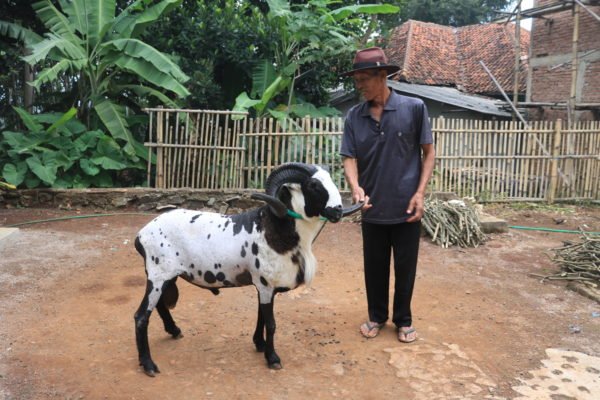
(Above) Maman proudly presents one of the sheep he has raised
sheep
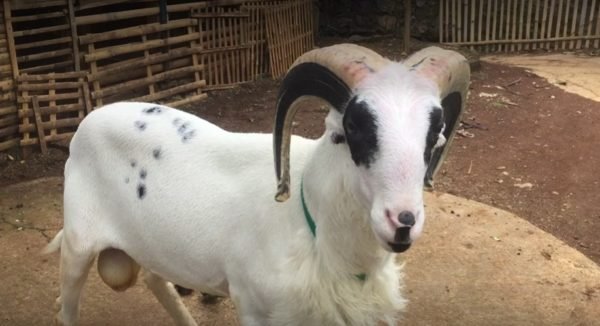
(Above) To farmers like Maman, healthy sheep can be worth a small fortune

Planting trees, preserving culture 

Key to the animals’ strength is the food they eat. “We use a variety of fodder,” explains Yeyen, “including grasses, plants, tofu, and gmelina leaves, which help them grow big and strong.” Gmelina makes for excellent fodder, along with the leaves of red stinkwood trees. To ensure a steady supply, Maman uses a particular pruning method. “The branches must be pruned just right, so we can use the leaves as fodder without harming the trees,” he says.  

“The Ibun community has long grown gmelina trees for their high-nutritious, easily digestible leaves,” says Jeje Sutarja, Trees4Trees’ Unit Manager for the Cirasea Watershed Unit in Bandung. “By providing gmelina trees free of charge, Trees4Trees helps farmers increase tree coverage, which has the triple benefit of supporting the animals’ well-being, preserving traditions, and conserving the natural environment.”  

Winning sheep
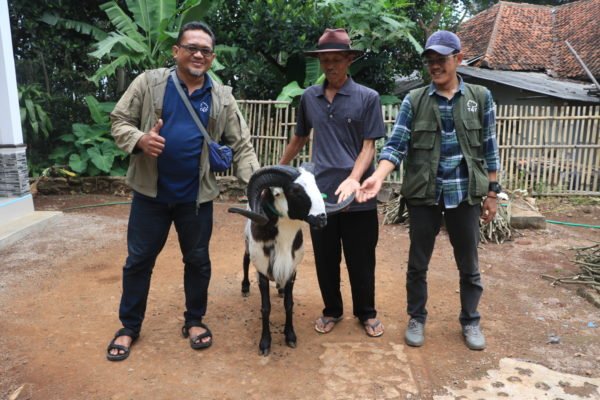
(Above) Members of the Trees4Trees team pose together with Maman (center) and one of his prize-winning sheep
Gmelina
Above) Gmelina trees are essential to the health and well-being of the prized sheep in Ibun Village, West Java

Planting for the future, rooted in traditions of the past  

“Farmers already know how to prune correctly by avoiding cuts to the trunk, and we provide additional guidance,” says Alwi Subhan, Trees4Trees’ Field Coordinator for Ibun District, adding that, by educating farmers on pruning methods, Trees4Trees aims to encourage proper leaf harvesting without harming the trees. “For example, before pruning, they need to measure at least 15 to 20 cm from the trunk to prevent damage to the trees,” explains Alwi. 

In addition to gmelina, Trees4Trees distributes a range of other tree species to the sheep farmers, including red stinkwood, albizia, mindi, and jackfruit. By providing them with the trees and the know-how they need, Trees4Trees is supporting the preservation of nature and culture in West Java. Together, we are helping traditions stay as strong and valued as the animals themselves. 

Writer: V. Arnila Wulandani. Editor: Chris Alexander. Photos: Kemas Duga Muis