Tantri “Kotak” and Arda Hatna: Small Action to Fight Climate Change

Tantri "Kotak"

Unpredictable seasons, rising heatwaves, heavier rainfall, extreme floods, cyclones, and prolonged drought – all show how much more intense the weather has become in recent years. These are not random events but signals that climate change is speeding up. Its impacts are already present in our daily lives, affecting our food supply, clean water access, health, and the safety of our homes and communities. 

The World Meteorogical Organization recently confirmed that last 2024 was the warmest year ever recorded since 1850. The past decade has also been the hottest on record, marking an alarming pattern of rapid global warming. 
Tantri "Kotak"

By 2030, climate change is projected to push between 32 and 132 million more people into extreme poverty. Meanwhile, global ice loss has surged from 0.8 trillion tonnes per year in the 1990s to 1.3 trillion tonnes annually by 2017. As ice melts, sea levels rise — increasing the risk of coastal flooding, especially in archipelagic nations like Indonesia. This threatens coastal communities, ecosystems, and wildlife habitats, making climate mitigation more urgent than ever. 

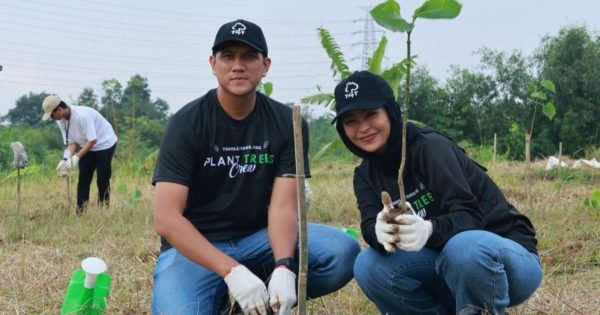
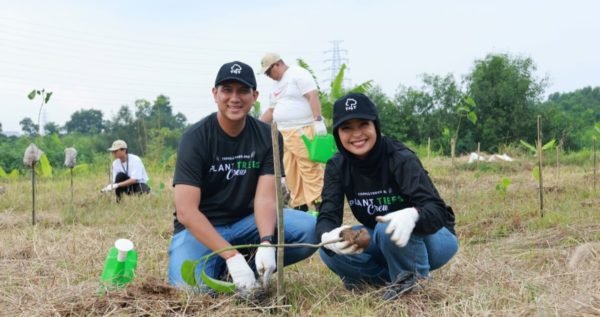
Speaking about the climate impacts we are witnessing today, during the tree-planting event with Trees4Trees and Jaya Obayashi in the GIIC industrial area, Cikarang, Trees4Trees ambassadors Tantri Syalindri (lead vocalist of Kotak Band) and Arda Hatna (solo singer) shared how each of us can play a role in slowing climate change, starting from simple, everyday actions. 

A Reflection Inspired by a Movie 

Arda shared that his awareness of environmental protection grew after witnessing unusual weather patterns in recent years. “I’ve realized how enormous and visible the effects of climate change have become. We can feel it directly – the seasons are no longer predictable; the dry season lasts too long, and the rainy season can be just as extreme. Diseases and viruses are also appearing more frequently. I believe climate change plays a major role in all of this,” he said. 

Interestingly, beyond the changing weather, his deeper self-awareness was sparked by reflecting on an antagonist character from a movie.  

“Honestly, I became more interested in environmental issues in 2019, after watching the Avengers movie,” he shared. “The villain, Thanos, wanted to wipe out half of the world’s population because he believed the Earth couldn’t sustain billions of people and provide all human needs. After watching it, I started to wonder – was he wrong, or was there a point? If we keep using up natural resources without giving anything back, eventually the planet won’t survive and neither will we.” 

He went on to explain that this also applies to trees. “If we cut them down to fulfill our needs, we must also replant them. If we only take and never restore, that greed will destroy our own future.” 
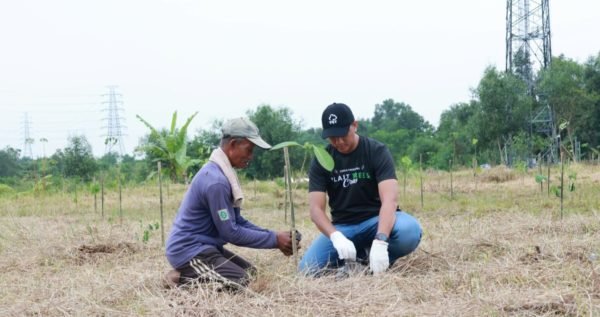
Arda and farmer

Engaging the Family in Better Habits  

Arda also emphasized that climate change is largely driven by human activities and often begins with small bad habits, even within our homes. “For example, using electricity 24 hours a day. Whether we realize it or not, we’re contributing to the climate problem.” He admitted that these habits still exist in his own household, which is why change must begin with daily actions. 

Echoing Arda’s message, Tantri shared that she has also felt the impact of extreme weather and believes the first step toward helping the environment can start from home. “We began by improving our family’s daily habits through small actions,” she said. “We have two children, and we try to lead by example – like not littering and teaching them why waste shouldn’t be thrown carelessly. We also plant trees at home. Some of the trees were planted together with our kids. We gave them planting kits so they could plant on their own.” 
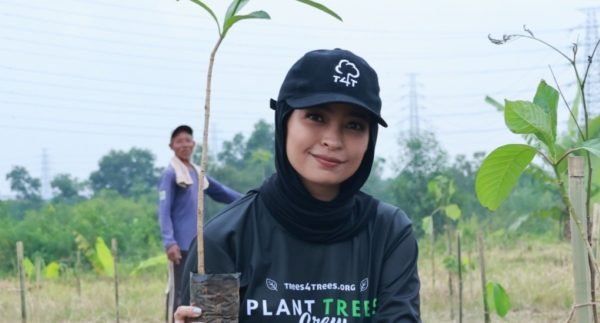
Tantri "Kotak"

Start with Small Actions: Planting Trees 

As musicians, Tantri and her band Kotak began raising environmental awareness as early as 2017 through one of their campaigns. “We were already anxious about the state of the planet back then. Things have only gotten worse today,” she said. Continuing that mission, she now wants to take real action by working with Trees4Trees to help green the Earth – aligning with the spirit of Kotak’s song Hijaukan Bumi (Greening the Earth). 

Recently, together with around 50 volunteers from Jaya Obayashi, Tantri and Arda joined a tree-planting event as part of their commitment to speak up for environmental protection and climate action. The activity is also part of an effort to balance nature with industrial growth through urban forestry within the GIIC industrial area. 
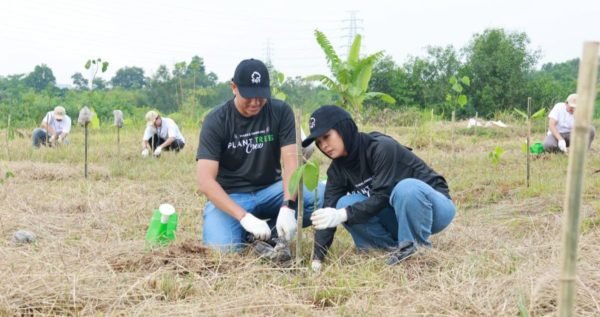
Tantri "Kotak" and Arda

Tantri "Kotak"

“This is our small step to contribute to the Earth, and we hope it will inspire others. We hope the trees we plant become part of the solution to today’s climate challenges. As they grow, they will help absorb emissions – especially in this industrial zone and restore some balance to the environment,” Tantri said. 

Arda added that planting trees may look like a small gesture, but when done collectively, it becomes powerful.  

“I believe Earth doesn’t need superheroes. It only needs many people who care enough to protect it. Because together, we can build a greater movement for this planet – our shared home,” he concluded.  

Writer: V. Arnila Wulandani. Photos: Yulianisa Dessenita

Community Culture, Interwoven with Mangrove Conservation

Community Culture

Surrounded by over 8,000 hectares of coastal trees and wetlands, Kampung Laut Village is home to the largest mangrove ecosystem in Central Java. This verdant water world in Cilacap Regency supports a rich variety of biodiversity, including over 50 distinct mangrove species.  

For the communities of Kampung Laut (a name which means ‘ocean village’ in the Indonesian language), mangroves are essential. Most of the people here work as fishers and recognize the importance of these trees to ecosystem health and productivity. 

But the mangroves’ value goes further still, with roots reaching deep into local culture; the trees provide natural dyes which can be used in the traditional art of batik textiles, thereby transforming nature’s bounty into both cultural heirlooms and economic opportunities. 

In this article, we explore a nascent artisan industry that has emerged in Kampung Laut, inspired by nature and intrinsically connected to land and culture. 

The Birth of Kampung Laut Batik 

The story of Kampung Laut batik began in 2015 when Sodiqin, leader of the Mekar Canting Batik Group, was inspired by a batik-making program on national television. Together with two neighbors, he began to experiment with techniques and materials until they found the right formula. 

“At first, we used natural dyes from ketapang leaves and jengkol tree bark,” Sodiqin recalls. “But I wanted something unique that represents Kampung Laut. I noticed the fallen Rhizopora mangrove fruits scattered on the roads. We were curious to see if they could be used as natural dyes, as many people had claimed.” 

Sodiqin and his friends started collecting Rhizopora fruits, cutting and crushing them, then drying them under the sun for three days before boiling them. “The entire process of producing the natural dye takes about a week,” he says, “and dyeing the cloth needs another three days to a week; it takes a while, but the results are worth the wait.” 

Sodiqin
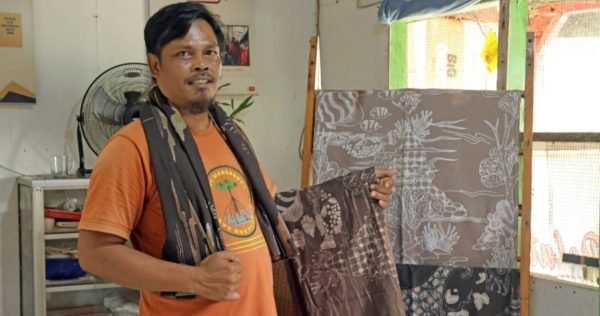
(Above) Sodiqin, founder of the Mekar Canting Batik Group, which is creating mangrove-inspired fabrics.

Motifs and Materials Inspired by Nature 

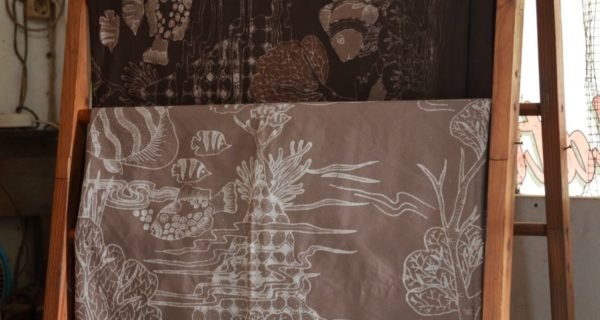
In addition to the distinctive brown hues of Rhizophora mangroves, blended with colors from other local trees, batik designs from Kampung Laut are brought to life through patterns and motifs inspired by the sea and the richness of coastal life. 

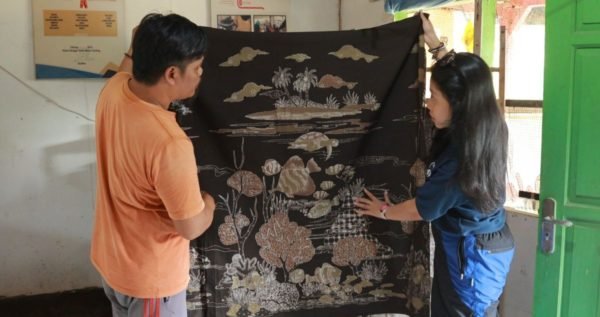
As Sodiqin explains, “when we asked ourselves what best reflects Kampung Laut, the answer was simple: mangroves and fisheries.” Designs from the Mekar Canting Batik Group feature fish, crabs, shells, shrimp, mangrove fruits, and underwater scenes. 

Most of their batik fabrics are made using a traditional stamping technique, whereby hot wax is applied to cloth using engraved copper stamps before it is dyed. This method allows the artisans to produce batik more efficiently and replicate patterns more consistently. 

“We also use the hand-drawn technique, but only by special order,” Sodiqin said. “Hand-drawn pieces take longer and require more skill.” This technique involves drawing patterns using a traditional drawing tool called a canting, which is filled with hot wax. It can take months just to complete one piece of batik cloth using this method. 

Community Culture
(Above) several of the fabrics produced by the group, which feature ocean-inspired motifs.

Sustainable Livelihoods, Interwoven with Women’s Empowerment 

What began as the passion project of three individuals has grown into a 20-strong collective, made up mostly of women. Training programs provided by the government and corporate CSR initiatives have strengthened their skills and encouraged more women to join. “It started with women inviting others to learn batik,” says Sodiqin. “Then, through word of mouth, more women have become involved.”  

The rise in popularity of Kampung Laut batik has opened new income opportunities for women in coastal communities. Batik-making provides much-needed earnings, especially during exhibitions or when orders come in. “The income can help women to cover their children’s needs or support other family expenses,” Sodiqin says. 

Nevertheless, marketing remains a challenge. Located in a remote area, accessible only by crossing a lagoon, Kampung Laut has limited access to markets. Most sales come from exhibitions in cities like Jakarta, Yogyakarta, and Semarang. “We tried e-commerce, but delivery is very difficult from here,” he said. 

Community Culture
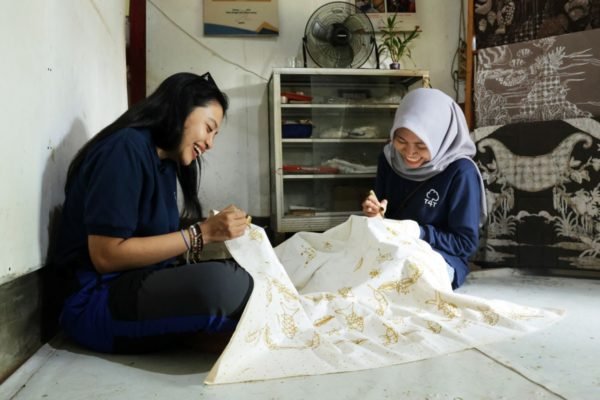
Members of the T4T team try their hand and making batik patterns during a recent visit to the Mekar Canting Batik Group studio.

From Ecology to Economy: Healthy Nature Helps Communities to Thrive 

In 2022, Trees4Trees began replanting mangroves in Kampung Laut to restore areas degraded by deforestation. From 2022 to 2023, over 24,000 individual trees were successfully planted. In 2024-2025, with support from our partner, EcoMatcher, 125,000 trees were planted. In October 2025, together with EcoMatcher and GRAB, we are planting an additional 50,000 mangroves in the area. 

“By expanding mangrove cover, our mangrove planting program helps local communities thrive, sustain their livelihoods, and keep their culture alive, including the mangrove batik,” explains Yoga Septian, Trees4Trees Unit Manager of the Cilacap site. “The local community relies on fisheries and mangroves for their living; beyond fishing, they process mangrove fruits into snacks and produce mangrove batik as additional sources of income,” he added. 

Planting mangrove
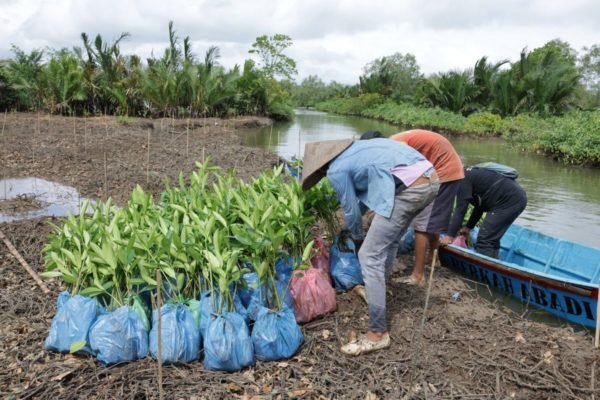
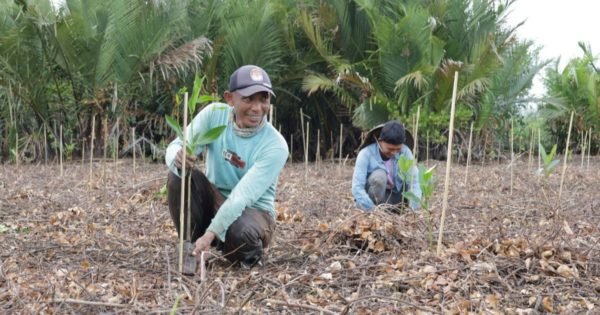
(above) Local fishermen load their boats with mangrove seedlings ready for planting. (Below) Together with local fishermen, T4T team members plant new trees in mangrove areas that had previously been severely degraded.


Community Culture

Healthy mangroves provide numerous benefits to people, nature, and the planet. They produce oxygen, absorb CO2, prevent coastal erosion, and provide essential nurseries for fish. For local people like Sodiqin and his group, these trees also provide materials, livelihoods, and cultural value. 

With that in mind, Sodiqin insists that sustainability is key. “Every time we harvest resources provided by the mangroves, we must also replenish them,” he says, “so they won’t vanish like they did before. The more we plant, the better our lives will be.” 

Writer: V. Arnila Wulandani. Editor: Chris Alexander. Photos: Yulianisa Dessenita for Trees4Trees 
 

Trees4Trees 2024 Annual Report

Trees4Trees 2024 Annual Report

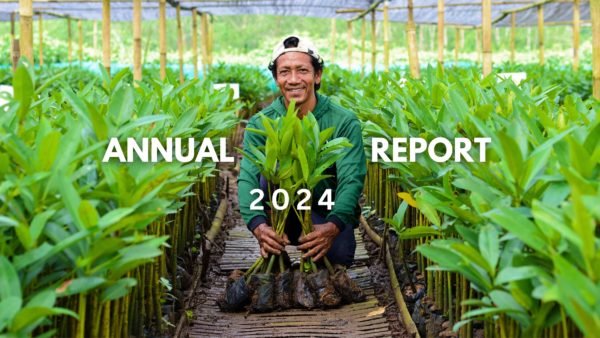
In 2024, we celebrate 17 years of impact. Marking the year of growth, collaboration, and meaningful progress, we are pleased to share our 2024 Annual Report.​ This report presents the financial results for 2024 and tree-planting operations from April 2024 to March 2025. ​

Throughout 2024 planting season, Trees4Trees successfully planted 4.65 million trees across 15 regions in Indonesia, bringing our total to over 15 million trees planted since 2008. This milestone is more than just numbers – it represents ecosystems revitalized and thousands of farming families gaining access to sustainable livelihoods through reforestation and education.​ Looking forward to 2025, our tasks are clear: scale our efforts, restore degraded landscapes, protect biodiversity, and uplift communities through inclusive, sustainable development.

We thank you to our partners, sponsors, and especially the local communities who are the heart of our tree-planting mission. Your continued support our vision for a greener, more resilient Indonesia.​

As we move into our 18th year, we also reflect on how collaboration has shaped our journey. Partnerships with local governments, companies, schools, and farmers have been the driving force behind our achievements. Every seedling planted carries with it a story of cooperation — between people and planet — and a shared hope for a healthier environment.

In 2024, we strengthened our monitoring systems and data transparency, ensuring that every tree planted is tracked and nurtured to maturity. We also expanded our educational outreach to empower youth and communities with knowledge about climate resilience and sustainable land management.

These steps are part of our long-term vision to create lasting change — not just planting trees, but cultivating a culture of stewardship and care for the environment. Together, we are growing a legacy that will continue to thrive for generations to come.

Read more our 2024 Annual Report

2024 ANNUAL REPORT

Mekarjaya Village’s Farmers: Planting Forest, Sustaining Life

Mekarjaya Village’s

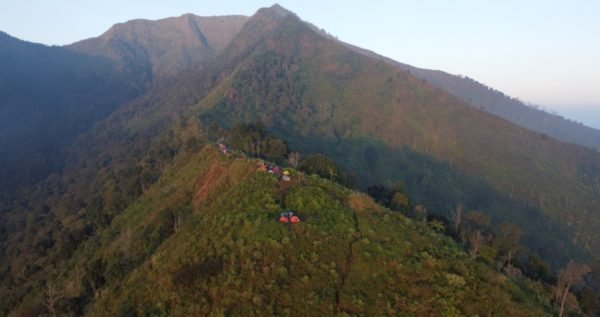
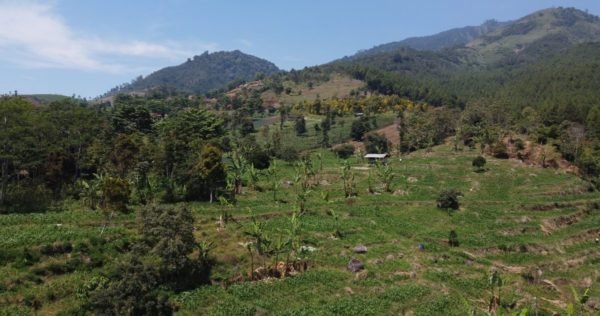
Nestled in the foothills of the Malabar Mountains in Bandung Regency – West Java, Mekarjaya Village lies surrounded by state forests and the towering 1,690-meter Sangar Mountain, which has drawn more visitors each year. This popularity has opened new opportunities of income for local communities through community-managed tourism. 

Yet, the beauty of the forest that visitors admire today exists thanks to the tireless dedication of local forest farmers who have spent years planting and nurturing trees to keep their land alive. Without their efforts, Mekarjaya’s forest could have suffered the same fate as many other parts of the Malabar range – degraded by land conversion and extensive logging. 

Sangar Mountain is located in the Mekarjaya Village in Bandung Regency, West Java.

Starting Greening Action Through Self-Reliance 

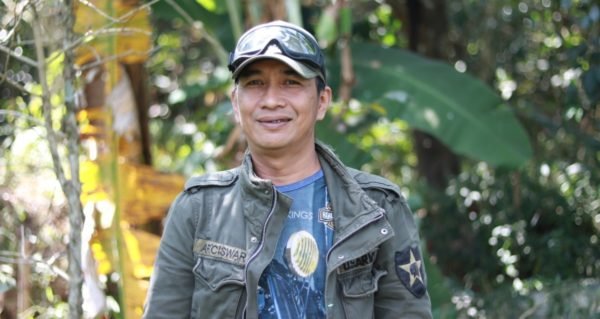
Asep, one of the village’s farmers, remembered how his journey began when he moved to Mekarjaya in 2018 and quickly joined the community’s reforestation mission. “I already had extensive experience in cultivating and planting trees since 2010,” he recalled. “Together with several local communities, we collected gmelina seeds from the streets to produce our own seedlings. Later, we grew thousands of trees and planted barren land around us.” 

With his experience, Asep became a strong supporter of Mekarjaya forest greening efforts. “Back then, we relied only on ourselves. We planted sandalwood, gmelina, eucalyptus – whatever we could – to protect the land we live, because much of the neighborhood forests were already gone,” he said. 

Mekarjaya Village’s
Asep, a forest farmer from Mekarjaya Village, began his green journey by cultivating seedlings on his own and taking the initiative to replant barren land.

Managing Forest Through Social Forestry 

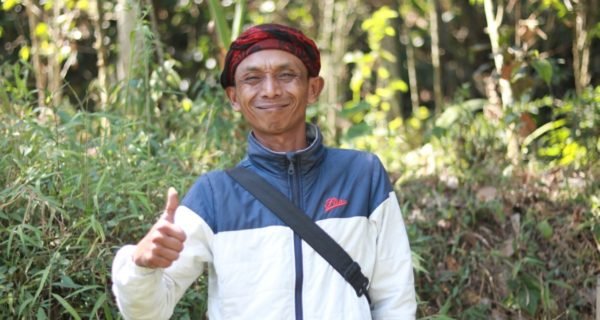
Alex, another forest farmer and leader of Mekarjaya Village’s social forestry group, shared how the community has taken collective responsibility to preserve the forest. Today, more than 100 villagers work together to manage around 140 hectares of state forest in their village.  

“We began looking after the forest in 2008, when the government first opened the opportunity for communities to manage it. But it was only in 2017 that we officially gained the right through the social forestry scheme,” Alex explained.  

Through this scheme, they hold a 35-year permit to manage the state forest – restoring and maintaining the land while being allowed to grow crops and fruit trees, but without cutting down forest trees. “Our responsibility is clear: restore and protect the forest by planting trees and keeping it healthy and lush,” Alex said. 

Since 2017, the villagers have held annual tree-planting activities as part of their commitment to forest preservation. “At first, we used our own seedlings,” Alex continued. “But over time, many nature lovers and hikers began donating trees. Their support has allowed us to continue planting new trees year after year.” 

Mekarjaya Village’s
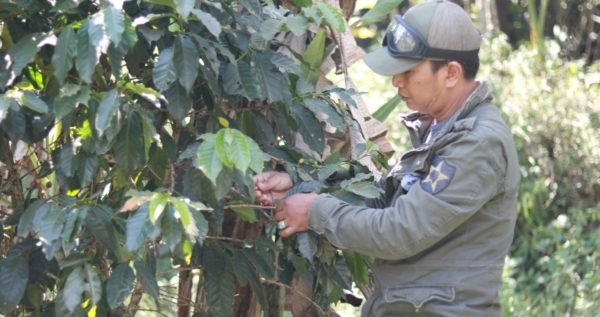
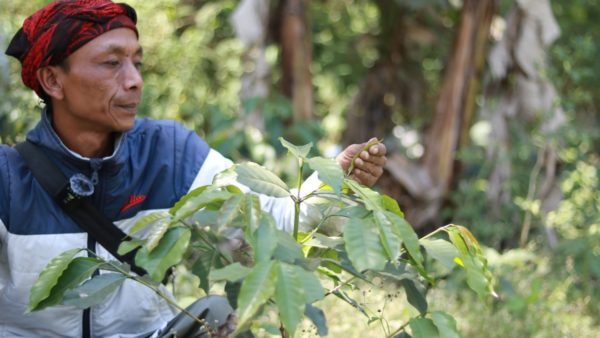
(Above) Alex, a social forestry community leader and forest farmer from Mekarjaya Village. (Below) Asep tending to his coffee trees.

Non-timber Harvesting and Preserving Native Tree Species 

The Mekarjaya forest is rich in native West Javan tree species. “We have puspa, rasamala, saninten, ki semut, and many other tree species,” Alex said. To protect ecological health, the farmers prioritize hardwood and native trees, while for economic benefits, they grow multipurpose and fruit species.  

“We mainly plant coffee to gain economic benefit, as it has high demand and this land is perfect for it,” Alex explained. “We also grow jackfruit, bitter bean, and avocado to harvest non-timber products.” Similarly, Asep focuses on cultivating non-timber trees such as coffee, sapodilla, and bananas. “I also grow damar pine trees – once they mature, they provide shade, while I can harvest their sap,” he added. 

Another farmer, Sutajaya, has chosen a different path. He focuses on creating an arboretum of native trees to support tourism and education. “As Sangar Mountain attracts more hikers, I established an arboretum where visitors can learn about biodiversity while climbing to the mountain,” he explained. 

Mekarjaya Village’s
Sutajaya is preparing to take care of the trees he planted in the arboretum he established, deep in the forest.
Trees4Trees Support: Planting Trees Empowering Communities 

In 2021, when Trees4Trees and TREEO launched a tree-planting initiative, farmers in Mekarjaya eagerly joined the program. Around 30,000 trees were distributed, accelerating reforestation and creating a healthier and more resilient forest. 

“This program truly helps us, as the trees allow us to restore our forest more quickly and enhance economic benefit for local forest farmers,” Alex said. While for Sutajaya, the program goes beyond economic benefits. “As the trees grow bigger and stronger each day, they provide oxygen and restore balance to the ecosystem. Native species are thriving, creating habitats for wildlife while improving air and water quality. For me, that’s the most important benefit,” he reflected. 

A view of the state forest in Mekarjaya Village from afar, where local farmers have planted trees.

Together, the dedication of local forest farmers and the support from initiatives like Trees4Trees and TREEO are breathing new life into Mekarjaya’s forests. What was once threatened by degradation is now transforming into a thriving ecosystem that not only safeguards biodiversity but also sustains the people who depend on it. “Those trees make our forest more abundant. They hold immense ecological and economic value that sustain our environment and strengthen the lives of our community,” Alex said.

Writer: V. Arnila Wulandani.