Planting in Kebumen UNESCO Geopark: Supporting Nature and Communities

Planting in Kebumen

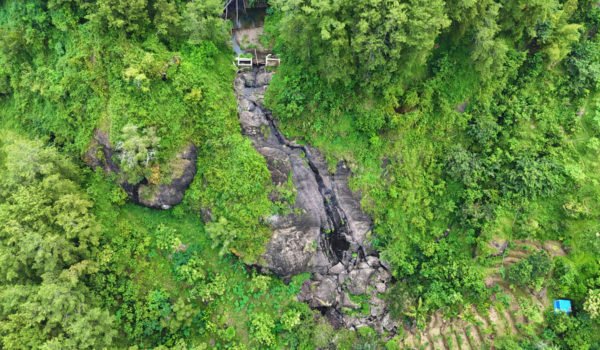
When exploring the northern part of Kebumen Regency in Central Java, you will see something that can’t be found anywhere else on Java. The rocks here are actually ancient sea beds, which are packed with marine fossils of corals and radiolarian plankton. 

This landscape, now surrounded by forests, is part of the Kebumen Geopark – an area recognized by UNESCO in 2024 as a Global Geopark, in recognition of its remarkable natural, cultural, and historical value. This landscape is a living testament to the natural history of our planet. 

“Over 80 million years ago,” explains Suparmin, one of the park’s caretakers, “a tectonic collision between the Indo-Australian Plate and the Eurasian Plate triggered a massive earthquake that lifted the seabed to sea level, forming the karst landscapes we see today.” 

The story of this amazing geopark is still being written. Trees4Trees has been working here since 2008, planting trees to help support ecosystem health, protect biodiversity, and sustain the communities who depend on the land for their livelihoods.  
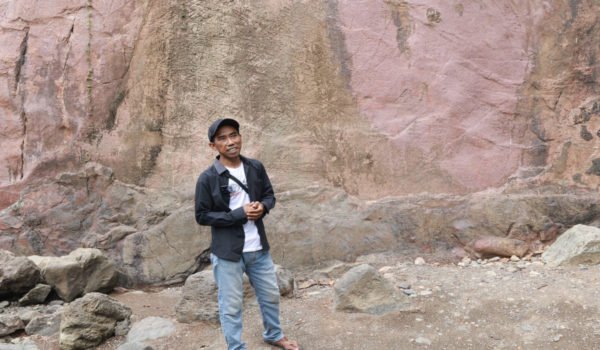
(Above) Suparmin, a local caretaker in Kebumen Geopark, stands in front of a massive basalt rock formation – an ancient sea floor.

Kebumen Geopark: A Biodiversity Hotspot 

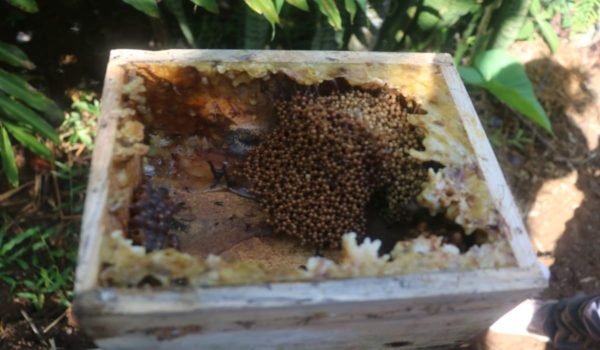
The Kebumen Geopark is home to abundant natural and cultural wonders, including 42 geo sites, 24 cultural sites, and eight biological sites. This includes terrestrial and mangrove forests, a sea turtle conservation center, and cultivation areas for local species, like the dwarf honeybee (or klanceng) and native genjah entog coconut. 

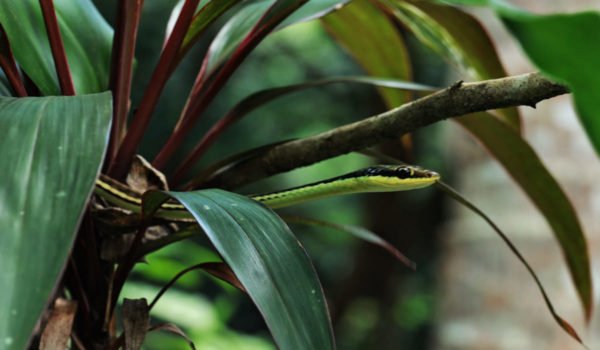
These sites provide habitats for wildlife, including rare and protected species. Among them are the endangered Javan hawk-eagle, Javan slow loris, and Javan leopard. “Our forests are home to diverse species, from birds and mammals to reptiles,” says Suparmin, before adding that there are also species of snakes like cobra, python, and tiger snakes here. “This area also shelters the endangered Javan slow loris, which is often targeted by illegal wildlife hunters,” he added. 

(Above) The Javan slow loris is one of several Endangered species that finds a refuge in the geopark. (Below) A snake spotted in the Watukelir geo site, which is home to various reptile species.

Planting in Kebumen

In addition to abundant animal species, the geopark is also home to a range of native and vulnerable plant species, such as Indian sandalwood, valued for its aromatic wood and bark. Other native species include the yellow cheese wood, pangi (or kluwak), bayur, and sugar palm. Some of these species’ feature in Trees4Trees’ ongoing planting program for the region. 
Planting in Kebumen
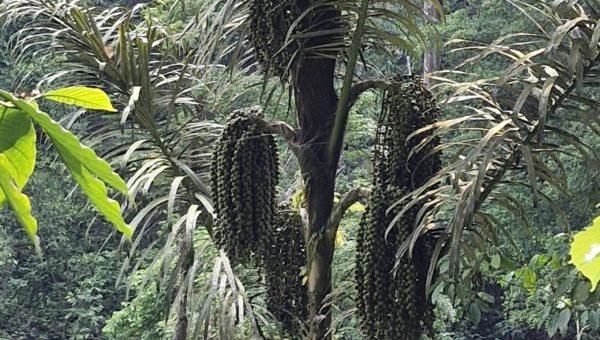
(Above) Sugar palms, one of several species planted in Kebumen by Trees4Trees, which are central to local livelihoods and help to mitigate the impacts of drought by conserving water.

Natural Heritage Meets Local Wisdom 

This area is just as rich in cultural diversity as it is in geological history. Spanning over 100,000 hectares of land (and 2,000 hectares of sea), the geopark spans valleys, hills, and coastal areas. These places are home to a variety of flora and fauna, as well as centuries-old cultural practices, rituals, and arts, underpinned by a deep respect for nature.  

“Sites in the geopark are sacred to local communities,” explains Suparmin. “Traditional wisdom prohibits exploitation and helps protect this heritage.” He also notes that local communities are actively engaged in nature preservation efforts that are strengthened by government regulations and stakeholders’ support. 
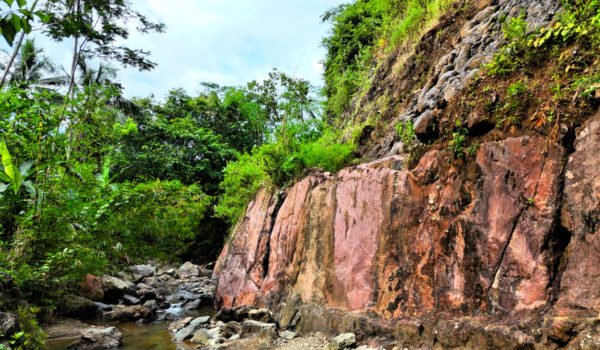
(Above) The distinctive rock formations of the Kebumen Geopark are actually ancient sea beds, brought up from the depths by tectonic activity over 80 million years ago.

Tree Planting in the Geopark  

Over the past 16 years, Trees4Trees has planted more than 1.2 million trees within the geopark. “We’ve worked across 24 villages in four districts within the geopark,” explains Henning Ilmi, Trees4Trees’ Field Coordinator in Kebumen. “This includes planting shade, fruit, and water-conserving tree species to help address drought,” she added.  

Henning also notes that many of these trees offer a mix of environmental and economic benefits. “Genitri trees, for example, are incredibly good at purifying air and their seeds can be made into beautiful beads that provide a source of local income.” According to her, pangi trees (kluwak) are also excellent at conserving water and produce fruits that are highly valuable, as they are central to Indonesian culinary traditions. 

Supporting Biodiversity, Strengthening Local Community Resilience 

Healthy ecosystems support more than just biodiversity – they can also sustains cultural traditions and local livelihoods. For example, in Kebumen Geopark, the landscape supports practices like the tapping of sugar palm sap, a tradition passed down through generations and a key source of income for many families. Sugar palms also help conserve water in drought-prone areas within Kebumen. 

Nature also provides for communities in other ways. Hanafi, a local farmer, relies on a healthy forest to cultivate dwarf honeybees. “Bees get their food from forest trees,” he explains, “without them, I couldn’t raise my honeybees. 

Henning says the long-term tree planting initiative from Trees4Trees has been designed and implemented to improve ecosystems and environmental quality, protect biodiversity, and strengthen local livelihoods. “The geopark is a center for geological heritage conservation and promotes sustainable development,” she explains. “Our tree-planting program supports this effort and aligns with the wider mission of the geopark.”   

The tree-planting program in Kebumen Geopark is a collaborative effort. You too can play your part and help secure its survival by donating trees to the project. This will not only help sustain the ancient ecosystems that protect biodiversity, but also help to support the local communities who depend on them for survival. To find out more, please visit our website. 


Writer: V. Arnila Wulandani. Editor: Chris Alexander. Interview, source compiling & photos:  Yulianisa Dessenita & Henning Ilmi. 


Samino: Bringing Life Back to His Village Land

In this day and age, where everything moves fast and hyperconnected, people are drawn to validation. Many seek more recognition, more follows, more engagement, or simply acknowledgment in various aspects of life. So, it’s not surprising that a lot of people think value comes from recognition. But that’s not always true, is it?

Realistically, everyone wants to be known in one way or another. It’s easy to be drawn to those who do the bare minimum in front of a camera while overlooking those making a real impact away from the spotlight.

Meanwhile, in Kedungwringin Village, Kebumen, Central Java, far from the noise, rush of the city, even cameras, Samino had been working the land for over 20 years as a farmer. Each morning, he walks the same path to his fields, the earth beneath his feet familiar, the routine unchanged. “For me, farming is a calling and commitment to Mother Nature,” he said with his humble smile.

Becoming a Tree Grower and Facing Challenges of Farming

That day, the sky was clear, unlike usual when rain often poured down. With steady steps, Samino walked 300 meters to his field, just as he did every day. Behind him, the Trees4Trees team followed while observing his farm, taking notes, and preparing to document his story.

Samino, 45, is a father of three children who are still in school. In addition to farming, he also runs a carpentry business at home, making door frames to supplement his income. Although he only completed elementary school, his passion for farming and learning new things has never faded.

His strong spirit and dedication earned him with title of Best Farmer in Kebumen in 2023—an impressive achievement considering he had only joined as a partner farmer earlier that year. It was a clear sign that his care for the land and the trees wasn’t just for show. Still, farming in his village comes with its fair share of challenges.

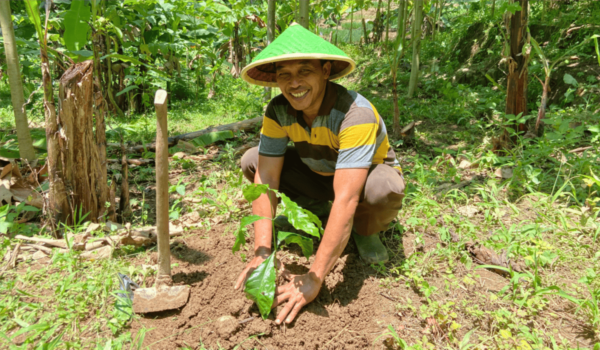
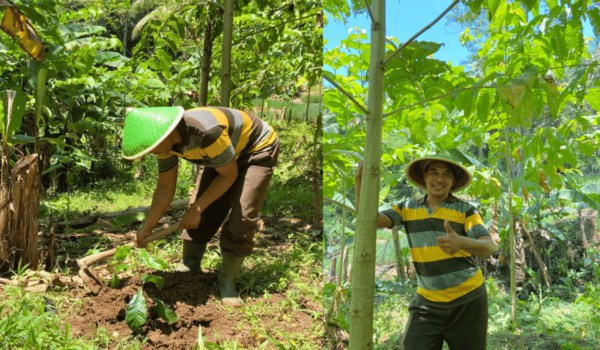
Samino has planted 230 tree seedlings with Trees4Trees — and he’s not stopping there. He’s ready to plant even more in the future.

The dry season often brings drought, and pest attacks can wipe out an entire harvest. But giving up isn’t in his nature. Alongside his fellow members in the Kapokan Kedungwringin farmer group, he keeps pushing forward, taking part in efforts like making organic fertilizer to enrich the soil and lessen their reliance on chemical solutions.

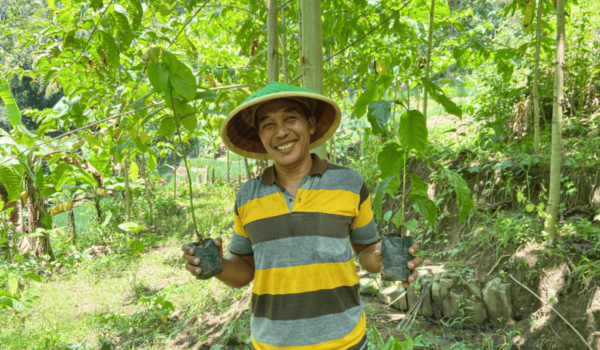
Samino proudly stands beside the Jabon tree he planted in 2023 with Trees4Trees. His biggest goal is to help restore the barren and neglected land in his village.

“Being a farmer is enjoyable; there’s a unique satisfaction in using the harvest we grow ourselves,” Samino shared with a warm, contented grin. 

Planting Trees: Reviving the Dry Land in His Village 

Samino has a big vision for his village. He doesn’t want to see empty land go to waste or the village turn barren. Because of this deep concern, he volunteered to become a field facilitator for Trees4Trees—helping spread the word about the program to other farmers and acting as a bridge between them and the field coordinator. As a tree grower, he’s received 230 seedlings, most of them jabon (Anthocepalus cadamba). That choice was intentional—he believes jabon will make his land more productive in the long run. 

Through the program, Samino also joined a training on making livestock feed to be used as a feed bank. It’s proven to be very useful, especially since he raises livestock himself. For him, farming is more than work—it’s something that speaks to his soul. He once tried his luck in Jakarta as a furniture worker, but city life, with all its noise and pollution, never felt like home. 

“I spent some time working in Jakarta, but my heart has always belonged to the village—with its clean air and the abundance of nature,” he said. 

When he returned home, he was shocked to see so much barren land. “What really struck me when I came back was how dry and empty the land had become. That’s when I felt the urge to do something about it,” he added. 

Planting with Purpose, Living with Heart 

When the Trees4Trees team came to visit, Samino proudly showed them the trees he had planted. He hopes that one day, these trees will not only improve his livelihood but also bring lasting benefits to his children and grandchildren. He often reminds others of the importance of caring for the trees properly to get the best results. 

Aziz Arifandi, the Field Coordinator for Kedungwringin Village, described him as a cooperative and passionate tree grower. “At first, he was shy and quiet, but once you get to know him, he’s actually really easy to talk to,” Aziz said. “He’s a peaceful, calm person—someone other farmers feel comfortable around when having discussions.” 

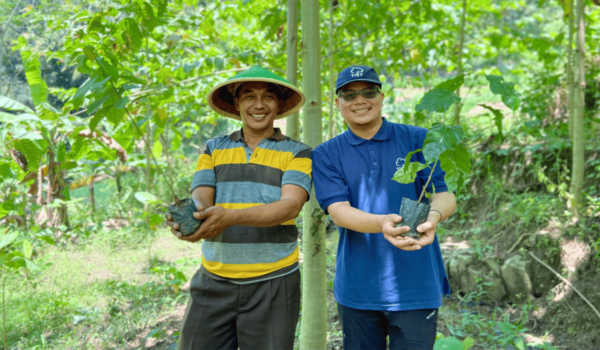
Samino with Aziz (right), Trees4Trees’ field coordinator. He was delighted by the team’s visit to monitor the trees that day.

According to Aziz, drought and pests remain the biggest challenges for farmers in the village. He hopes the tree growers will become more enthusiastic and communicative in facing these issues so the village can grow greener. Among them all, Samino stands out—he’s always the most excited whenever the Trees4Trees team visits. 

But there’s more to Samino than just his dedication to planting trees, when he’s tired from working in the fields, Samino has a simple way of unwinding—fishing and playing his guitar. The soft strum of the strings brings him a sense of peace. Through his dedication to farming and reforesting the land, Samino proves that when you work with heart and determination, it’s possible to create meaningful change for the environment and for the next generation. 

Writer: Teresia K. Miranti. Interview and compiled source: Aziz Arifandi. Photos: Henning Ilmi W 


Earth Day 2025: Creating an Urban Forest with FedEx

Earth Day

Every year on April 22, people around the world come together to celebrate Earth Day, an urgent call to reduce our collective carbon footprint and contribute to positive environmental developments. Answering that call, FedEx Indonesia took part in a tree-planting event at the Greenland International Industrial Center (GIIC) in Cikarang, Bekasi on April 26, 2025. The initiative set out to create an urban forest that can regreen one of Jakarta’s major industrial buffer zones. 

Garrick Thompson, Managing Director of FedEx Indonesia, confirmed the initiative was not just a celebration of Earth Day, but also a reflection of the company’s commitment to nature-positive action. The FedEx Indonesia office is located in the heart of Jakarta, where issues like traffic and air pollution are a daily challenge. In nearby buffer zones like Bekasi, where the GIIC is located, environmentally friendly actions can have a wide-ranging impact for people living and working in the city.  

“You know, this environment that we live and work in is fragile,” said Thompson, who is committed to finding solutions for environmental problems in his local area. “There’s a lot of land we can regenerate, and thereby give back to nature,” he added. 

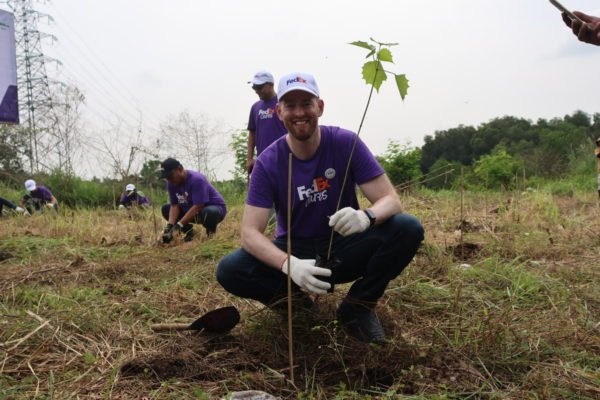
(Above) Garrick Thompson, Managing Director of FedEx Indonesia, who joined the tree-planting event in Cikarang this April.

Planting Trees, Seeding Progress  

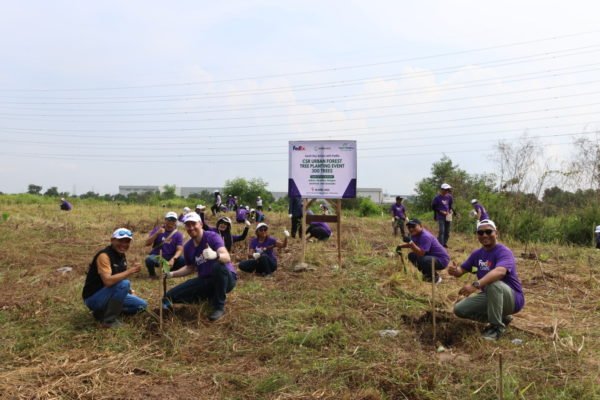
The tree-planting initiative was a collaborative effort between FedEx Indonesia, Trees4Trees, and the GIIC management. A total of 300 trees were planted, which will provide shade and fruit in the new urban forest.  

Trees like cadamba (jabon), gmelina, albizia (sengon) jackfruit, and avocado were chosen for their resilience – they should be able to take root and thrive, even in the area’s poor soil, which has been degraded by years of rapid land conversion for industrial development. These trees will provide shade, a simple step which is proven to reduce temperatures and improve airflow in urban areas.    

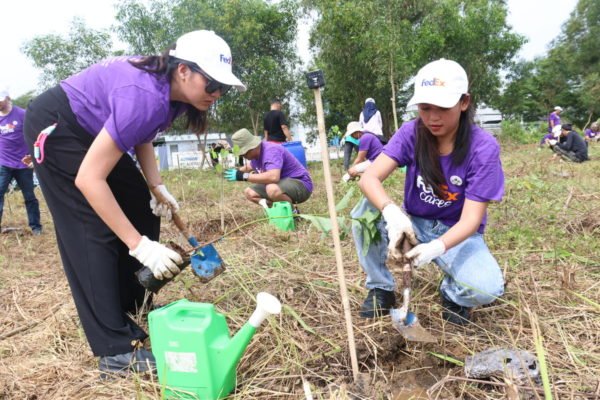
The planting was carried out by a large team of volunteers from FedEx, who demonstrated their dedication, and the commitment of their company, to environmental preservation. 

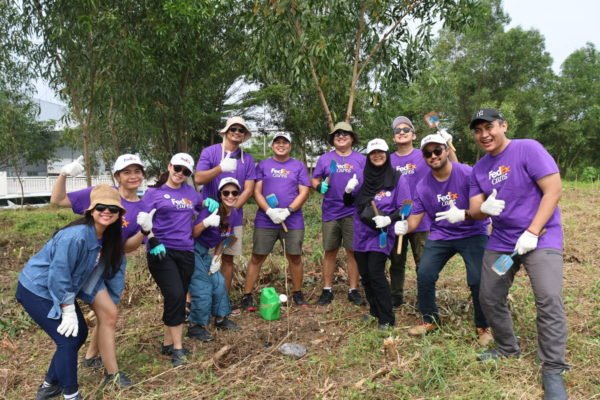
(Above) More than 50 FedEx team members took part in the project, which successfully planted 300 new trees around the GIIC in Bekasi.

“We’re excited to bring our team here together with Trees4Trees,” explained Thompson during the tree-planting activities. “We have more than 50 people from our team helping out today,” he added, before noting that this kind of activity will help engender an environmental mindset among employees moving forwards. “It’s a great opportunity to instill a sense of responsibility to give back and to find ways to contribute to a sustainable environment,” he added. 

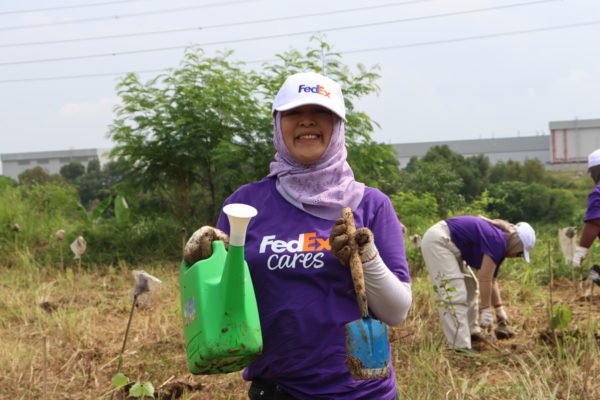
Dewi Herniani, Vendor Clearance Manager at FedEx, found the experience especially meaningful. Raised in a village close to nature, she was excited to reconnect with the environment through this initiative. “We were each assigned six trees for planting today, but I’m happy that I managed to plant 10,” she said proudly. Dewi hopes to participate in more activities like this, as part of FedEx’s ongoing sustainability program. “If no one cares about greening the environment, and the world ends up without trees, what would it look like? That’s why I believe it’s important for us to act together,” she added. 

(Above) Dewi Herniani, FedEx Indonesia Vendor Clearance Manager, gets her hands dirty and commits to making an impact through urban forestry.

Contributing to FedEx’s Carbon Reduction Goals 

As a global logistics company, FedEx understands the importance of contributing to environmental sustainability. During the event, Thompson noted that tree-planting activities like this contribute to FedEx’s wider sustainability mission. 

“We place a big emphasis on sustainability in our business,” he said. “Our target at FedEx is to be carbon neutral by 2040 and this tree-planting activity plays a big role in helping us achieve that.” Thompson also added that this sustainability goal is a priority, not only for the company, but also for its customers.  

Rahmat Fauzi works in the FedEx Customer Service team. He confirmed that environmental preservation is an integral part of FedEx’s corporate culture. “FedEx is focusing on creating linkages between company, community, and environment. By working together, we can achieve positive impacts,” he said.

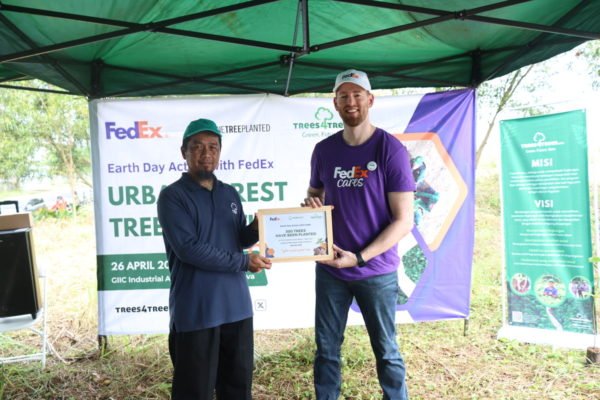
(Above) Adi Gani, Trees4Trees’ Project Manager, presents a tree-planting certificate to Garrick Thompson, Managing Director of FedEx Indonesia.
Earth Day
(Above) FedEx employees carefully planted the new saplings together, then watered them and added fertilizer to give the new growth a good chance of survival.

A Shared Responsibility for a Greener Future 

Dewi believes caring for the environment isn’t just a corporate responsibility, but an important path for individuals to follow too. “At FedEx, we’re not just working – each of us has a role in protecting the environment,” before adding that “we all breathe the same air; planting trees is something anyone can do to produce cleaner air, even starting with just one tree.” 

Rahmat added that FedEx’s culture encourages both the company and individuals to act together for the environment, while also giving back to nature and communities. “Humans and nature are connected,” he said. “If we protect nature, it protects us; if we harm it, it harms us back. Initiatives like this are a way to ensure better environmental sustainability in the future,” he added. 

The 300 new trees planted by the FedEx team are expected to grow strong and support a healthier environment in the industrial area, helping reduce carbon emissions and air pollution, increase green cover to cool the climate, and bring lasting benefits to surrounding areas. With support from Trees4Trees, FedEx Indonesia is furthering their sustainability mission and helping to secure a greener, cleaner future for Jakarta’s urban areas. 

Writer: V. Arnila Wulandani. Editor: Chris Alexander. Photos: Kemas Duga Muis