Bali Reforestation: Preserving Water, Local Livelihoods, and Cultural Heritage

Bali

When people think of Bali, they often picture a world-famous tourist destination with stunning beaches, majestic mountains and hills, and a rich cultural heritage showcased through traditional dances, art performances, and iconic architectures. And while that’s all true, Bali is much more than just a tourist destination.  

This island is home to vibrant marine and coastal ecosystems, protected forests, thriving agriculture, and centuries-old traditions deeply rooted in local wisdom. It includes Subak, a traditional irrigation system which reflects the deep connection between nature, community, and tradition. 

However, Bali now faces growing environmental threats, including population growth and deforestation caused by land conversion and excessive land use. These threats not only lead to environmental degradation but also put local livelihoods and traditional practices like Subak at risk, including in the western part of the island, specifically in Melaya District of Jembrana Regency. 

Agricultural Practice and Subak Irrigation System in Melaya 

Unlike other regions of Bali, where tourism dominated, Melaya communities depend primarily on agriculture. Rice, coconut, and cacao are the district’s key agricultural products.  

“Cacao production, in particular, has made one of villages in Melaya District, Ekasari Village, renowned as the largest and best cacao producer in Bali,” said Rusmanto Manulang, the Trees4Trees Field Coordinator for Bali. 
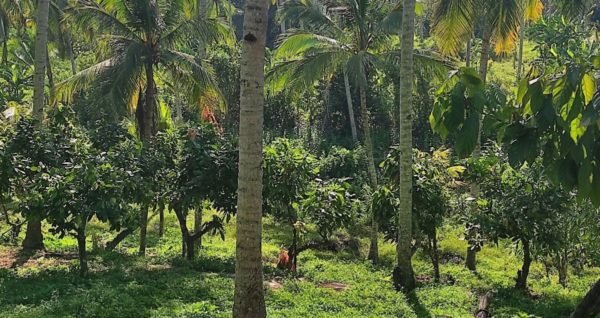
Bali Reforestation
Cacao trees grow alongside coconut trees in agroforestry systems in Ekasari Village, both key agricultural products in Melaya.

Melaya, where also a home to West Bali National Park and traversed by Sangiang Gede river, practices organic farming and as much of Bali, the agriculture is deeply intertwined with Subak, a traditional irrigation system recognized as a UNESCO World Heritage Site since 2012. The district has 19 Subak sites, spanning over villages, sustaining this centuries-old irrigation system. 

Believed to date back to 9th century, the Subak system follows sustainable and rotational methods, where local farmers work in organized groups, taking turns irrigating rice fields while others grow alternative crops. Water is distributed through irrigation water tunnels network, ensuring equitable access and making water availability crucial.  

“In Melaya, local farmers uphold this practice, working together hand in hand, not only to secure their livelihoods, but also preserve the cultural traditions,” Rusmanto added. 
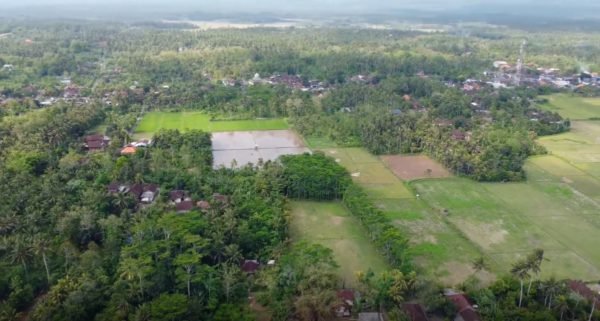
Tuwed village
Rice fields span Tuwed Village, one of Trees4Trees’ tree-planting locations.

Read also: How Do Trees Conserve Water?

Land Degradation in Melaya and the Role of Forest in Water Conservation 

Among Bali’s regencies, Jembrana has the largest forest area, with 49% – approximately 41,307-hectare of its land, covered in forest, according to Ministry of Environment and Forestry (MOEF) in 2021. Most of these are protected forests, serving as habitats for diverse wildlife and sustaining water resources in the region.  

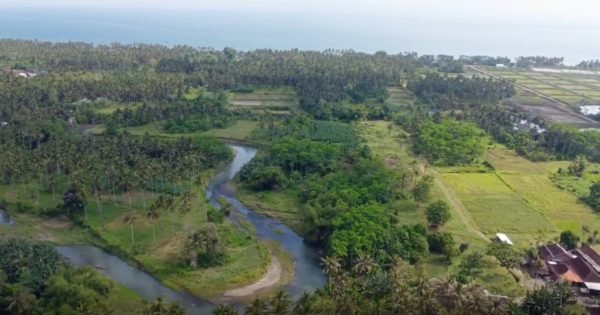
The regency is also traversed by 40 rivers, some flowing into Melaya district, playing a vital role in supporting the Subak irrigation system. This includes the Sangiang Gede river (Tukad Sangiang Gede in Balinese), the longest river in Jembrana, stretching 25,000 meters 

Bali Reforestation
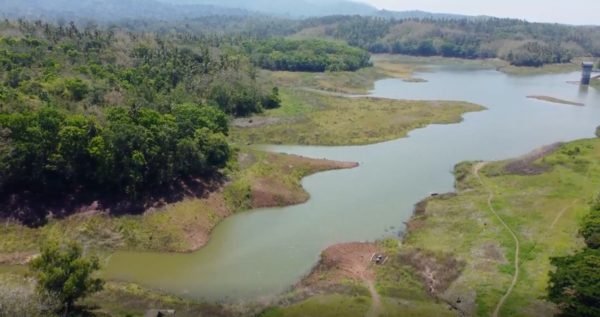
Palasari Reservoir in Ekasari Village stores water of the Sangiang Gede river.

Despite the crucial link between intact forest and water availability, the Sangiang Gede watershed in Melaya district has experienced increasing environmental degradation in recent years, putting water sources at risk. Rapid population growth has led to land conversion for residential and agricultural expansion, resulting in deforestation, erosion that increases river sedimentation, flooding, and water shortages. These challenges threaten both local ecosystems and traditional farming practices.

“Some areas in Melaya Village experience flooding, especially after heavy rain. Meanwhile, in the neighboring Ekasari Village, residents struggle with water shortages during the dry season,” said Rusmanto.

Based on Trees4Trees’ spatial analysis, currently, over 29% of the land in Melaya district, especially in the Sangiang Gede river, has been affected by degradation. It highlights the urgent need for conservation and sustainable land management efforts.  

Trees4Trees Tree Planting: Restoring Nature, Strengthening Communities 

To help local communities address environmental challenges, protect livelihoods, and preserve Bali’s rich agricultural heritage, Trees4Trees is expanding its reforestation efforts on the island. Together with its supporters, Trees4Trees has recently planted over 17,000 trees across two villages in Melaya District: Tuwed and Ekasari. 
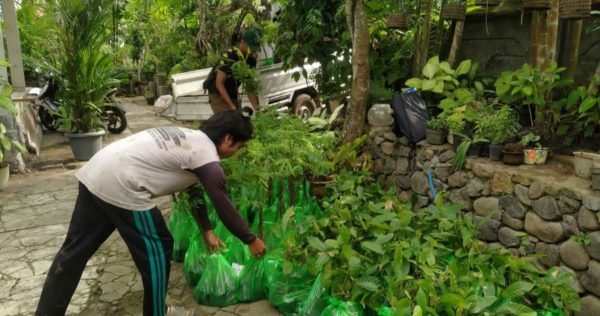
Bali Reforestation
Tree seedlings distribution in Tuwed Village.

Read also: Expanding Green: Trees4Trees Planting Season 2024-2025

Focusing on cacao and albizia trees, the initiative spans approximately 25 hectares.  It aims to support local farmers and protect forests bordering the villages, which are vital in sustaining the river supplies water to the Subak. With a long-term vision of restoring ecological balance, strengthening local economies, and safeguarding cultural traditions in Bali, Trees4Trees is committed to expanding this initiative in the years ahead.  

You can also participate in this reforestation program! Make a lasting impact on the environment, agriculture, and local communities in Bali by planting trees together with us.  

Contact us at info@trees4trees.treesforplant.com to learn more about how to get involved in the Bali Reforestation! 

Writer: V. Arnila Wulandani. Photos: Muhammad Ely Nezar & Rusmanto Manulang 

Supporting Women Farmers Through Reforestation in the Citarum Watershed

Supporting Women Farmers

Most people living upstream of the Citarum watershed, which spans West Bandung Regency in West Java, make their living from farming. For Sundanese – the main ethnic group in West Java – this is more than just a source of income. It is a tradition passed down through generations. Many of the farming community here are women, most of whom have been working the land from an early age. 

Over 5,000 woman farmers have participated in tree-planting activities since Trees4Trees first began its Citarum watershed reforestation efforts in 2021 (around a quarter of the total turnout). With funding support from AstraZeneca and One Tree Planted, these women have been able to preserve family traditions and improve their economic independence; their participation also highlights the key role women must play in restoring the environment and strengthening communities.  

Read also: The Story of Euis Maryati: Widowed and Planting Trees to Support Her Family

Family, Farming and Tradition: Continuing the Legacy in West Java  

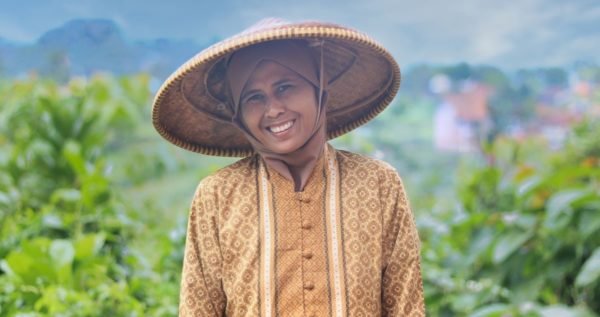
“I’ve never left my village and have worked the soil with my family since I was a teenager,” explains Aisha (60), from Ancolmekar Village. She is one of many local women who have dedicated their lives to farming.  

Aisha joined Trees4Trees as a grower in 2021 and quickly demonstrated her exceptional skills. In 2022, she was recognized as one of the best farmers in the area. “My farming skills have improved over time,” she explains, “because farming has been my habit for decades, sharpening my ability to nurture every plant I grow.” 

Iis Hasanah (47), from Cijambu Village, spent 11 years working abroad as a household servant in Saudi Arabia before returning home to settle down and continue her family legacy of farming.  “After elementary school, my mother often brought me to the field,” she remembers, “which showed me how to sow seeds and grow trees and crops.” She now splits her time between farming and caring for her son, passing her skills on to the next generation. 

Iis Hasanah and Aisyah
Iis Hasanah (left) and Aisah (right) have determined to work the land and continue their family legacy.

Nurturing Families by Caring for Nature 

For some women, farming offers a connection to their roots. For others, it is a way to provide for their families. Maryati (43) from Kutawaringin Village began farming in her 20s to supplement her family’s income and put her two children through school.   

“In addition to shade trees, I chose to plant fruit and coffee trees due to their competitive prices,” says Maryati. “This way, I can help my husband earn additional income and save more money to secure our family’s economy.”  

Supporting Women Farmers
Maryati prunes the leaves of a burflower-tree, part of her daily commitment to care for trees she has planted.

Kokom, from Mekarjaya Village, has been farming for 10 years. On her plot measuring 700 sqm, she grows cassava and peanuts, along with fruit trees. “I sell fruits like avocado, along with coffee and cloves, to cover my children’s needs,” she says. “Crops like cassava, peanuts, and vegetables are for family consumption, which helps us save money on food.”  

Read also: Reviving Clean Water Access in Lebak Muncang Tourism Village: Elis’ Tree Planting Initiative

Women’s Empowerment: The Key to Environmental Preservation  

The active participation of women in Trees4Trees’ Citarum watershed restoration efforts demonstrate their determination to be productive. Andini Mulyani, a woman farmer from Mekarjaya Village, believes women are equally capable of contributing to their communities as men. “It’s not about competing with men,” she says, “but having equal opportunities and roles. Farming isn’t only for men, women can do it too.” 

Supporting Women Farmers
Kokom (left) and Andini Mulyani (right) believe women farmers are equally capable in contributing to both the community and environment.

Through the Citarum watershed reforestation initiative, women are given equal opportunities in tree-planting, including access to seedlings, training and capacity building, and various other benefits. These resources empower them, not only to contribute to their community and families, but to positively impact the surrounding environment. “We receive free seedlings, the yield is ours, and the training sessions help women farmers like us improve our knowledge,” says Iis. 

Despite living near the watershed, many areas in the Citarum watershed face drought and water scarcity. Aisha believes tree-planting activities enable women to collectively address these environmental challenges.  

“Drought, landslides, and water shortages are common issues here,” she says. “The planting initiative from Trees4Trees gives us the chance to preserve water, prevent disasters, and develop our livelihoods while improving the surrounding environment.” 

By empowering women farmers as tree-growing partners, Trees4Trees’ Citarum watershed reforestation program is restoring degraded lands and building community resilience to the impacts of climate change. Crucially, these positive impacts are rooted in local tradition and the principles of gender equality within sustainable social forestry practices. 

Writer: V. Arnila Wulandani. Editor: Chris Alexander. Photos: Zaki Luqman, Giri Satriyo, Adia Mufidz, Kemas Duga Muis for Trees4Trees 

Preventing Disasters, Empowering Communities of the Slopes of Mount Salak

Preventing Disasters

Mount Salak in Bogor, part of the Halimun-Salak National Park in West Java, serves as a key water catchment area, a significant carbon sink, and a habitat for at least 200 species of flora and fauna. This includes the Javan hawk eagle, a bird of prey that is threatened by extinction. Spanning over 113,000 hectares of conservation land, Mount Salak’s ecosystem not only protects the largest lowland rainforest in the region and supports biodiversity but also provides for communities in the surrounding area.  

However, heavy rainfall on the mountain can make its slopes highly susceptible to erosion, which can cause disastrous landslides and flooding. The surrounding Tamansari District is one of Mount Salak’s buffer areas most affected and is especially at risk during the rainy season. While the landscape may appear green at first glance, several open areas in and around the villages lack tree cover, leaving them vulnerable to environmental degradation. 

To help local communities address these issues and mitigate future impacts, and as part of their ongoing corporate sustainability program. Sumitomo Electric Group Indonesia teamed up with Trees4Treesto implement a tree-planting project in the region.

CSR Sumitomo Group
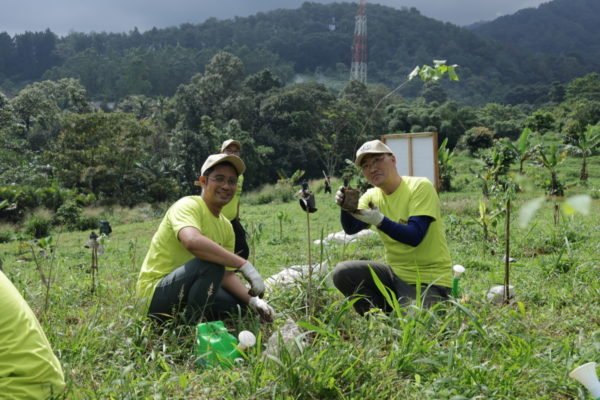
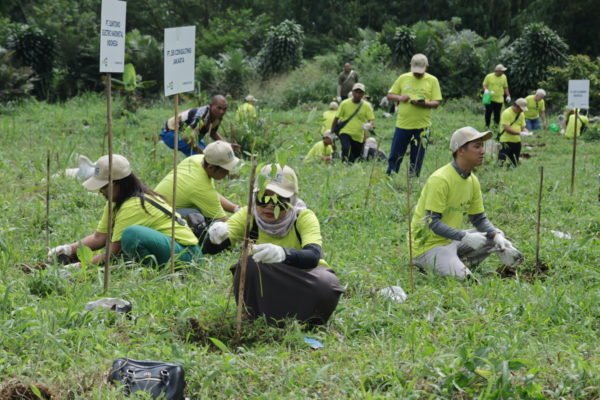
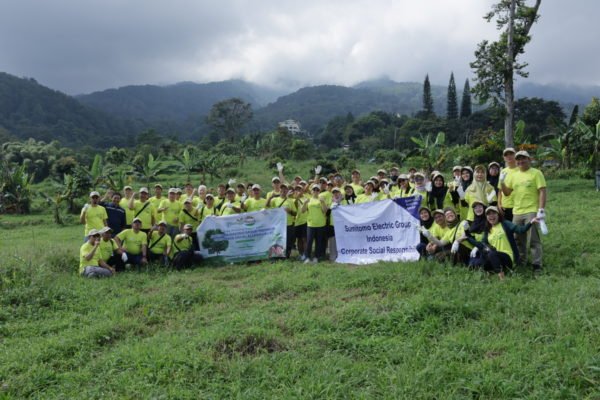
Over 50 Sumitomo Electric Group Indonesia employees planted trees to help prevent erosion in Tamansari Village, a Mount Salak buffer zone. 

Erosion Control and Improved Carbon Sequestration 

These actions are both timely and sorely needed. Just last year, Tamansari District was hit by a major landslide and flash flood. This followed similar disasters in 2021 and 2023, which seriously threatened the lives of villagers and uprooted local livelihoods. 

In response, Sumitomo Electric Group Indonesia has committed to planting 2,000 trees around Tamansari Village in Tamansari District. This project aims to increase tree cover and reduce the risk of future landslides by controlling the erosion that can trigger potentially deadly disasters. 

Preventing Disasters
Five tree species including eucalyptus, burflower-tree, avocado, jackfruits, and langsat tree, were planted to enhance the environment and support local communities’ livelihoods.

“We chose the slopes of Mount Salak, part of the Citiis River watershed, due to their critical condition,” explains Adi Gani, Trees4Trees’ Project Manager, noting that several degraded open lands need to be restored. “We hope the trees we have planted will help reduce disaster risks, improve water catchment, and benefit local communities,” he says. 

Preventing Disasters
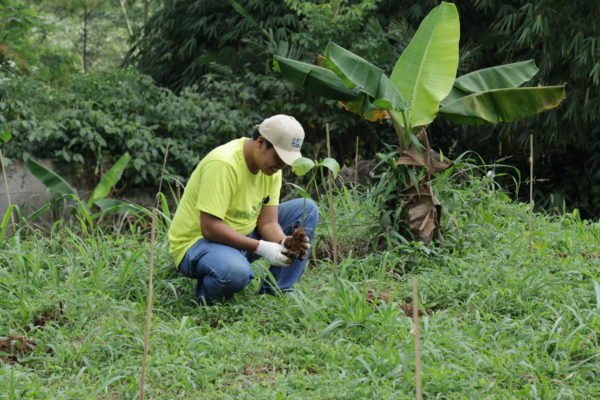
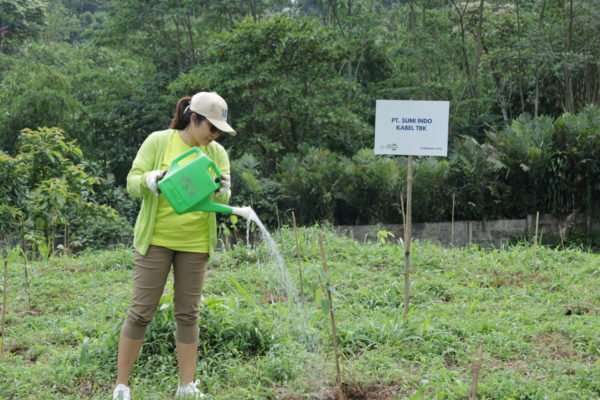
Joining as volunteers, the employees gain valuable knowledge on proper tree planting techniques, including watering and fertilizing.

Another major benefit of this program is its support for Mount Salak’s environmental role as a major carbon sink, thereby contributing to climate change mitigation in line with Sumitomo Group’s corporate sustainability goals. 

“We have a goal to reduce CO₂ emissions,” says Koji Imakita, President Director of Sumiden Serasi Wire Product, a subsidiary of Sumitomo Electric Group Indonesia, who participated as a tree-planting volunteer. “While we recognize that the number of trees we have planted is relatively small, this is a significant step forward in our mission to reduce greenhouse gas emissions.”  

Plant a Planet: Seeding a More Sustainable Future 

Various employees of Sumitomo Electric Group Indonesia and its subsidiaries joined together to volunteer in tree-planting activities coordinated by Trees4Trees. The program, themed ‘Plant a Planet’, demonstrates the company’s dedication to environmental sustainability as part of its corporate responsibility commitments. 

Preventing Disasters
Hand in hand, Sumitomo Electric Group Indonesia successfully planted 800 trees, while another 1,200 trees were planted with the involvement of local communities.

“Previously, we planted mangroves, and now we’re expanding to tree planting in a different location,” said Mulyadi, a volunteer and HR Community Representative from one of Sumitomo Electric Group Indonesia’s subsidiaries. “We hope this initiative will make positive impacts, because a healthy planet is the greatest legacy we can leave behind for future generations.” 

Mario Eko Cumentas is the Chairperson of Sumitomo Electric Group Indonesia Area Committee. He confirmed that the current initiative forms part of the company’s global commitment to environmental preservation and its support for local communities. “Our main goal is to contribute to environmental sustainability so that nature, in turn, continues to support life for future generations,” said Mario. “This includes local communities living in the vicinity,” he added. 

Gohoyoshi: A Commitment to Positive Community Impact 

As a company with Japanese roots, Sumitomo Group upholds a core principle of Gohoyoshi, also known as the ‘five-way win’ approach, which represents the company’s commitment to create positive outcomes for all stakeholders. This includes employees, suppliers, customers, stockholders, and socially vulnerable communities. A key aspect of this tree-planting initiative is the central role of local communities.  

“This tree-planting initiative is very important to us,” explains Koji Imakita. “At Sumitomo Group Indonesia, we follow Gohoyoshi, or the Five-Way Win, as our business philosophy, which prioritizes community well-being. And that’s why we strive to contribute as much as we can to the local communities around us.” 

Guided by the spirit of Gohoyoshi, the company’s sustainability programs not only aim to benefit stakeholders, including local communities, but also to support a healthier environment. This, in turn, supports long-term success and business sustainability. Together with Trees4Trees, Sumitomo Group is helping turn these commitments into tangible impacts for people and planet. 


Writer: V. Arnila Wulandani. Editor: Chris Alexander. Photos: Yulianisa Dessenita