Trees4Trees Joins Forces Youth: Reviving Fire-Affected Lands of Merbabu Mountain

Trees4Trees

It still resonates in our minds that last 2023 was marked by unusually hot days. According to several studies, it was recorded as the hottest year in global temperature since this data was first recorded in 1850. The year was also impacted by El Niño, a natural climate warming phenomenon that can affect global weather. Climate change exacerbated the effects of El Nino in 2023  leading to prolonged droughts and heatwaves, which triggered severe wildfires in various regions, including Indonesia. 

One of the major events linked to the phenomenon was the wildfires that devastated several forests in Indonesia’s mountainous areas, with over 140 incidents recorded throughout the year. Merbabu Mountain in Central Java Province suffered some of the worst damage, with over 480 hectares of forest burned. The fire was allegedly caused by natural leaves friction, although human actions like discarded cigarette butts or burning trash may have also played a role. 

Read also: Weathering the Storm: Natural Solutions to El Nino 

A Year After the Wildfire: Youth Community Reforests Fire-Damaged Area 

One year has passed since the devastating wildfire on Merbabu Mountain in October 2023. It destroyed much of the forest cover, including valuable vegetation, such as edelweiss, cantigi, and tree species like puspa, pines, cinnamon, and wilodo. While some parts of the forests have been reforested, other fire-affected areas remain barren. This has motivated the youth community of the Executive Student Board (BEM) Diponegoro University to take action, mobilizing youth communities to restore the land by planting trees.

Trees4Trees
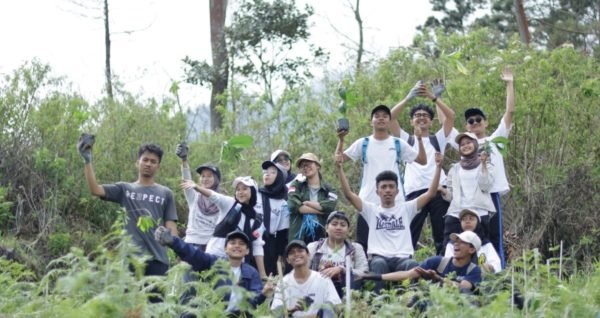
Diponegoro University students went to an altitude of 1,500 meters above sea level together to plant 500 trees in the fire-affected area of Merbabu Mountain.

Collaborating with Trees4Trees, they organized a tree-planting event through an annual environmental program, Gerakan Aksi Tanam Pohon (GESIT) or the Tree Planting Action Movement. The event took place on October 20, 2024 – exactly one year after the wildfires struck. 

“Aligned with our program in conservation, we initiated this tree-planting activity. In total, 70 volunteers from twelve faculties joined as tree-planting volunteers to help the environment, particularly by reforesting fire-affected areas,” said Jania, a student of Diponegoro University and coordinator of the tree-planting activity. 

Green Action
Three species of trees were planted in the area: puspa, cinnamon, and wilodo, all the characteristic trees of Merbabu.

A Green Collaboration to Recover the Environment 

Together with Trees4Trees, the Gen Z volunteers planted 500 trees along the Thekelan hiking trail on the slope of Merbabu Mountain, in Getasan District, Semarang Regency.  

“This tree-planting aims to support ecosystem recovery, allowing the trees to produce more oxygen to benefit all living beings. This small action reflects our care as young generations for the environment,” said Izza, a Diponegoro University student and leader of the Conservation and Disaster Division. 

As part of its mission in education and sustainability promotion, Trees4Trees provided volunteers with essential training on tree-planting techniques and preparations a week before the event. Danang Pambudi, a Trees4Trees forester who led the training, emphasized the importance of sharing tree-planting knowledge with young people. “We hope this education encourages them not only to plant trees at this event but to continue planting more in the future, wherever they can,” he said. 

Aksi Hijau
Trees4Trees’ forester was presenting the tree-planting technique to the tree-planting volunteers.

Why Is It Important to Plant Trees in the Fire-Affected Area? 

Danang revealed, Trees4Trees supported the tree-planting event by providing three species of trees: puspa, cinnamon, and wilodo, all of which are characteristic of Merbabu Mountain. Some of them were diminished during the wildfire. 

“We selected the trees to fit the existing ecosystem. Merbabu is the natural habitat for these species, and by planting them, we help restore the ecosystem. In fact, the puspa tree is even fire-resistant,” said Danang. He also emphasized that if fire-affected areas are left neglected, they will eventually recover on their own. Birds and wind will disperse the seeds of native trees naturally, encouraging regrowth, but it takes time. “By planting these characteristic trees in their natural habitat, we help to accelerate ecosystem recovery. Additionally, we also help enhance carbon sequestration, contributing to fight climate change,” he explained. 

Penanaman
Each tree was planted in 30 cm depth with 3 meters distance from each other to ensure their growth.
Empowering Youth through Trees4Trees Youth4Change 

Trees4Trees‘ involvement in this collaborative tree-planting event was backed with the aim to raise awareness about environmental preservation among the young generation. This initiative is part of the Trees4Trees Youth4Change program, designed to empower youth to express their concerns and take action for a greener planet. 

Trees4Trees
Trees4Trees Youth4Change collaborates with 70 students of Diponegoro University to make an environmental impact in the Merbabu tree-planting

Hatta Iskandar, the Trees4Trees Fundraising Manager, noted that Youth4Change offers opportunities for youth to engage in impactful actions for environmental preservation. “We are excited to collaborate with young communities, especially in tree-planting activities. We hope to continue this collaboration in the future and involve more youth in the green movement,” he stated. 

In the other hand, Danang emphasized the younger generation holds the key to a sustainable future. “It’s vital to cultivate a sense of environmental responsibility in young people. By supporting positive initiatives and sharing knowledge, we can inspire a deep commitment to protecting our planet,” he said. 

Writer: V. Arnila Wulandani. Photo: Yulianisa Dessenita & Doc. BEM UNDIP 

Nurturing the Next Generation: Support for Young Farmers in West Java

Nurturing the Next Generation


Nurturing the Next Generation
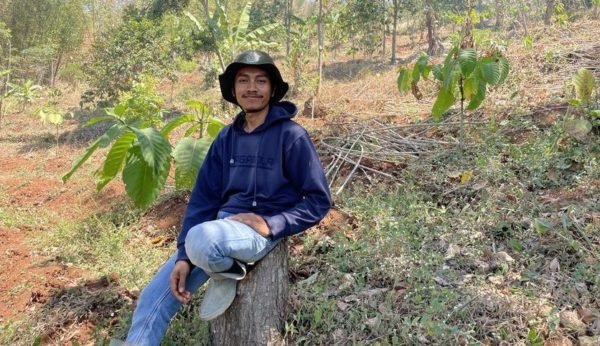
Dani, a young farmer from Pakutandang Village, next to the burflower trees he has been growing with support from Trees4Trees.

“Most people my age don’t think about getting into farming,” says Heri, a 36-year-old from Batulayang in West Bandung Regency. “They believe there’s more money to be had in city jobs, but that’s not always that case.” Heri speaks from experience. He used to be one of the majorities who took city jobs – recent government data shows that only 17% of people aged 17 to 39 in West Java are farmers.  

In recent decades, rapid development has transformed rural areas into modern landscapes, replacing farmlands with factories, shopping centers, and housing. This shift has changed job trends, with many young people choosing city-based careers over farming. Nevertheless, some young people like Heri are growing disillusioned with city life and returning to their roots.  

“From my experience in horticulture, I’ve seen how farming can lead to success and become a sustainable livelihood for many, helping them provide for their families,” says Heri. The most important thing for young people is to change their mindset and recognize that farming can lead the way to entrepreneurship,” he added. With support from Trees4Trees, this new generation is rediscovering the benefits that rural life can bring. 

Homecoming: Choosing Farm and Family

Many of the young farmers participating in Trees4Trees reforestation programs learned farming from their parents. Munawar Sidiq (21), a Gen Z farmer from Mandalawaji Village, began farming as a child. After briefly working on a construction project in the city, he returned to continue his parents’ legacy.  

“City life wasn’t for me,” he explains. I have family, land that would have gone to waste if I didn’t take care of it;. if all young people like me leave the village, who will farm, grow trees, produce food, and protect nature?”  

Similarly, Dani (32) from Pakutandang Village, developed basic farming skills under his father’s tutelage in his teenage years, before later joining a restoration project in Sumatra. He decided to return and become a full-time farmer in 2018. “This experience gave me advanced skills in farming that I can now use to transform my family’s field,” he said. 

Nurturing the Next Generation
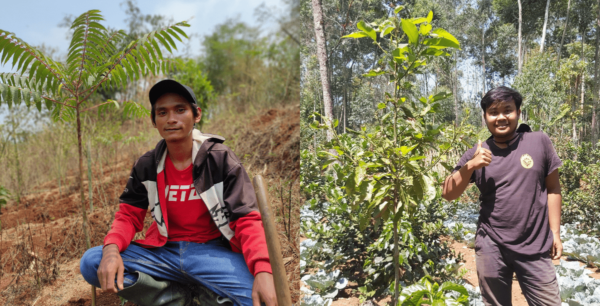
(Left) Munawar Sidiq and (Right) Aditya Swara with the trees and crops they have been growing.

New Solutions for a New Generation 

Armed with the knowledge and experience they have gained from their travels, these young farmers are committed to helping their villages develop better, more sustainable practices. Aditya Swara (20), a farmer from Girimulya Village, chose to stay home instead of moving to the city, with a mission to tackle water scarcity in his village. Like other residents, he manages vegetable plots and grows fruit trees. “We rely on growing vegetables, but water access is limited,” he says. “During the dry season, it becomes a real challenge.” To combat this, Aditya combines vegetable farming with shade trees like teak and mahogany, which also help to improve soil quality and the availability of groundwater. 

Yonan (33) from Kidangpananjung Village, also sees the value of tree planting. To prevent future water scarcity in his surrounding area, he plants trees among his crops. “Without tree cover, water disappears,” he says. “More trees mean more water.” 

Youth involvement in environmental preservation is crucial, yet interest in farming among them is still lower than needed. Recognizing this, Heri initiated Citra Muda, a farmers’ group uniting young people aged 17 to 39 and encouraging them to pursue farming. With over 46 members, the group aims to secure a future for farming in their village. “I want to motivate them to create opportunities and become agricultural entrepreneurs through farming,” he said. 

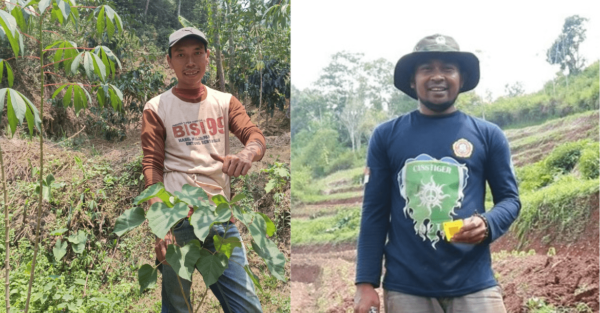
(Left) Yonan (Right) Heri

Flourishing in Farming with a Tree-planting Program 

Since 2021, Trees4Trees, together with AstraZeneca and One Tree Planted, has led a tree-planting initiative to restore the Citarum Watershed. This program has empowered young farmers with new opportunities and knowledge. Yonan and Heri shared that the program allowed them to plant various trees at no cost and gain organic farming techniques through training.  

Meanwhile, for Dani, being named one of the program’s best farmers was an honor. “I never thought I’d be recognized. I just did what was necessary, and the team acknowledged my efforts. It motivated me to keep improving my land and protecting my village environment.” 

Aditya’s field was also selected as a demonstration plot due to his impressive planting efforts and the growth of his trees. “Through the demonstration plot, it’s a great opportunity for me to showcase sustainable farming and educate other farmers in the village, especially young people,” he said. 

These young farmers are grateful for the tree-planting initiative and eager to continue working to build greener villages.  “We hope Trees4Trees and partners keep supporting young farmers like us with free seedlings and training” said Munawar. “I believe more trees and more involvement from young people will ultimately lead to a greener environment.” 


Writer: V. Arnila Wulandani. Editor: Chris Alexander. Photos: Nopan Noviana, Benyamin Harits, Fahry SK, Indra Dirjakusuma, Kemas Duga Muis