Harry Raharja: Getting Back to Nature in Pengalengan

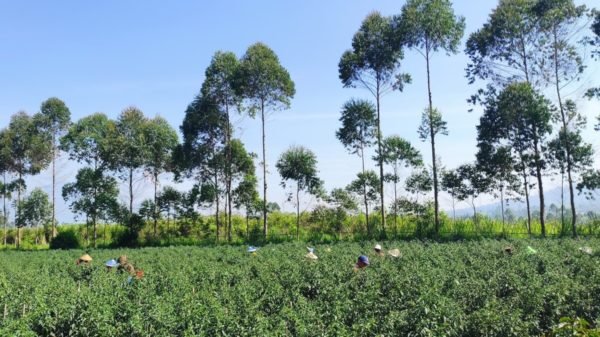
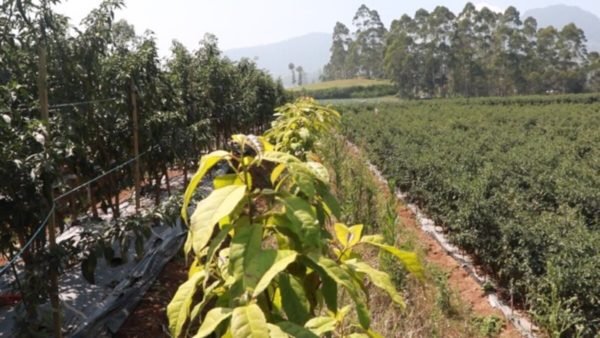
(Above) In Margamukti Village, a farm has benefitted from planting trees beside vegetable plots

About 30 miles south of Bandung in West Java, Pengalengan District is a rolling green patchwork of dairy farms and tea plantations. Traditional villages are dotted all around, along with lakes, waterfalls, and hot springs. For the growing number of tourists who come here to enjoy the fresh air and beautiful views, the area appears serene and peaceful. But below the surface, Pengalengan has a different story to tell.  

In recent years, unsustainable farming practices, combined with unchecked land conversion, have degraded the land. Combined with natural disasters like earthquakes and extreme weather events, many farmers have begun to worry about the environmental impact these developments are having on the landscape. 

Working with nature, not against it 

One of them is Harry Raharja, owner of Harry’s Farm in Margamukti Village. In 1990, he began planting vegetables, crops, and fruits on his family farm in the Cisangkuy sub-watershed area. At the time, some of his neighbors were selling their land to tourism developers. Those who continued to farm did so with a heavy hand – removing tree cover and using chemicals to maximize their yields. Bucking this trend, Harry continued to implement sustainable practices as his ancestors had done – working with nature, instead of only taking from it. 

For Harry, this is not just an aesthetic decision. He believes having tree cover around his farm brings benefits like shade and fresh air, while also binding the soil together and protecting his land from erosion and water shortages. “It may reduce the yield I can harvest from the farm,” he says, “because the vegetables which are covered by trees will not get as much sunlight or grow as well as those in open land. But I don’t mind. I get a greater benefit by letting trees grow at my farm.” 

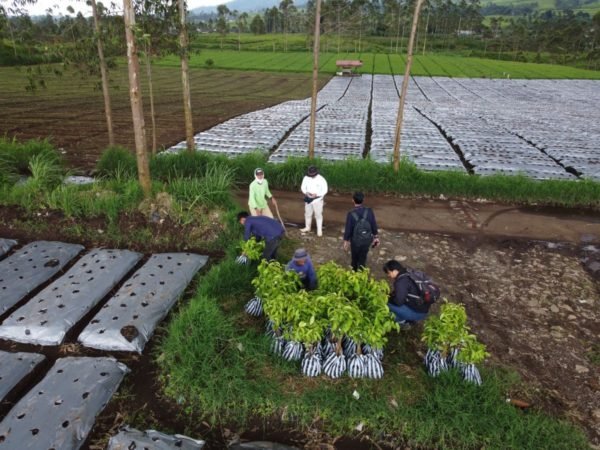
Harry is working with nature to maintain fertility on his farm. To avoid monocropping, his land is planted with a range of vegetables such as chili, potatoes, carrots, and tomatoes. Then, on the borders, he has planted eucalyptus and rasamala trees to provide shade. He has also planted groves of orange trees, which stand apart from his vegetable gardens. 
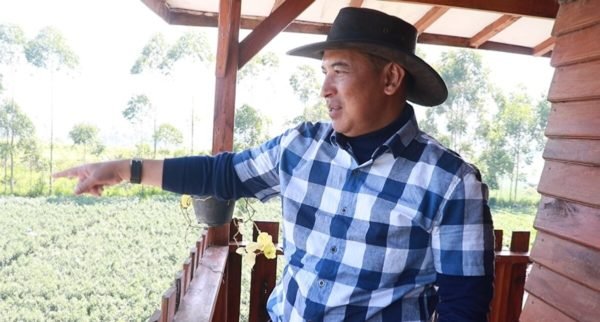
Harry Raharja
(Above) Harry Raharja, owner of Harry’s Farm in Margamukti Village, where Trees4Trees has been helping plant rasamala trees (below)

Rasamala Tree

Short-term gains create long-term problems 

In the time it has taken for Harry’s trees to grow, he has seen a boom in land conversion around Pengalengan, most notably the conversion of forest areas into tourist attractions such as lodges, cafes, lookout points, and other vegetable plots to feed the ever-growing influx of visitors.  

Many of these plantations were created without environmental sustainability in mind. Their lack of terracing makes the land more vulnerable to landslides, which are triggered by flooding during the rainy season. To maximize their yield, farmers also clear away trees from the land, making it even more prone to erosion. 

The loss of tree cover has also made Pengalengan, once famed for its cooler climes, noticeably hotter during the day, and caused water shortages due to a lack of absorption and storage capacity. This cycle of flooding and drought has taken a heavy toll on the land, while weekend traffic jams have also created a new problem: Air pollution.  
Harry Raharja

Rasamala Tree
(above) Together with local workers, members of Trees4Trees help plant a new generation of trees on Harry’s Farm

Nature-based solutions for man-made problems 

Harry saw the damage being done and decided to take action. In 2022, he joined a Trees4Trees planting program which helped plant 10,000 avocado, rasamala, and mahogany trees on his 30-hectare plantation. With funding support from Astra Zeneca Forest (AZ Forest) and One Tree Planted (OTP), these activities formed part of a wider project to add 50,000 new trees to Bandung Regency, focusing on three sub-watersheds of the Citarum River Basin (Citarik, Cirasea, and Cisangkuy). 

To this day, each of the trees Harry planted with AZ Forest, OTP and Trees4Trees are standing strong. When other areas in Pengalengan experience flooding and landslides, or when water shortages hit during the dry season, Harry’s Farm stays green and productive. By maintaining tree coverage on his land and staying connected to nature, he is better able to sustain his yields and ensure the availability of water.  

These benefits have also impacted the wider community. Harry employs a team of local farmhands on his land, who always have work to – whether harvesting fruits and vegetables or caring for the trees that shelter his fields. In addition to providing them with a reliable livelihood, the environmentally conscious practices implemented at Harry’s Farm have also helped to inform and educate the wider community. With continued support from AZ Forest, Trees4Trees and OTP, the people of Pengalengan can repair the damage done in recent times and look forward to a greener, more sustainable future.  

Interview: V. Arnila Wulandani. Writer: Chris Alexander. Photos: Kemas Duga Muis/Trees4Trees

Amung and Tami: Regreening the Concrete Jungle

Amung and Tami
(Above) Amung and Tami

The Greenland International Industrial Center (GIIC) in Cikarang is one of Jakarta’s biggest industrial zones. And yet, even here, pockets of nature continue to proliferate. Through the enlightened approach of the GIIC management, and with critical support from local people, these patches of green within the estate are being stitched together. 

Trees4Trees, One Tree Planted (OTP) and Microsoft have teamed up with local farmers to help catalyze the regreening process. Amung and his wife, Tami, are two of many who are ensuring ‘Greenland’ remains an integral part of the GIIC. In the process, they’re bringing relief to the area, finding a connection to the past, and planting hope for the future.  

Nature and nurture 

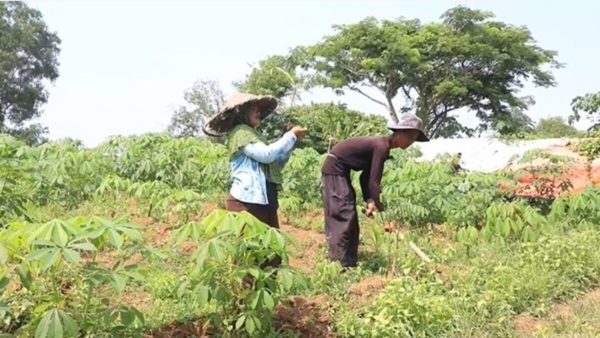
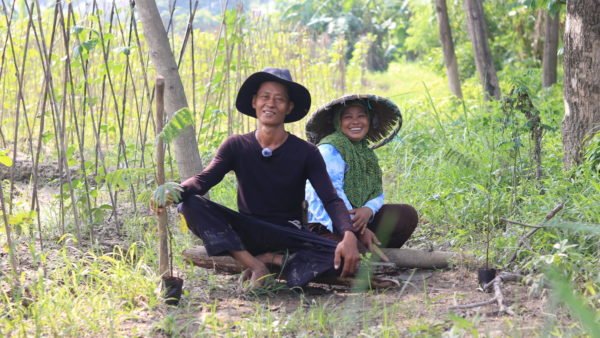
For as long as he can remember, Amung has had an affinity with farming – nurturing plants to nourish his family. Together with his wife, he grows vegetable crops and fruit trees on disused industrial land in the GIIC.  

I’ve been farming here since 2014,” he explains. “It’s been about 10 years now. The land I work on provides us with vegetables, cassava, and many other crops and fruits.”   

Income from his farming has allowed Amung to provide for his family, while also covering school expenses for his two children. “Although it’s not a lot, we’re grateful,” he says.

Amung and Tami
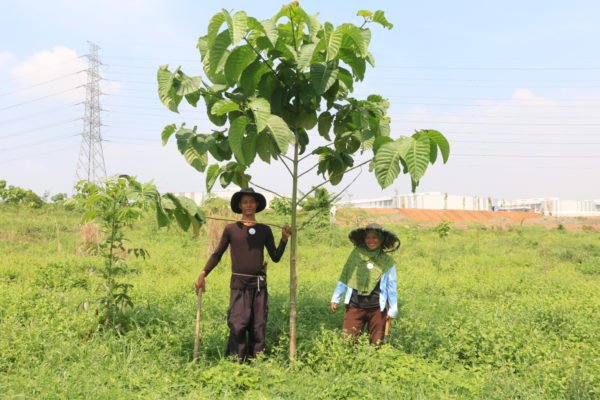
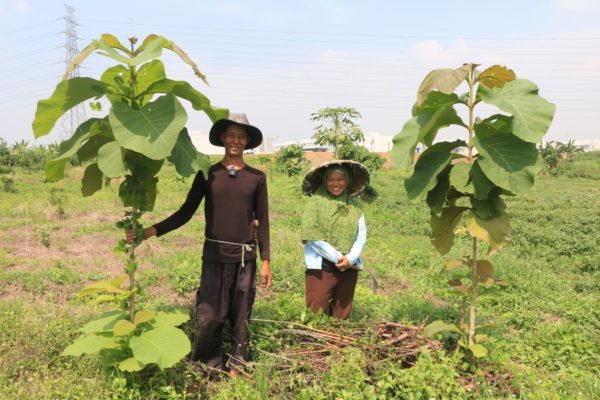
(Above) Amung and Tami, in the shade of one of many trees they have planted on the GIIC industrial estate in Cikarang, West Java.

Staying connected to their roots 

For Tami, working the land brings back memories. Before this area became an industrial zone, it was the site of her ancestral home. “One day, I visited and found the land where my house used to be had been abandoned. I told my husband and asked him to farm here,” she explained.  

Before long, Tami and Amung brought the land back to life. “I used to farm in other locations, but this land is the best,” says Amung. “Most plants can grow easily here. It is also close to the river for irrigation.” 

local Farmer
Above) With support from Microsoft, Trees4Trees and One Tree Planted, Tami and Amung have reconnected with their ancestral lands and helped keep the GIIC green.

Tree-planting support from Microsoft  

In 2022, Trees4Trees, with funding from Microsoft and support from One Tree Planted, launched a tree-planting program around the GIIC. The aim was to restore degraded land and increase tree cover to create an urban forest.  

“In 2022, we got 350 seedlings in total, consisting of fruit trees like mango, petai, and durian, as well as timber like mahogany, teak, and jabon,” says Amung. “We’re thankful to be able to plant them and benefit from them in the future. This program really supports us.”  

The program successfully planted 21,000 trees in public spaces and on local community lands. In 2023, Microsoft added another 19,000 trees. This year, the initiative will continue, expanding tree cover throughout the industrial zone. 

Amung and Tami hope all their trees will survive and bear fruit such as mangoes and petai, which they can sell. They are also looking forward to planting more new trees in future and contributing to the regreening of the local area. 

GIIC Farmers
(Above) It’s been a year since the planting activities, and now the trees are nearly 2 meters tall.
Progress towards a greener future 

In just over a year, Amung and Tami have already transformed around 0.5 hectares of unused land in the GIIC area into a lush, green space that is filled with teak, jabon, and mango. Amung attributes this success to nature: “I think the soil is perfect for these trees to thrive, even without special treatment,” he says. 

Amung and Tami’s actions have played a vital role in keeping the GIIC green. In addition to providing shade, clean air, and water to the surrounding environment, the green spaces of the GIIC also deliver sustainable livelihood opportunities to local farmers. This also provides a blueprint for a more sustainable, more equitable future; a collaborative model that benefits local communities, business, and nature. 

Writer: V. Arnila Wulandani. Editor: Chris Alexander. Photos: Kemas Duga Muis/Trees4Trees
Amplifying the Reforestation Message with Tantri and Arda: Trees4Trees’ Green Ambassadors

Tantri Arda

Tantri Arda

Trees4Trees has taken a new step in broadening its reforestation message by partnering with Tantri Syalindri, lead vocalist of the renowned Indonesian rock band Kotak, and her husband Arda Hatna Danarda, an Indonesian pop singer as green ambassadors. This collaboration aligns with the shared mission of Trees4Trees and Tantri and Arda to promote environmental preservation efforts in Indonesia. 

Through this collaboration, the spirit of protecting the environment and Indonesia’s natural resources is expected to reach a wider audience, particularly the younger generation.  

Creating Environmental Protection Songs and Raising Awareness Among Fans 

As musicians, they have incorporated environmental messages into their songs and performances. In 2015, Tantri and her band, Kotak, released a song titled “Jagalah Bumi” (Protect the Earth) as the soundtrack for a children’s series. Two years later, she collaborated with her bandmate, Chua, the bassist, to create another environmental song in a strong rock style, titled “Hijaukan Bumi” (Green the Earth). 

Due to the environmental messages conveyed in their songs, they gained opportunities to be involved in several environmental preservation projects. One involvement was in a tree-planting program to green the roadsides of tollways, initiated by one of Indonesia’s state-owned companies.  

Arda, on the other hand, spreads awareness about environmental preservation in his own way. “As musicians, we spread environmental messages through our work. The simplest way I contribute is by actively reminding the audience not to litter and leave garbage at the concert venue,” Arda explained. 

Tantri Arda
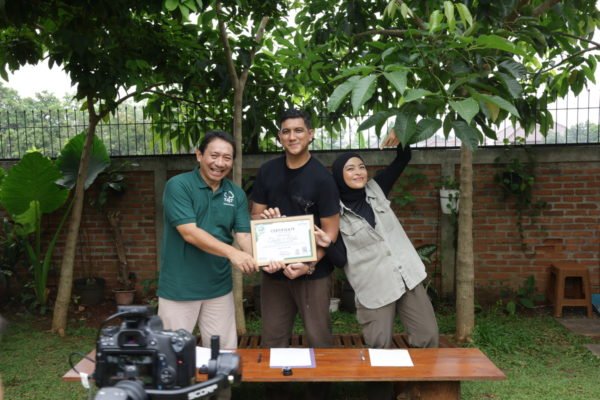
Arda and Tantri received a tree-planting E-certificate from Trees4Trees Program Manager, which they can track tree’s location through unique code called World Identification Number (WIN)

Applying Green Action on Their Wedding and Daily Life  

Planting trees has always been part of Arda’s life. His mother, who comes from a mountainous region, was familiar with planting and passed this habit to her children. “I’ve been planting trees since I was a kid because my mom taught me how. It became a regular part of our lives,” said Arda. When he married Tantri ten years ago, the couple decided to give tree seedlings to their guests as wedding souvenirs, reflecting their care for the environment and nature. 

“Now, ten years later, some of our friends still send us pictures of how tall the trees have grown. It’s incredible to see the growth of something we gave them as a small seedling, and now they are thriving. I’m also grateful that from the little seedlings we gave, then spreading to our friends and acquittance’s home, then creating great impacts by providing the oxygen and shade,” Tantri shared. 

Now, their green habits have been introduced to their children. They not only plant various types of trees and plants around their home, but also teach their kids how to do the same. “I believe it’s human nature to enjoy greenery and feel at ease surrounded by plants and trees, connecting with nature. A green environment brings tranquility, and many ideas are born from that kind of space,” said Arda. 

Tantri Arda
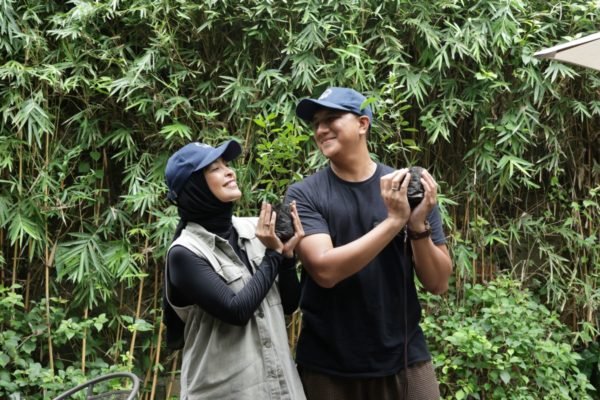
Arda and Tantri introduced a symbolic gesture—a half-closed hand, representing that planting trees is also planting hope for a better future.

Voice Out: Planting Trees for Hopes  

In partnership with Trees4Trees, they committed to promoting the message and spirit of reforestation. Over the next three years, they will collaborate with Trees4Trees on digital campaigns to inspire more people to protect their environment, helping the Earth thrive. Arda introduced a symbolic gesture that will align with this partnership campaign—a half-closed hand, reminiscent of a prayer—representing the idea that planting trees is also planting hope for a better future through a healthier planet.  

This partnership aims to make a lasting impact by raising awareness and encouraging sustainable practices toward Indonesia’s audience. “We have experienced climate change effects, like extreme heat or heavy rain that leads to flooding. I think witnessing these conditions should prompt us to evaluate ourselves. What have we done to preserve and care for our Earth?” said Tantri. 

She also emphasizes that simple actions, like planting trees around our homes, can make a difference. “Planting trees is one of the simplest ways to show our care for the Earth. We can start with our surroundings. But if you don’t have space, you can plant with Trees4Trees. There are plenty of areas out there where we can contribute to reforestation. So, I invite you to help green the Earth for a better life,” Tantri encouraged. 

Writer: V. Arnila Wulandani. Photos: Yulianisa Dessenita